
Overview
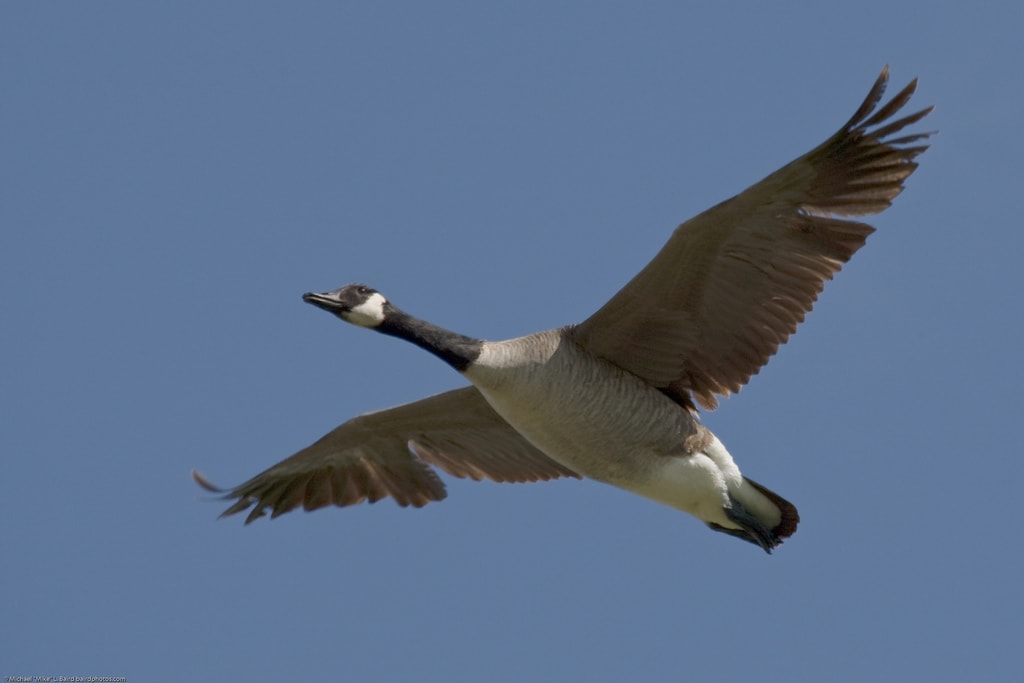
The black head and neck with a white chinstrap distinguish the Canada goose from all other goose species, with the exception of the cackling goose and barnacle goose (the latter, however, has a black breast and gray rather than brownish body plumage).The seven subspecies of this bird vary widely in size and plumage details, but all are recognizable as Canada geese. Some of the smaller races can be hard to distinguish from the cackling goose, which slightly overlap in mass. Of the true geese (i.e. the genera Anser or Branta), the Canada goose is on average the largest living species, although some other species that are geese in name, if not of close relation to these genera, are on average heavier such as the spur-winged goose and Cape Barren goose.
Taxonomy
- Kingdom
- Animalia
- Phylum
- Chordata
- Class
- Bird
- Family
- Anatidae
- Genus
- Branta
- Species
- canadensis
Habitat
This species is native to North America. It breeds in Canada and the northern United States in a variety of habitats. The Great Lakes region maintains a very large population of Canada geese. Canada geese occur year-round in the southern part of their breeding range, including most of the eastern seaboard and the Pacific coast. Between California and South Carolina in the southern United States and northern Mexico, Canada geese are primarily present as migrants from further north during the winter.
Diet
Canada geese are primarily herbivores, although they sometimes eat small insects and fish. Their diet includes green vegetation and grains. The Canada goose eats a variety of grasses when on land. It feeds by grasping a blade of grass with the bill, then tearing it with a jerk of the head. The Canada goose also eats beans and grains such as wheat, rice, and corn when they are available. In the water, it feeds from silt at the bottom of the body of water. It also feeds on aquatic plants, such as seaweeds.
Behavior
Like most geese, the Canada goose is naturally migratory with the wintering range being most of the United States. The calls overhead from large groups of Canada geese flying in V-shaped formation signal the transitions into spring and autumn. In some areas, migration routes have changed due to changes in habitat and food sources. In mild climates from California to the Great Lakes, some of the population has become nonmigratory due to adequate winter food supply and a lack of former predators.
Hunting
Typically hunted with a 12 ga shot. Shot size #2-4 is sufficient. Effectively hunted with decoys and calling.
Conservation Status
Listed as Least Concern by IUCN.