
Overview
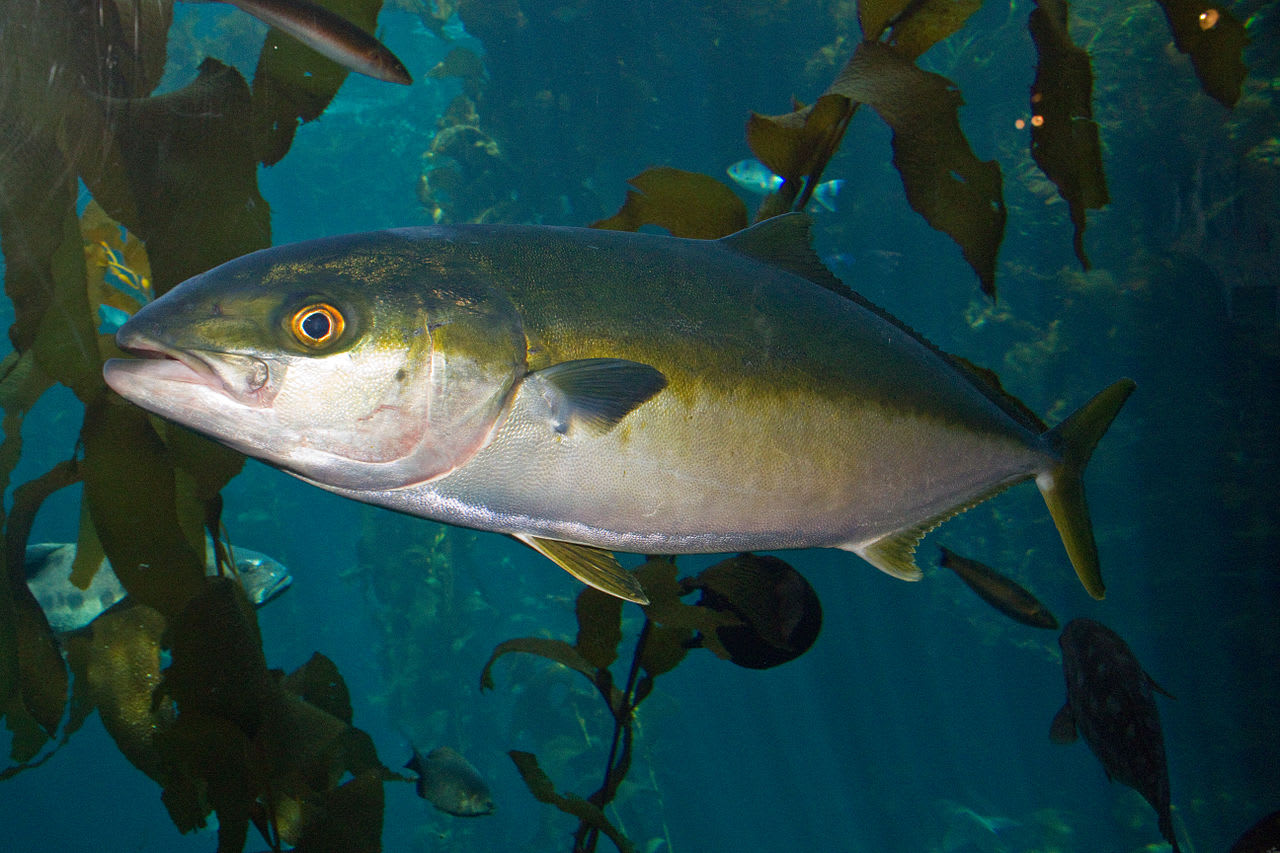
The Yellowtail is easily recognized by its bright yellow tail and a characteristic brass colored stripe that runs along the median line of the flanks from the tip of the snout to the tail. It is closely related to the Greater Amberjack. It can be distinguished by the greater number of developed gill rakers, 21 28 on the first arch, while the Amberjack has 11 16.
Taxonomy
- Kingdom
- Animalia
- Phylum
- Chordata
- Class
- Actinopterygii
- Order
- Cichliformes
- Family
- Carangidae
- Genus
- Seriola
- Species
- lalandi
Habitat
California yellowtail primarily inhabit coastal pelagic waters in the eastern Pacific, often near rocky reefs, kelp forests, and offshore islands where they find shelter and food. They prefer temperate to subtropical seas with depths from the surface to about 100 meters, and can occasionally enter bays or estuaries. Their range extends from California southward to Chile and includes various oceanic islands.
Diet
Feeds predominantly in the morning and late afternoon on small fishes, invertebrates, and pelagic crabs. Small to medium size fish generally undertake seasonal migrations. Larger individuals are more solitary and less migratory.
Behavior
A coastal, schooling fish that sometimes enters estuaries. It has been reported to occur occasionally in very large schools in the Gulf of California.
Fishing
A fast swimmer. The strike is vicious and is followed by a long, hard run and sometimes two or three shorter runs before the fish is boated. Fishing methods include trolling or casting with live baits or with lures. The Yellowtail's habit of driving bait fish up against the shore, makes casting from the beach a method catching them. The advice of experts is to allowtime for the bait to be swallowed, then strike hard. Although opinions vary regarding the food value of this species it is generally highly regarded, with smaller specimens receiving the better ratings.
Conservation Status
The IUCN classifies the California yellowtail as Least Concern, with populations generally stable across most of its range. Major threats include overfishing and habitat degradation from pollution.