
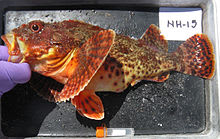
Taxonomy
- Kingdom
- Animalia
- Phylum
- Chordata
- Class
- Actinopterygii
- Order
- Pleuronectiformes
- Family
- Scorpaenidae
- Genus
- Scorpaena
- Species
- guttata
Habitat
This species inhabits rocky reefs, kelp forests, and sandy bottoms in coastal waters, typically at depths of 1 to 200 meters. It prefers temperate regions along the eastern Pacific, from southern California to Baja California, Mexico, often hiding among structures for protection. Geographic preferences include areas with abundant cover and moderate water temperatures.
Diet
The California scorpionfish primarily eats small fish, crustaceans like crabs and shrimp, and occasionally mollusks. As an ambush predator, it lies motionless on the seafloor and strikes quickly when prey comes close, with feeding activity peaking at night. It uses its excellent camouflage to surprise and capture food.
Behavior
California scorpionfish are solitary and territorial, often remaining stationary during the day to conserve energy and avoid detection. They are primarily nocturnal hunters, emerging at night to forage, and rely heavily on camouflage to ambush prey. They exhibit defensive behaviors like flaring their spines when threatened.
Fishing
Target California scorpionfish with bottom fishing techniques using medium-weight tackle for effective results in their rocky reef and kelp forest habitats along the southern California coast and Baja California, Mexico; use a sturdy rod and reel combo with 20-30 pound test line, a 3-6 ounce sinker to reach depths of 1 to 200 meters, and strong hooks to handle their toothy mouths, while always handling them carefully due to venomous spines—wear gloves and use tools for release. Opt for live bait like shrimp or crabs, or lures that mimic small fish and crustaceans to entice these ambush predators, casting near structures where they hide. The best season is summer when they are more active during spawning, with prime fishing times at night when they hunt; focus on temperate coastal waters with moderate temperatures for higher success rates. Record sizes include IGFA all-tackle world records up to 4 pounds 6 ounces and lengths reaching 45 cm, showcasing the thrill of landing these camouflaged fighters. Angler-funded programs through fishing licenses support habitat restoration in these areas, promoting catch-and-release for smaller fish to maintain healthy populations, while state regulations like bag limits and slot sizes in California waters serve as effective management tools to ensure sustainable stocks and protect this Data Deficient species as listed by the IUCN, reinforcing how recreational fishing contributes to aquatic conservation efforts.
Conservation Status
Listed as Data Deficient by IUCN.