
Overview
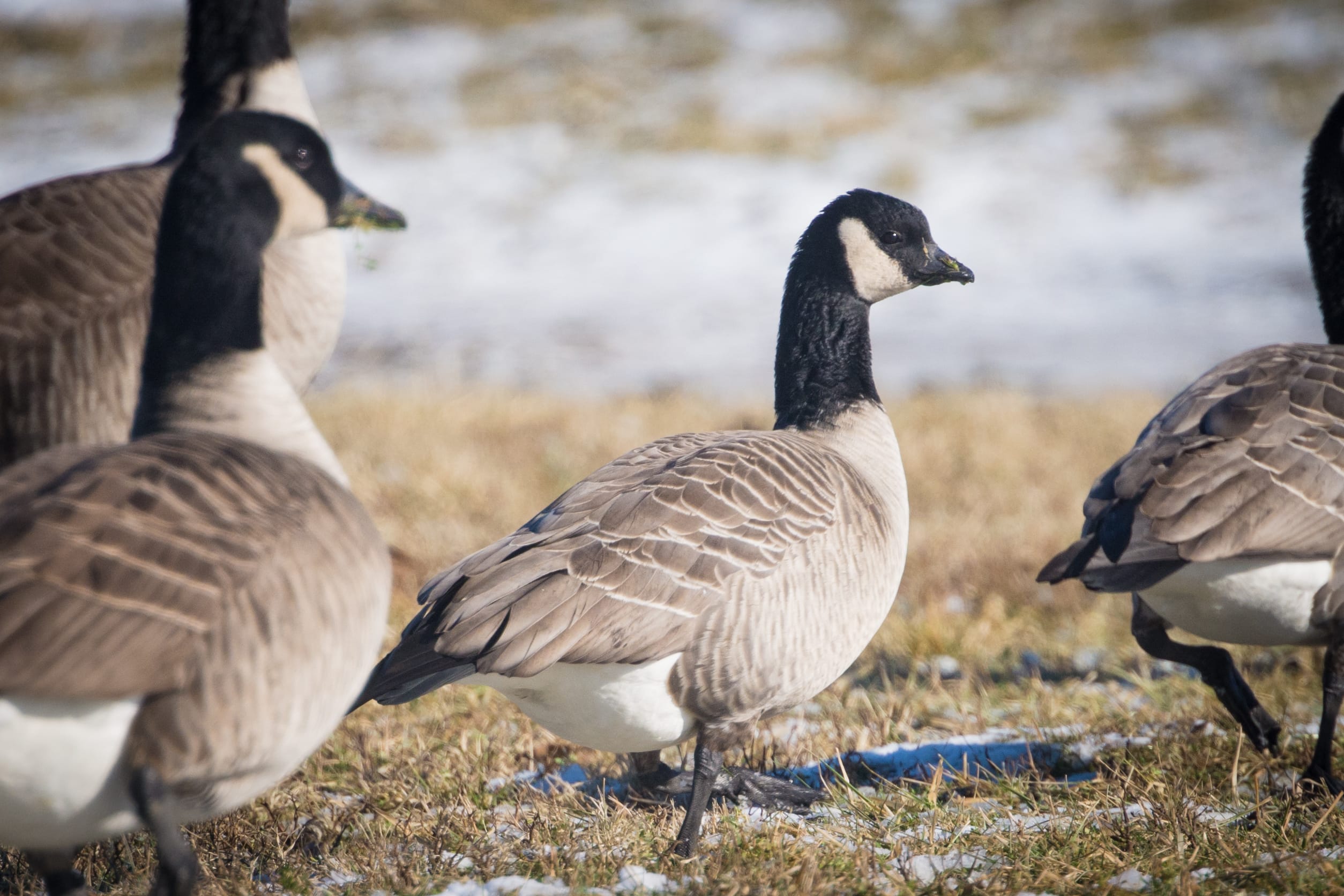
The black head and neck with white chinstrap distinguish this goose from all other geese except the larger Canada goose (Branta canadensis) and the similarly sized barnacle goose (B. leucopsis). The female looks virtually identical but is slightly lighter and has a different voice. Some are hard to distinguish from the Canada goose, with which the cackling goose was long assumed to form one species, the cackling goose and the smaller Canada goose subspecies being called the lesser Canada goose.
Taxonomy
- Kingdom
- Animalia
- Phylum
- Chordata
- Class
- Bird
- Family
- Anatidae
- Genus
- Branta
- Species
- hutchinsii
Habitat
Tundra, migratory across the Americas.
Diet
These birds feed mainly on plant material. When feeding in water, they submerge their heads and necks to reach aquatic plants, sometimes tipping forward like a dabbling duck. Flocks of these birds often feed on leftover cultivated grains in fields, especially during migration or in winter. They also eat some insects, molluscs and crustaceans.
Behavior
It breeds in northern Canada and Alaska in a variety of tundra habitats. However, the nest is usually located in an elevated area near water. The eggs are laid in a shallow depression lined with plant material and down. Males can be very aggressive in defending territory. A pair may mate for life (up to around 20 years). Adult geese are often seen leading their goslings in a line with one parent at the front, and the other at the back of the parade. Like most geese, it is naturally migratory, the wintering range being most of the U.S., and locally in western Canada and northern Mexico. The calls overhead from large groups of cackling geese flying in V-shaped formation signal the transitions into spring and fall. In some areas, migration routes have changed due to changes in habitat and food sources.
Hunting
Hunted across its range.
Conservation Status
Listed as Least Concern by IUCN.