
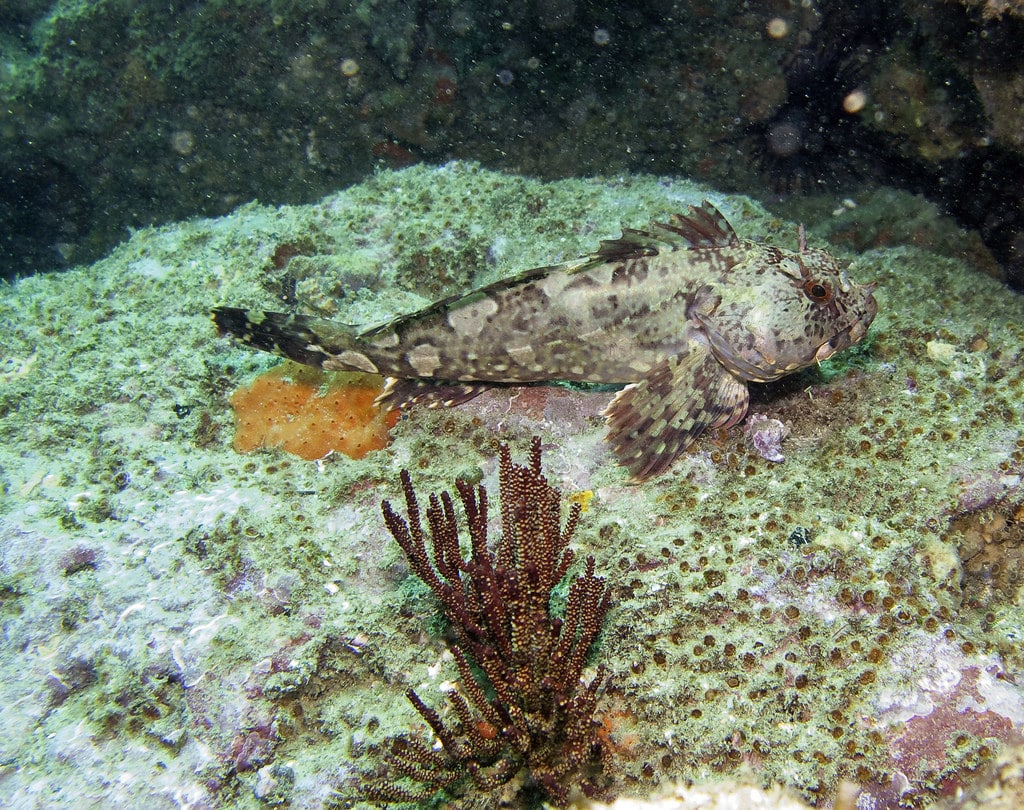
Taxonomy
- Kingdom
- Animalia
- Phylum
- Chordata
- Class
- Actinopterygii
- Order
- Istiophoriformes
- Family
- Cottidae
- Genus
- Scorpaenichthys
- Species
- marmoratus
Habitat
They are found in intertidal waters, down to a depth of 250 feet, and are usually associated with reefs, boulders, kelp, or eelgrass.
Diet
Cabezon primarily feed on benthic invertebrates such as crabs, clams, and sea urchins, using their powerful jaws to crush shells. They also consume small fish and squid when available, typically hunting during daylight hours by ambushing prey from hiding spots among rocks. Their feeding behavior is opportunistic, adapting to seasonal prey abundance in their habitat.
Behavior
Cabezon are solitary and territorial fish that inhabit rocky areas, often remaining hidden under ledges or in crevices during the day. They exhibit ambush predation, lying in wait for prey, and are generally inactive at night. Males become highly aggressive in defending nesting sites during reproduction, but otherwise, they show little social interaction.
Fishing
Cabezon are a popular sport fish in the Eastern Pacific, from Southeastern Alaska to Central Baja California, Mexico, prized for their hard-fighting nature and excellent taste, making them a key contributor to conservation through angler license fees that fund habitat protection and restoration. Employ bottom fishing techniques, such as dropping bait to the seafloor and using a slow retrieve to mimic natural prey, to effectively target these ambush predators hiding among rocks and kelp. Use medium-heavy rods with 20-30 pound test line, sturdy reels, and strong hooks to handle their powerful surges and prevent snags in rocky areas; top baits include live crabs, shrimp, or worms, while jigs and lures that imitate small fish or invertebrates work well for enticing strikes. The best seasons are spring through fall, with peak activity during daylight hours when they hunt benthic prey. Focus on intertidal zones down to 250 feet, specifically around reefs, boulders, kelp beds, and eelgrass for the highest success rates. The IGFA all-tackle record is 23 pounds, highlighting their potential size up to 100 cm or more. Conservation efforts, including slot limits and minimum size regulations in areas like California, are effective management tools that sustain populations by allowing fish to reach maturity, while catch-and-release practices and stocking programs supported by anglers help protect these vital marine ecosystems.
Conservation Status
Listed as Not Evaluated by IUCN.