
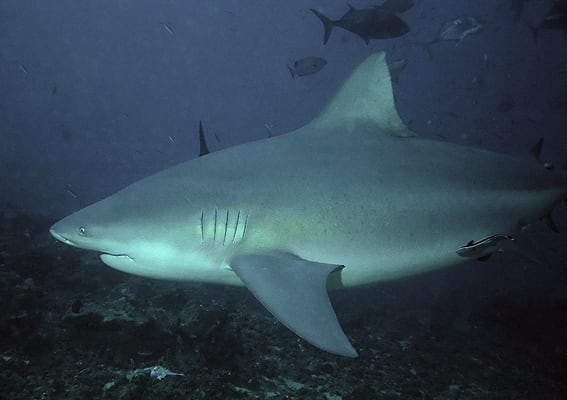
Taxonomy
- Kingdom
- Animalia
- Phylum
- Chordata
- Class
- Chondrichthyes
- Order
- Carcharhiniformes
- Family
- Carcharhinidae
- Genus
- Carcharhinus
- Species
- leucas
Habitat
Bull sharks primarily inhabit coastal waters, estuaries, and rivers, often venturing into freshwater environments far inland. They prefer warm tropical and subtropical regions worldwide, including shallow bays, mangrove swamps, and oceanic areas up to depths of about 150 meters.
Diet
Bull sharks are opportunistic carnivores that feed on a variety of prey including fish, other sharks, rays, marine mammals like dolphins, and even birds or terrestrial animals that enter the water. They hunt using ambush tactics, often in murky waters, and are most active during dawn and dusk when visibility is low.
Behavior
Bull sharks are typically solitary and territorial, aggressively defending their feeding areas and showing curiosity towards potential threats. They are highly adaptable, capable of thriving in both saltwater and freshwater, and exhibit bursts of speed up to 20 mph when pursuing prey.
Fishing
Bull sharks are a thrilling sport fish for experienced anglers, offering a challenging fight that supports conservation through regulated fishing practices, as license fees fund habitat protection and research. Target them using heavy tackle setups, including a stout rod rated for 50-80 pound test line, a high-capacity reel with drag up to 20 pounds, and strong leaders to handle their sharp teeth; effective baits and lures include live fish like mullet or mackerel, cut bait such as squid or fish chunks, and sturdy artificial lures that mimic prey. The best seasons are during warmer months in tropical and subtropical regions, from late spring through fall, with peak activity at dawn and dusk when they hunt in murky waters for optimal strikes. Focus on habitats like coastal estuaries, river mouths, and shallow bays in areas such as the Florida Everglades or Australian coastlines, where they venture into freshwater, using techniques like trolling, chumming, or bottom fishing to entice bites in depths up to 150 meters. The IGFA all-tackle world record stands at 697 pounds 12 ounces, caught in Florida, highlighting their impressive size potential. Conservation efforts, including catch-and-release mandates in many regions as effective management tools to maintain healthy populations, are supported by angler-funded programs that protect waterways and combat threats like overfishing, ensuring bull sharks remain a sustainable resource for future generations.
Conservation Status
Listed as Near Threatened by IUCN.