
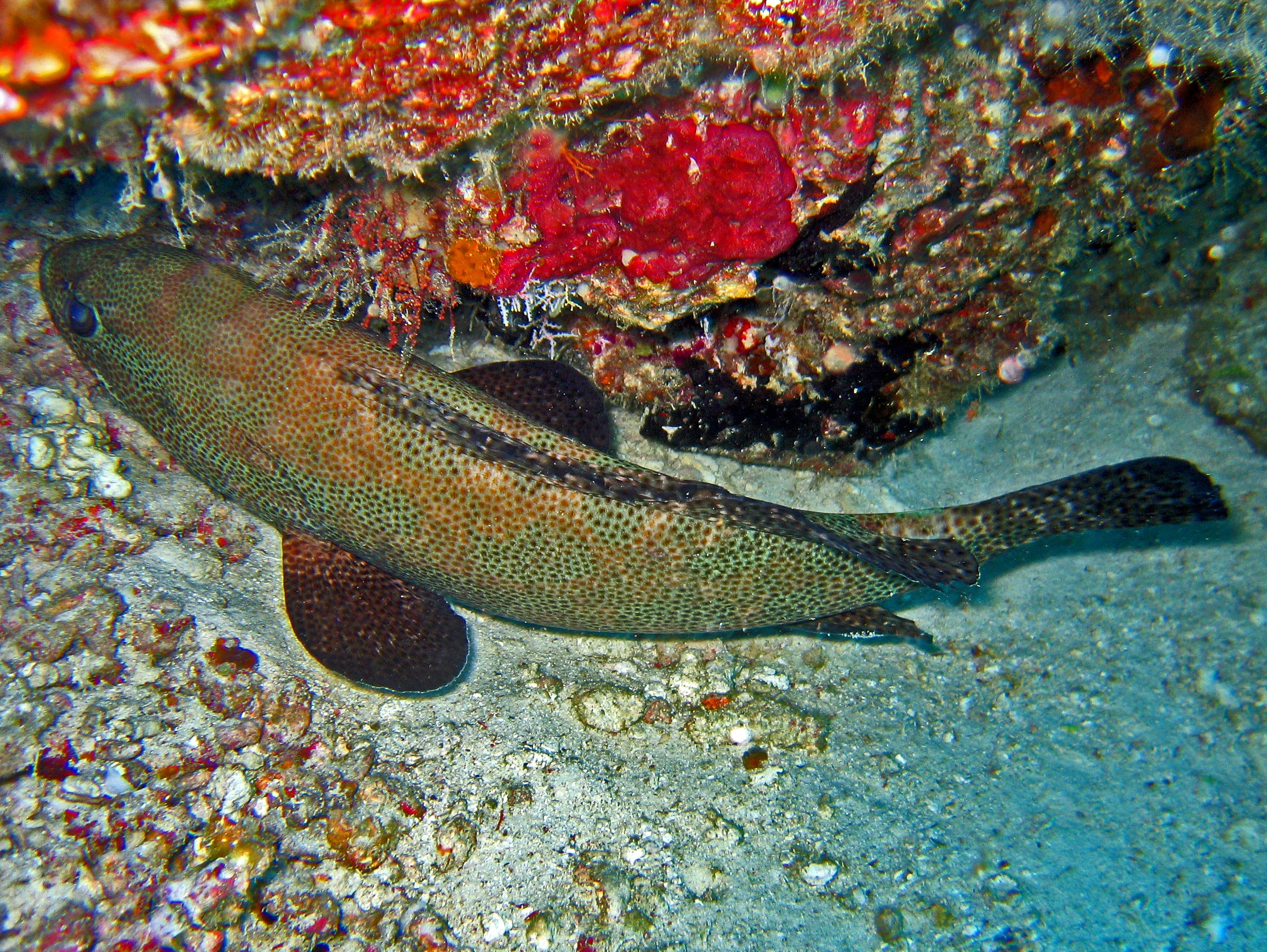
Taxonomy
- Kingdom
- Animalia
- Phylum
- Chordata
- Class
- Actinopterygii
- Order
- Scorpaeniformes
- Family
- Serranidae
- Genus
- Epinephelus
- Species
- chlorostigma
Habitat
This species inhabits coral reefs, rocky bottoms, and lagoon areas in tropical and subtropical waters. It prefers depths from 10 to 200 meters and is commonly found in the Indo-Pacific region, including the Red Sea and Western Indian Ocean. These areas provide ample hiding spots among corals and rocks.
Diet
The brownspotted grouper primarily feeds on small fish, crustaceans, and cephalopods. It employs an ambush strategy, lying in wait among reefs to strike at prey. Feeding is most active during the day when visibility is high.
Behavior
Brownspotted groupers are generally solitary and territorial, aggressively defending their chosen reef areas from intruders. They are diurnal, being most active during daylight hours for hunting and feeding. This species exhibits color changes for camouflage and communication, and they may form loose aggregations during spawning.
Fishing
Targeting the brownspotted grouper, a prized sport fish in the Indo-Pacific region including the Indian Ocean, Red Sea, and areas like South Africa, Madagascar, and Japan, offers anglers a thrilling challenge while supporting conservation through license fees that fund habitat protection and sustainable fisheries management. Employ bottom fishing techniques such as drifting baits over coral reefs and rocky bottoms in depths of 10 to 200 meters, using ambush strategies like jigging with metal jigs or soft plastics to mimic small fish and crustaceans; live bait such as sardines, squid, or shrimp works exceptionally well to entice strikes from these territorial predators. Opt for medium-heavy rods with 20-50 lb test line, sturdy reels, and strong hooks to handle their powerful runs in rugged habitats. The best seasons are spring to summer during warmer months when they are more active and spawning, with peak bites occurring during daylight hours when they hunt; focus on lagoon areas, coral reefs, and rocky structures for the highest success. Record sizes include an IGFA all-tackle world record of approximately 11 pounds 7 ounces, showcasing the potential for memorable catches. Conservation efforts, such as catch-and-release practices and slot limits in certain regions, ensure healthy populations by allowing mature fish to spawn, with angler-funded programs playing a key role in protecting these vibrant ecosystems and maintaining the species' stable status as Least Concern by the IUCN.
Conservation Status
Listed as Least Concern by IUCN.