
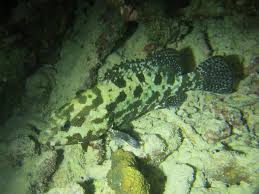
Taxonomy
- Kingdom
- Animalia
- Phylum
- Chordata
- Class
- Actinopterygii
- Order
- Scorpaeniformes
- Family
- Serranidae
- Genus
- Epinephelus
- Species
- fuscoguttatus
Habitat
This species primarily inhabits coral reefs, rocky areas, and lagoons in tropical and subtropical waters. It prefers depths from 10 to 150 meters and is commonly found in the Indo-Pacific region, including areas like the Red Sea, Persian Gulf, and western Pacific. These environments provide ample hiding spots among corals and rocks.
Diet
The Brown marbled grouper is a carnivorous ambush predator that mainly feeds on small fish, crustaceans, and cephalopods. It hunts by hiding and then striking quickly, often during daylight hours. Feeding behavior includes patrolling territories to locate prey.
Behavior
Brown marbled groupers are solitary and highly territorial, aggressively defending their feeding and resting areas from other fish. They are primarily nocturnal but can be active during the day, using camouflage to ambush prey. This species forms large spawning aggregations, which makes them vulnerable to overfishing.
Fishing
For targeting the Brown marbled grouper, a prized sport fish in the Indo-Pacific regions like the Red Sea, Persian Gulf, and western Pacific, use effective techniques such as bottom fishing, jigging, or trolling around coral reefs, rocky areas, and lagoons in depths of 10 to 150 meters, where they ambush prey. Recommended tackle includes a heavy-action rod with 20-50 pound test line, a strong reel for deep-water battles, and sturdy hooks; opt for baits like live baitfish, squid, or crustaceans, or lures such as metal jigs and soft plastics that imitate their natural diet of small fish and cephalopods. The best seasons coincide with their spawning aggregations from December to March, with optimal fishing times around dawn and dusk when they are most active. Focus on tropical and subtropical waters with hiding spots among corals and rocks for the best results. The IGFA all-tackle world record stands at 37 pounds 7 ounces, highlighting the species' impressive size potential. Conservation efforts, including angler-supported regulations like slot limits and catch-and-release during spawning to protect aggregations, ensure sustainable populations and fund habitat restoration, demonstrating how recreational fishing contributes to marine conservation in these vibrant ecosystems.
Conservation Status
Listed as Near Threatened by IUCN.