
Overview
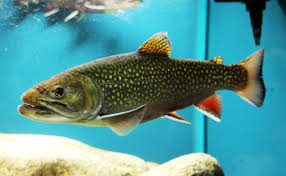
It is a typical char of the Salvelinus genus. The lower fins (pectoral, pelvic and anal) of chars have a milk white leading edge, distinguishing them from trouts. It is often identified by the light green to cream colored wavy lines (vermiculations) on the back and top of the head, and by the pale yellowish or greenish spots and the red spots with blue halos (ocelli) on the sides. The dorsal fin has heavy black vermiculations. The basic color of the back is olive green to dark brown, lightening to white on the belly. At spawning time, the lower flanks and belly of the males turn bright orange red with a black edge on the lower sides. Sea run specimens turn silvery, often with a light iridescent purplish sheen, and with only the red spots showing. The tail is squarish or only very slightly indented. All the fins are soft rayed, without spines.
Taxonomy
- Kingdom
- Animalia
- Phylum
- Chordata
- Class
- Actinopterygii
- Order
- Perciformes
- Family
- Salmonidae
- Genus
- Salvelinus
- Species
- fontinalis
Habitat
Streams, Creeks, Lakes, some even in the sea.
Diet
Plankton, Insects, Worms, Leeches, Minnows, Cryfish, Frogs, Lizards, Salamanders
Behavior
Brook trout travel upstream to spawn, where the female will lay her eggs in loose gravel. While the female is laying her eggs the male will come fertlize them, then the female will burry the eggs. Then the brook trout will swim back down stream.
Fishing
As a food and game fish it rates extremely high. The flesh is white to bright orange and delicious. It is one of the most popular game fishes in northeastern North America, actively sought by both fly fishing and spinning enthusiasts. In some areas it is protected from commercial sale because of its status as a game fish.
Conservation Status
Listed as Not Evaluated by IUCN.