
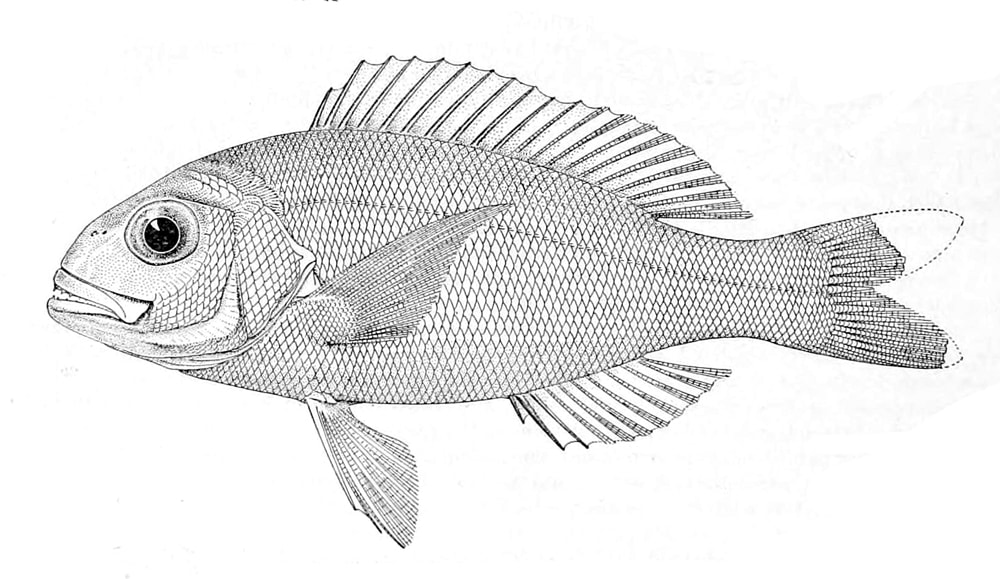
Taxonomy
- Kingdom
- Animalia
- Phylum
- Chordata
- Class
- Actinopterygii
- Order
- Perciformes
- Family
- Lutjanidae
- Genus
- Pristipomoides
- Species
- zonatus
Habitat
Brigham's snapper inhabits deep waters of the Indo-Pacific region, typically at depths of 100 to 400 meters over rocky reefs, coral outcrops, and submarine slopes. They prefer areas with strong currents and structured environments for shelter. This species is commonly found around oceanic islands and continental shelves in the Indian and Pacific Oceans.
Diet
Brigham's snapper primarily feeds on smaller fish, crustaceans, and cephalopods such as squid. They are ambush predators that hunt in schools or individually during the day, often in mid-water columns near reefs. Feeding activity peaks at dawn and dusk when prey is more abundant.
Behavior
Brigham's snapper forms loose schools in deeper waters and is primarily diurnal, actively foraging during the day. They exhibit territorial behavior around feeding sites and can quickly disperse when threatened. This species is known for seasonal migrations to follow food sources and spawning grounds.
Fishing
Anglers targeting Brigham's snapper, a prized deep-water species in the Indo-Pacific, rely on bottom fishing or deep jigging techniques to effectively reach their habitats at 100-400 meters, using strong currents and structured reefs to your advantage for successful hookups. Recommended tackle includes a heavy-action rod (20-50 pound test line), a high-capacity conventional reel for deep drops, and abrasion-resistant leaders to handle rocky substrates; for bait and lures, opt for live baitfish, squid, or vertical jigs that imitate their primary prey like smaller fish and crustaceans. The best season is summer during spawning aggregations, with optimal fishing times at dawn and dusk when feeding peaks, enhancing your chances in tropical waters. Focus on habitats around oceanic islands, coral outcrops, and submarine slopes in areas like Hawaii, Australia, and the Western Central Pacific, where precise depth targeting with fish finders can make all the difference. The IGFA all-tackle world record stands at 2 pounds 11 ounces, caught in Hawaii, reflecting the species' typical size range. Conservation-wise, Brigham's snapper benefits from angler-funded programs through license fees that support habitat restoration and population monitoring, with slot limits and catch-and-release practices in certain regions serving as effective tools to maintain stable, Least Concern populations as assessed by the IUCN, ensuring sustainable fishing for future generations.
Conservation Status
Listed as Least Concern by IUCN.