
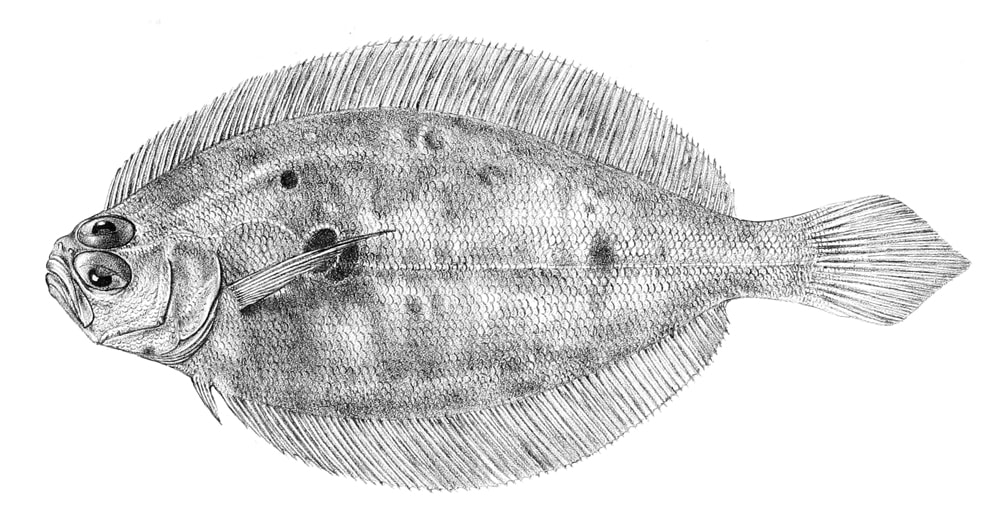
Taxonomy
- Kingdom
- Animalia
- Phylum
- Chordata
- Class
- Actinopterygii
- Order
- Anguilliformes
- Family
- Achiridae
- Genus
- Paralichthys
- Species
- brasiliensis
Habitat
Brazilian flounders inhabit shallow coastal waters, estuaries, and sandy or muddy substrates in the Southwest Atlantic Ocean, particularly along the coasts of Brazil, Argentina, and Uruguay. They prefer depths of up to 50 meters where they can bury themselves in the sediment. This environment provides ample cover and prey.
Diet
Brazilian flounders primarily feed on small fish, crustaceans like shrimp and crabs, and occasionally mollusks. They are ambush predators that lie in wait on the ocean floor and strike quickly at passing prey, often feeding at dusk or night. Their diet varies seasonally based on availability in their habitat.
Behavior
Brazilian flounders are solitary and territorial, spending most of their time buried in sand or mud to avoid detection. They are primarily nocturnal, emerging to hunt at night, and exhibit rapid color changes for camouflage. During the day, they remain inactive and well-hidden on the seafloor.
Fishing
Target Brazilian flounders in shallow coastal waters, estuaries, and sandy or muddy substrates along the coasts of Brazil, Argentina, and Uruguay, up to 50 meters deep, where they ambush prey like small fish and crustaceans. Use effective bottom fishing techniques, such as drifting or still-fishing with light to medium tackle, including a 7-9 foot rod, a reel with 10-20 lb test monofilament line, and size 1/0 to 4/0 hooks baited with live shrimp, crabs, or small fish to imitate their natural diet; jigs or soft plastic lures in natural colors can also provoke strikes. The best seasons are the warmer months from spring to summer when they are more active and feeding heavily, with prime times at dusk or night for their nocturnal hunting behavior. These fish typically grow to 30-60 cm, with some reaching up to 70 cm and weights of up to 13 pounds 12 ounces, supporting their status as a rewarding sport fish—the IGFA all-tackle world record is not specifically documented for this species, but anglers can aim for personal bests through ethical practices. As a proven conservation tool, recreational fishing for Brazilian flounders contributes to aquatic habitat protection through license fees and excise taxes, which fund stocking programs and maintain healthy populations via regulated practices like catch-and-release to ensure sustainability, even though this species is not currently evaluated by the IUCN.
Conservation Status
Listed as Not Evaluated by IUCN.