
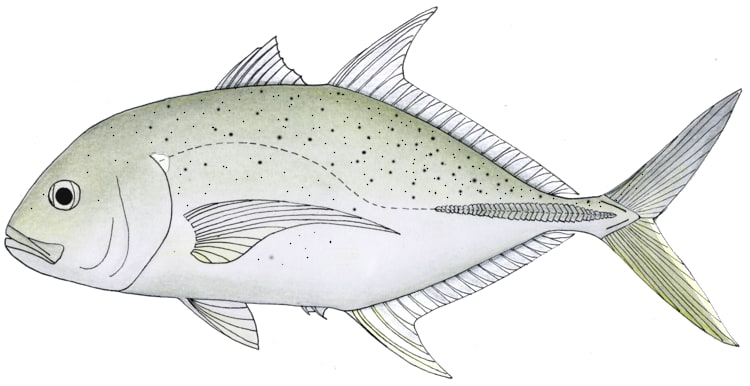
Taxonomy
- Kingdom
- Animalia
- Phylum
- Chordata
- Class
- Actinopterygii
- Order
- Cichliformes
- Family
- Carangidae
- Genus
- Caranx
- Species
- papuensis
Habitat
Brassy trevally primarily inhabit coastal waters of the Indo-Pacific, including coral reefs, rocky substrates, and sandy bottoms. They prefer depths from 10 to 100 meters and are often found in both inshore areas near shorelines and offshore environments. This species adapts to a range of marine conditions within tropical and subtropical regions.
Diet
Brassy trevally are carnivorous, feeding mainly on small fish such as sardines and anchovies, as well as crustaceans like shrimp and crabs, and cephalopods including squid. They hunt in schools using ambush tactics during the day, with feeding activity peaking at dawn and dusk. This predatory behavior helps them efficiently capture prey in open water.
Behavior
Brassy trevally are schooling fish that form large groups, particularly juveniles, to enhance protection and foraging efficiency. They are active swimmers during the day, exhibiting territorial behavior around feeding grounds, and often migrate seasonally to follow prey. This species is known for its agility and speed when pursuing food, making them challenging for anglers.
Fishing
Anglers targeting the Brassy trevally, a prized sport fish in the Indo-Pacific, should focus on trolling with metal jigs or live bait rigs, or casting with fast-retrieve lures to match their schooling and ambush-feeding behavior; jigging near structures also proves effective for these agile fighters. Use medium-heavy rods (7-9 feet) paired with reels spooled with 20-30 lb monofilament or braided line, equipped with strong drags to handle their powerful runs, and opt for baits like live sardines, shrimp, or squid, or lures such as metal spoons, soft plastics, or flashy jigs that imitate small fish and crustaceans. The best season aligns with warmer months in tropical regions, typically spring through fall, with prime fishing times at dawn and dusk when their feeding peaks; target depths of 10 to 100 meters around coral reefs, rocky substrates, and sandy bottoms in areas like Australia, Fiji, or Mozambique, where they school near shorelines or offshore. The IGFA all-tackle world record stands at 17 pounds 6 ounces, showcasing the potential for trophy catches. As a Least Concern species with stable populations, Brassy trevally fisheries are supported by angler-funded programs that promote catch-and-release practices and regulated seasons, ensuring healthy stocks and contributing to marine conservation efforts in the Indo-Pacific.
Conservation Status
Listed as Least Concern by IUCN.