
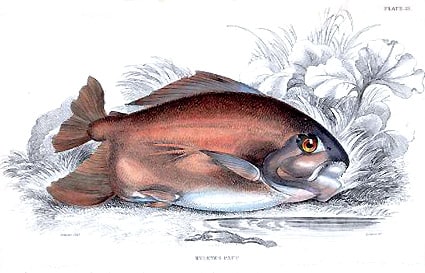
Taxonomy
- Kingdom
- Animalia
- Phylum
- Chordata
- Class
- Actinopterygii
- Order
- Siluriformes
- Family
- Serrasalmidae
- Genus
- Myleus
- Species
- pacu
Habitat
Borracha pacu inhabit freshwater rivers, lakes, and flooded forests in South America, particularly in the Essequibo, Iriri, and other Brazilian river systems. They prefer warm, slow-moving waters with abundant vegetation and submerged structures for cover. These fish are often found in areas with soft substrates and plenty of plant life.
Diet
Borracha pacu primarily feed on fruits, seeds, nuts, and aquatic vegetation, using their strong teeth to crush hard items. They occasionally consume insects, small crustaceans, and other invertebrates. Feeding activity peaks during the day when they forage near the surface or along riverbanks.
Behavior
Borracha pacu are schooling fish that form groups for protection and feeding, often seen swimming in mid-water columns. They are diurnal, active during the day and resting at night in deeper waters. These fish can be territorial during spawning seasons but generally exhibit calm, non-aggressive behavior.
Fishing
Anglers targeting the Borracha pacu, a popular sport fish in South America's freshwater systems, should focus on bottom fishing or float techniques using baits that mimic their natural diet of fruits, seeds, and nuts for the best results; cast with medium-light spinning rods paired with 6-10 lb test line and a size 2-6 hook to handle their strong fights in slow-moving waters. Effective baits include fresh fruits like bananas or berries, nuts, or artificial lures such as soft plastics and crankbaits that imitate vegetation; prime fishing occurs during the rainy season from November to March when they are most active, with daytime hours offering the highest success as they forage near the surface or along riverbanks. Target them in warm, vegetated habitats like the Essequibo, Iriri, and other Brazilian river systems, focusing on areas with abundant submerged structures and soft substrates for cover, which not only boosts catch rates but also supports conservation by minimizing habitat disturbance. Record sizes include fish up to 5 lbs 4 oz and lengths exceeding 1 meter, with IGFA records highlighting their impressive growth potential. As a species listed as Not Evaluated by the IUCN, Borracha pacu benefit from angler-funded conservation efforts, such as license fees that support stocking programs and habitat restoration in South American waterways, making catch-and-release practices a smart choice to maintain healthy populations and ensure sustainable fishing for future generations.
Conservation Status
Listed as Not Evaluated by IUCN.