
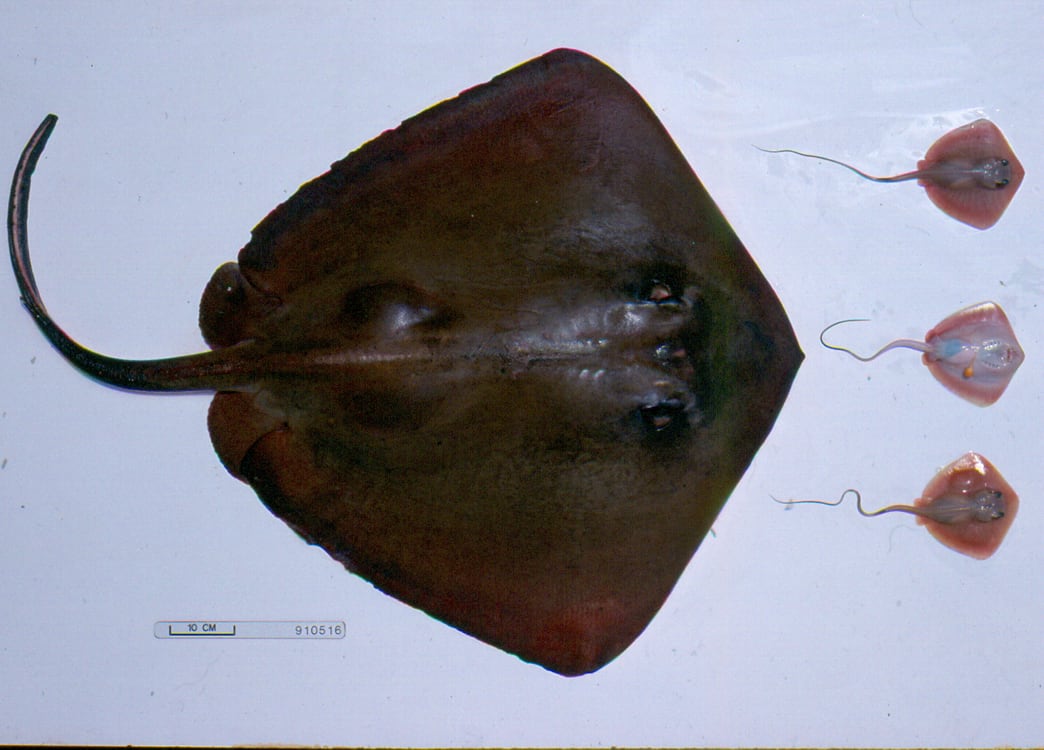
Taxonomy
- Kingdom
- Animalia
- Phylum
- Chordata
- Class
- Chondrichthyes
- Order
- Myliobatiformes
- Family
- Dasyatidae
- Genus
- Dasyatis
- Species
- Say
Habitat
Bluntnose stingrays inhabit shallow coastal waters, estuaries, and bays with sandy or muddy bottoms along the western Atlantic Ocean. They prefer warm, tropical to subtropical regions from the southeastern United States to northern South America. These areas provide ample cover and prey, allowing them to bury in the sediment.
Diet
Bluntnose stingrays primarily feed on bottom-dwelling invertebrates such as crabs, shrimp, worms, and small mollusks. They use their pectoral fins to stir up sediment and uncover prey, often foraging at night or in low-visibility conditions. This feeding behavior helps them avoid predators while maximizing food intake.
Behavior
Bluntnose stingrays are mostly solitary and spend much of their time buried in the sand to ambush prey or hide from threats. They are nocturnal feeders, becoming more active at night, and exhibit defensive behaviors like whipping their venomous tail when disturbed. During the day, they rest on the bottom and may migrate to deeper waters in response to temperature changes.
Conservation Status
Listed as Least Concern by IUCN.