
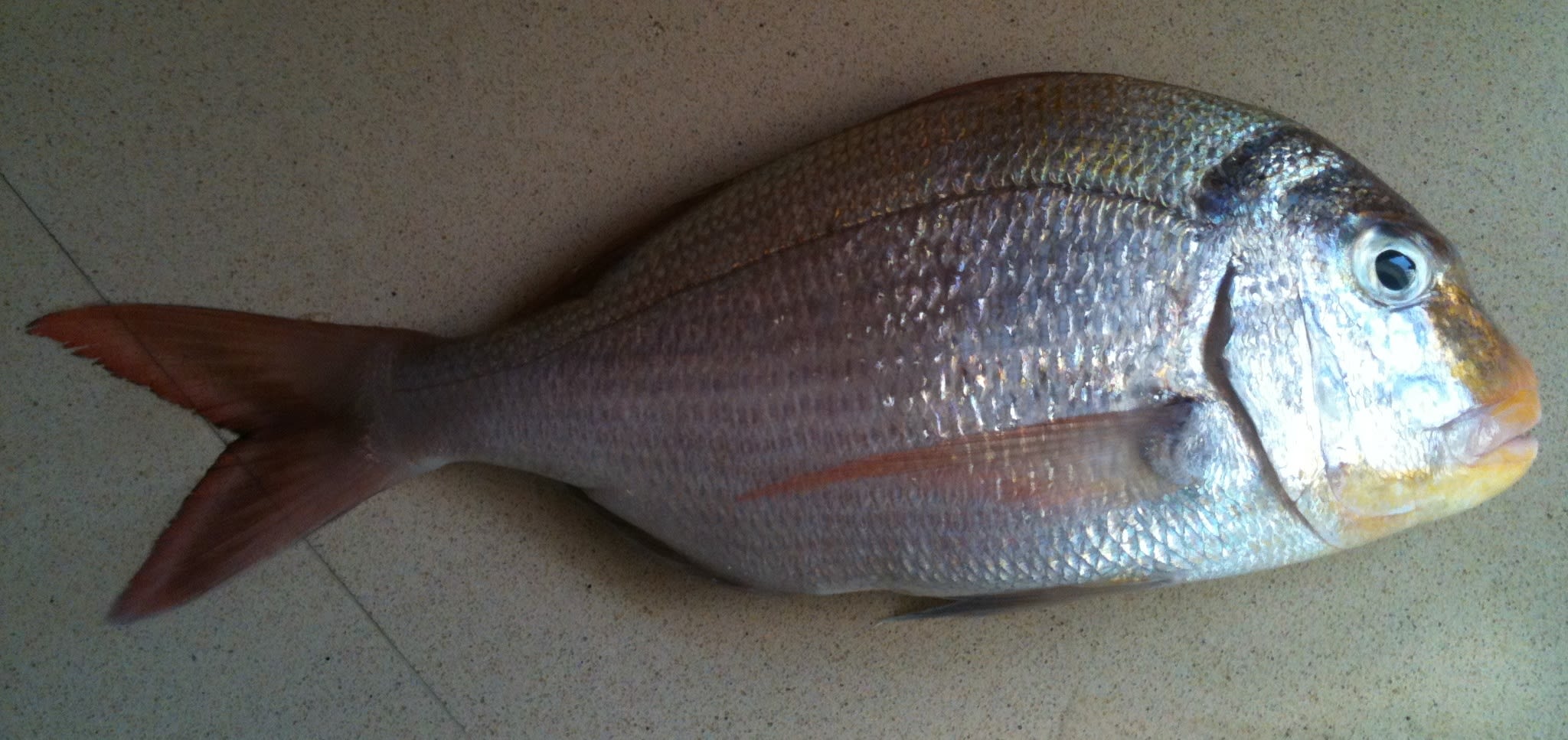
Taxonomy
- Kingdom
- Animalia
- Phylum
- Chordata
- Class
- Actinopterygii
- Order
- Siluriformes
- Family
- Sparidae
- Genus
- Pagrus
- Species
- caeruleostictus
Habitat
This species inhabits coastal waters of the Eastern Atlantic and Mediterranean, preferring rocky reefs, sandy bottoms, and areas with seagrass at depths from 10 to 200 meters. It is commonly found in temperate to subtropical regions, avoiding extremely deep or open ocean environments.
Diet
Bluespotted seabream primarily feeds on crustaceans like crabs and shrimp, as well as mollusks and small fish. They are opportunistic foragers, often hunting during the day in groups over the seabed. Feeding behavior includes picking at the substrate to uncover prey.
Behavior
Bluespotted seabream are schooling fish that form loose groups for protection and foraging, especially in open waters. They are diurnal, active during the day and resting in crevices at night, and exhibit territorial behavior around feeding areas. This species is known for its agility in navigating complex reef structures.
Fishing
Anglers targeting the Bluespotted seabream, a prized sport fish in the Atlantic and Mediterranean regions, should focus on bottom fishing techniques from boats or shorelines near rocky reefs, sandy bottoms, and seagrass beds at depths of 10-200 meters, where these schooling fish forage during the day. Use medium-weight tackle, such as a 7-9 foot rod with 20-30 lb test line, a sturdy reel, and circle hooks in sizes 2/0 to 4/0 to minimize injury during catch-and-release; effective baits and lures include live shrimp, crabs, or small fish imitations to match their diet of crustaceans and mollusks. The best seasons are spring and summer, coinciding with their spawning periods, when they're most active in the daytime, particularly around dawn and dusk for increased bites. The IGFA all-tackle world record for sea bream species stands at around 25 pounds 9 ounces, making it a thrilling target for trophy hunters. Conservation efforts, supported by angler license fees, ensure this Least Concern species remains stable through effective management tools like slot limits and catch-and-release practices in areas such as the Mediterranean, promoting healthy populations and protecting vital habitats.
Conservation Status
Listed as Least Concern by IUCN.