
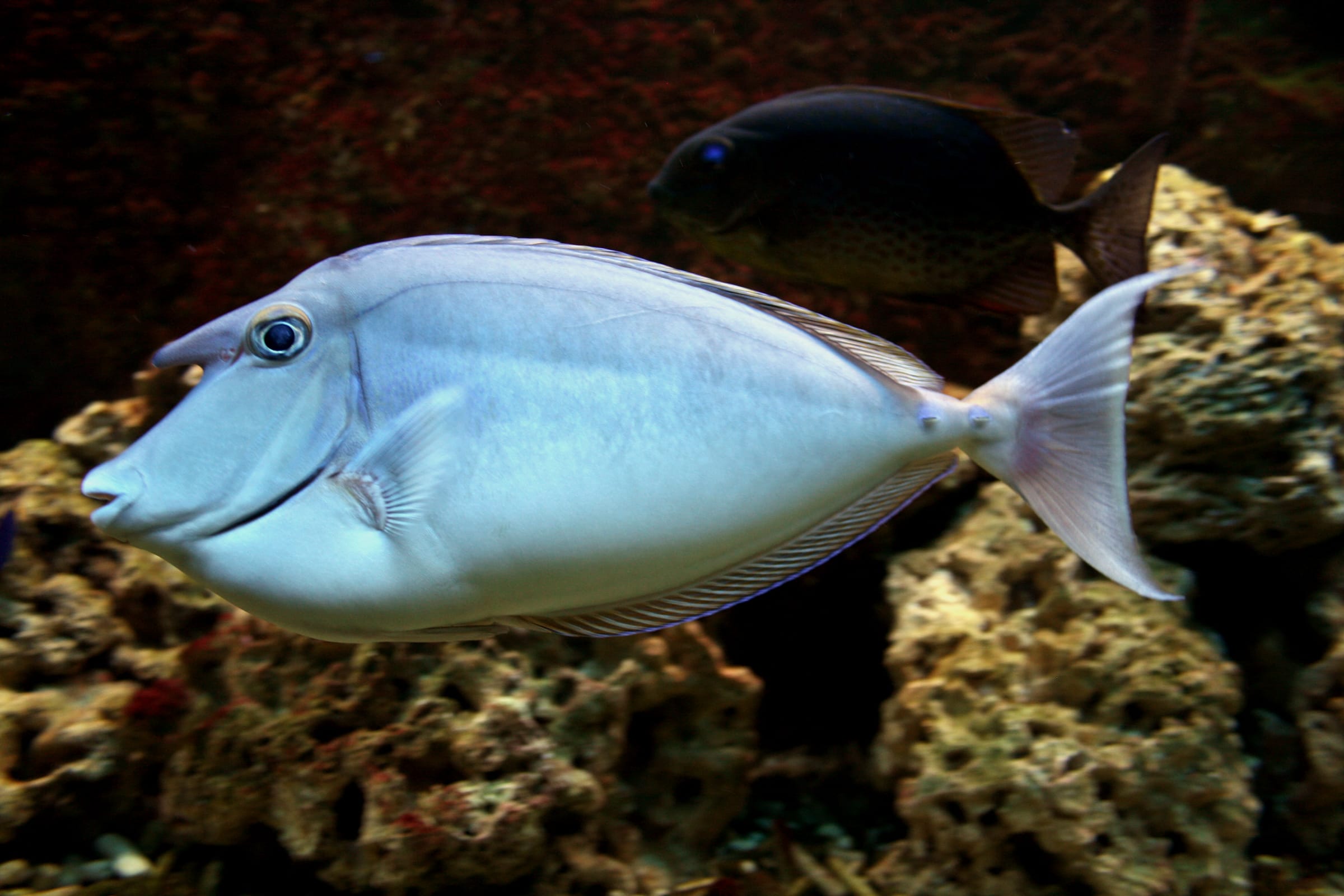
Taxonomy
- Kingdom
- Animalia
- Phylum
- Chordata
- Class
- Actinopterygii
- Order
- Anabantiformes
- Family
- Acanthuridae
- Genus
- Naso
- Species
- unicornis
Habitat
Bluespine unicornfish primarily inhabit coral reefs and rocky substrates in tropical and subtropical waters of the Indo-Pacific region. They are commonly found at depths of 5 to 30 meters, preferring areas with strong currents and abundant algae growth. These environments provide both shelter and food sources.
Diet
Bluespine unicornfish mainly feed on benthic algae, which they scrape from rocks and coral using their beak-like mouths. They are primarily herbivorous but may occasionally consume small invertebrates. Feeding activity peaks during the day when they actively graze in schools or pairs.
Behavior
Bluespine unicornfish are generally schooling fish, often forming groups in open water but becoming more solitary in feeding areas. They are diurnal, active during daylight hours for foraging and resting at night in crevices. They exhibit territorial behavior around food sources and use their spines for defense against threats.
Fishing
The Bluespine unicornfish, a popular target in tropical Indo-Pacific waters like Hawaii and Australia, offers rewarding recreational fishing that supports conservation through angler-funded programs and habitat protection. Target them using light tackle setups with medium-action rods and reels spooled with 10-20 pound test line, paired with circle hooks to minimize injury during catch-and-release; effective baits include seaweed, algae-based lures, or small crabs to mimic their herbivorous diet, while lures like soft plastics or jigs can entice strikes in current-swept areas. Best techniques involve bottom fishing from boats or shore in depths of 5-30 meters over coral reefs and rocky substrates with strong currents, where they school during the day—cast and retrieve slowly or use chumming to draw them in. The prime season runs from spring to summer when warmer waters boost their activity and spawning, with early morning or late afternoon being optimal times for bites as they actively forage. Anglers can expect fish up to 70 cm in length and weighing around 3 pounds, though IGFA records are not prominently established for this species. Conservation-wise, Bluespine unicornfish are managed under slot limits and catch-and-release practices in many regions to maintain healthy populations, ensuring sustainable fisheries that fund reef restoration and protect these vibrant ecosystems, as evidenced by their Least Concern status on the IUCN Red List.
Conservation Status
Listed as Least Concern by IUCN.