
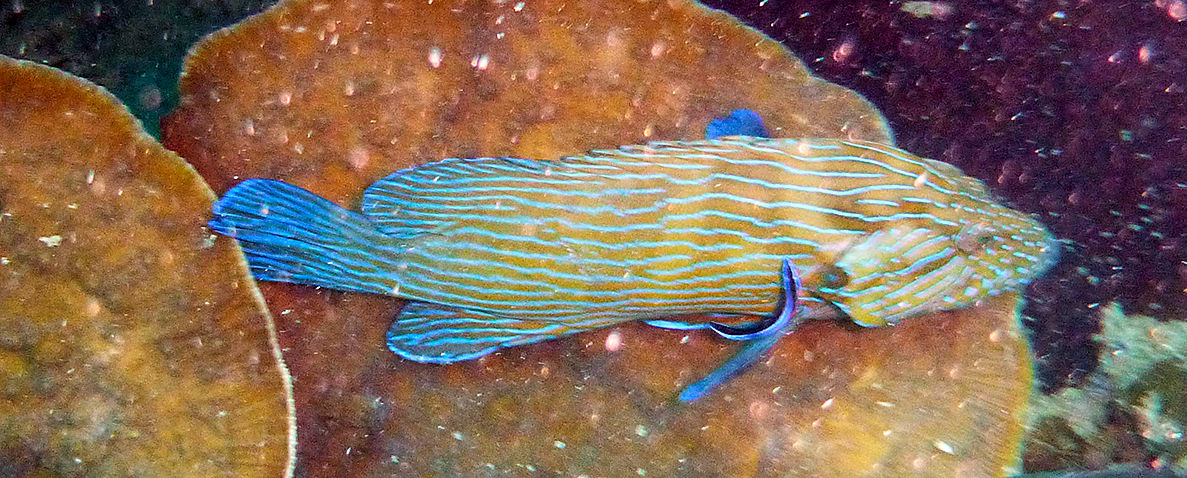
Taxonomy
- Kingdom
- Animalia
- Phylum
- Chordata
- Class
- Actinopterygii
- Order
- Scorpaeniformes
- Family
- Serranidae
- Genus
- Cephalopholis
- Species
- formosa
Habitat
This species inhabits coral reefs and rocky substrates in the Indo-Pacific region, from shallow coastal waters down to about 150 meters depth. It prefers areas with crevices and overhangs for shelter, commonly found in the Western Indian Ocean and Western Central Pacific around countries like Indonesia and Australia.
Diet
The Bluelined rockcod primarily feeds on small fishes, crustaceans, and occasionally octopuses. It employs an ambush feeding strategy, hiding among corals and striking quickly at prey, and is most active during the day.
Behavior
Bluelined rockcod are solitary and territorial, often defending a specific area of reef from intruders. They are diurnal, spending daylight hours hunting or resting on substrates, and retreat to crevices at night for protection. This species exhibits cautious behavior, quickly darting into hiding when threatened.
Fishing
Target the Bluelined rockcod, a prized reef fish in the Indo-Pacific, using effective bottom fishing techniques like dropping baited hooks or vertical jigging near coral reefs and rocky substrates to mimic its ambush predation on small fish and crustaceans; opt for medium-light spinning or conventional rods with 10-20 lb test line, a sturdy reel, and size 1/0 to 2/0 circle hooks to promote catch-and-release success and minimize injury. Use live bait such as shrimp, small fish, or crabs, or artificial lures like soft plastics and jigs that imitate prey for the best results. The prime season is year-round in tropical waters, with peak activity during warmer months for spawning and the best bites occurring in daylight hours when this diurnal species is most active; focus on depths from shallow coastal areas down to 150 meters around countries like Indonesia, Australia, and the Philippines, targeting crevices and overhangs where they hide. Record sizes reach up to 40 cm in length and 1 lb 8 oz, with no specific IGFA record noted, but anglers contribute to conservation by adhering to local regulations that ensure sustainable populations—such as slot limits and seasonal closures in some regions—which are vital management tools funded by fishing licenses, helping maintain healthy reef ecosystems and support habitat restoration programs through excise taxes.
Conservation Status
Listed as Least Concern by IUCN.