
Overview
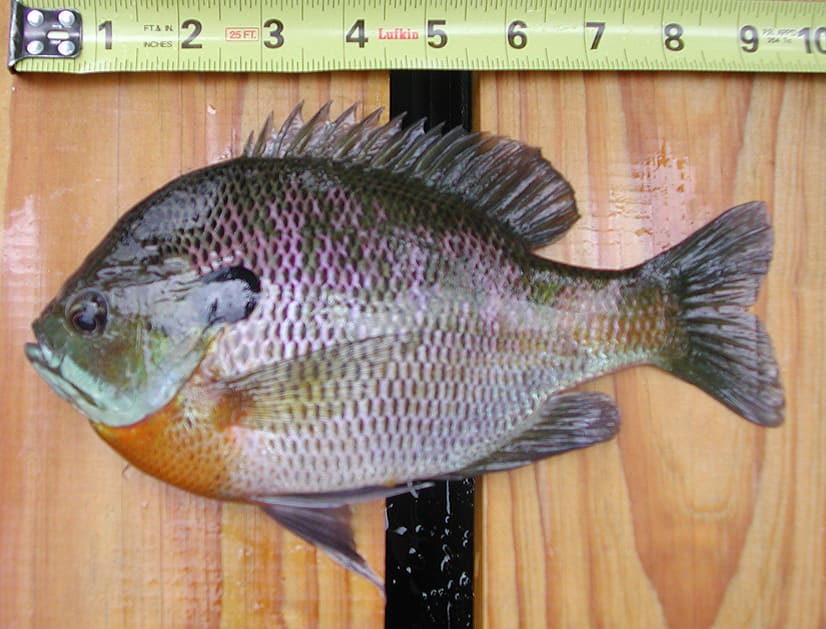
This specie is native to approximately the eastern half of the U.S.A.,Today, it is one of the most popular panfish species in North America. It has a greatly compressed, roundish (in profile) body that is typical of the sunfishes. Its color is highly variable and many range from dark blue or bluish purple to yellow, and in some cases (notably in quarry holes) it may even appear to be clear and colorless. Usually, there are 6 8 vertical bars on the sides, which may or may not be prominent. The gill cover (operculum) peaks into a broad, roundish flap that is black in color; however, it is not surrounded by a lighter colored trim as it is in some other sunfishes. It has the small mouth and head that are typical of sunfish species. The pectoral fins are pointed.
Taxonomy
- Kingdom
- Animalia
- Phylum
- Chordata
- Class
- Actinopterygii
- Order
- Cypriniformes
- Family
- Centrarchidae
- Genus
- Lepomis
- Species
- macrochirus
Habitat
Rivers, lakes, and ponds.
Diet
Young fish feed on plankton, but as they grow the diet shifts to aquatic insects and their larvae. Up to 50% of their diet may consist of midge larvae. These may include: Worms, Zooplankton, Snails, Minnows.
Behavior
Bluegills begin spawning when water temperatures reach about 70°F. Spawning may peak in May or June, but continues until water temperatures cool in the fall. Because of their long spawning season, bluegills have very high reproductive potential, which often results in overpopulation in the face of low predation or low fishing pressure. Nests are created in shallow water, one to two feet in depth. Gravel substrate is preferred. Fifty or more nests may be crowded into a small area, thus creating a spawning bed. Males guard the nest until the eggs hatch and fry leave.
Fishing
Although less than one percent of licensed Texas anglers say they prefer to catch sunfish, bluegill and other sunfish are nevertheless a vital part of many freshwater fisheries nationwide, including Texas. Many pre-license age anglers begin their fishing careers by bank fishing for bluegills and other sunfish. Bluegills provide plenty of fight, pound for pound.
Conservation Status
Listed as Least Concern by IUCN.