
Overview
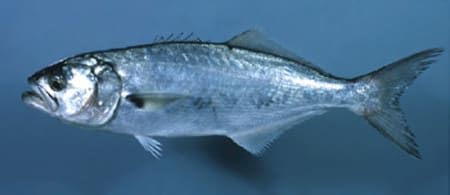
The bluefish is one of only three species of the family Pomatomidae.The mouth has extremely sharp teeth. The existence of a spine in the second dorsal fin, the absence of head markings, and the lack of an interspace between the dorsal fins distinguish the bluefish from the similar looking greater amberjack, Seriola dumerili. The bluefish's lack of finlets immediately distinguishes it from the mackerels. The voracious bluefish richly deserves the nicknames “marine piranha” and ”chopper” because it swims in large schools through shoals of bait fish, slashing and destroying everything in its path. They will bite anything, including unlucky swimmers. Bluefish can easily inflict serious wounds even when the fish is out of water; as many a careless fisherman has learned.
Taxonomy
- Kingdom
- Animalia
- Phylum
- Chordata
- Class
- Actinopterygii
- Order
- Perciformes
- Family
- Pomatomidae
- Genus
- Pomatomus
- Species
- saltatrix
Habitat
Bluefish inhabit both inshore and offshore areas of coastal regions in temperatures ranging from 66 to 72 degrees F, with the young fish (first year of life) called snappers often frequent estuaries and river mouths. This species normally travel in large schools which may contain up to several thousand individuals.
Diet
Bluefish primarily feed on small fish such as menhaden, sardines, anchovies, and herring, as well as squid and shrimp. They are aggressive predators that hunt in schools, using their sharp teeth to slash through schools of prey. Feeding is most active during dawn and dusk when they chase down baitfish with high speed.
Behavior
Bluefish form large, fast-moving schools that migrate seasonally along coastlines, often traveling long distances. They exhibit aggressive and predatory behavior, particularly when feeding, where they relentlessly pursue and attack schools of smaller fish. These fish are diurnal, most active during the day, and can become territorial in prime feeding areas, sometimes biting at non-food items like fishing lines or even swimmers.
Fishing
Some anglers “sniff out” bluefish by their smell, which is something like fresh cucumbers. Fishing methods include trolling, chumming, casting, jigging, and live and dead bait fishing from boats, shores or piers. Live baits are best, but plugs, lures or feathers are also used. The flesh tends to become soft if not eaten soon after capture. It does not keep well if frozen.
Conservation Status
Listed as Vulnerable by IUCN.