
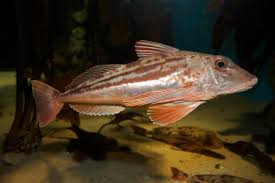
Taxonomy
- Kingdom
- Animalia
- Phylum
- Chordata
- Class
- Chondrichthyes
- Order
- Rhinopristiformes
- Family
- Rhinobatidae
- Genus
- Chelidonichthys
- Species
- kumu
Habitat
Bluefin gurnards inhabit coastal waters and continental shelves, preferring sandy or muddy substrates in depths from 10 to 200 meters. They are commonly found in the Indo-Pacific region, including areas around New Zealand, Australia, and South Africa, often near reefs or estuaries.
Diet
Bluefin gurnards primarily feed on benthic invertebrates such as crabs, shrimp, and worms, which they detect and uncover using their sensitive pectoral fins. They are opportunistic hunters, often foraging at night or during low light conditions to ambush prey on the seafloor.
Behavior
Bluefin gurnards are solitary or found in small groups, spending most of their time buried in sand or mud to ambush prey. They exhibit territorial behavior when feeding, using their pectoral fins to probe the substrate, and are generally nocturnal to avoid daytime predators. These fish are not highly migratory but may move seasonally with water temperatures.
Fishing
Target Bluefin gurnard with bottom fishing techniques, such as drifting or anchoring over sandy or muddy substrates, using light to medium tackle including a 6-10 foot rod, 10-20 lb test line, and a simple bottom rig with a sinker to keep bait on the seafloor; effective baits include shrimp, worms, or small crabs to mimic their diet of benthic invertebrates, while jigs or soft plastic lures that imitate prey can also work well. The best season is summer during warmer months when they spawn, with optimal fishing times at night or during low light periods like dawn and dusk when they are most active and foraging. Focus on coastal waters and continental shelves in depths of 10 to 200 meters around regions like New Zealand, Australia, South Africa, and the Indo-Pacific, particularly near reefs or estuaries where they bury themselves in the substrate. Record sizes reach up to 70 cm in length and 2 lbs 15 oz, with IGFA records for related gurnard species highlighting the potential for trophy catches. Conservation-wise, Bluefin gurnard are listed as Least Concern by the IUCN, and angler-funded programs through license fees support habitat restoration and regulated fishing practices, such as slot limits in some areas, to ensure sustainable populations and protect these fish as part of broader aquatic conservation efforts.
Conservation Status
Listed as Least Concern by IUCN.