
Overview
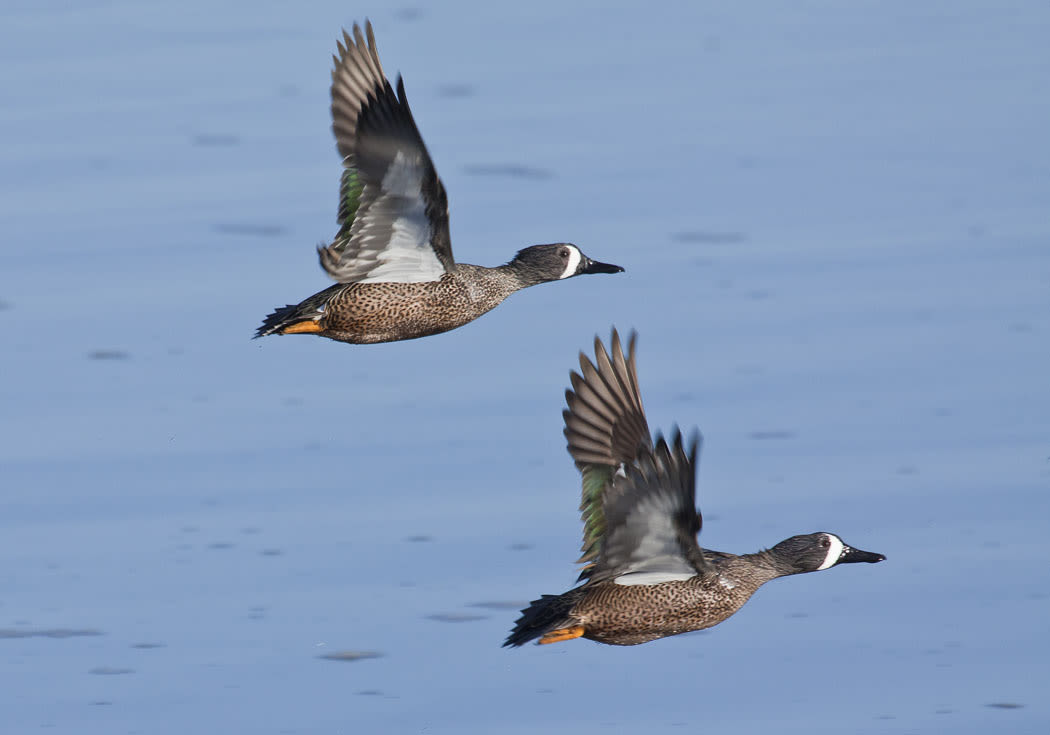
The Blue-winged Teal is another small dabbling species that is closely linked to the Green-winged Teal and Cinnamon Teal. These ducks average 16 inches with an average weight of 15 ounces. A white facial crest between the bill and eyes can easily identify the drake. They have a spotted breast, blue wing patch, and a green wing patch with a black rear. The hen has a dark eye line and a brown tan body. The male Blue-wing will make a high-pitched “Tsee-Tsee” or laughing sound. They are found primarily in wetland grass fields, shallow marshes, slews, and temporarily ponds. While down in the wintering grounds they feed on aquatic plants, seeds, and aquatic animals.
Taxonomy
- Kingdom
- Animalia
- Phylum
- Chordata
- Class
- Bird
- Family
- Anatidae
- Genus
- Anas
- Species
- discors
Habitat
The Blue-wing Teal can be found during breeding time up in the Northern prairies and parklands of North America. When winter pressures arrive up in the prairies, the Blue-wing will be the first to head south. These birds winter in Florida, Texas-Coast, and Mexico. When spring arrives, the Blue-wing Teal is the last duck to head back up north for breeding. One interesting fact is that the female will change nesting/breeding sites every year based upon the climate. These birds, like the Green-wing Teal, fly in tight cluster groups and low to the water skimming right over the top.
Diet
Blue-winged teal are surface feeders and prefer to feed on mud flats, in fields, or in shallow water where there is floating and shallowly submerged vegetation plus abundant small aquatic animal life. They mostly eat vegetative matter consisting of seeds or stems and leaves of sedge, grass, pondweed, smartweed (Polygonum spp.), duckweed (Lemna spp.), Widgeongrass, and muskgrass (Chara spp.). The seeds of plants that grow on mud flats, such as nutgrass (Cyperusspp.), smartweed, millet (Panicum spp.), and Rice Cut-grass (Leersia oryzoides), are avidly consumed by this duck. One-fourth of the food consumed by blue-winged teal is animal matter such as mollusks, crustaceans, and insects.
Behavior
Blue-winged teal are generally the first ducks south in the fall and the last ones north in the spring. Adult drakes depart the breeding grounds well before adult hens and immatures. Most blue-winged teal flocks seen after mid-September are composed largely of adult hens and immatures. The northern regions experience a steady decline in blue-winged teal populations from early September until early November. Blue-winged teal in central migration areas tend to remain through September, then diminish rapidly during October, with small numbers remaining until December. Large numbers of blue-winged teal appear on wintering grounds in Florida, Louisiana, and Texas in September.
Hunting
Typically hunted with a 12 ga shotgun. Shot size #2-4 is sufficient. Effectively hunted with decoys and calling. Dogs are used for bird retrieval. Steel shot is required for waterfowl in the United States.
Conservation Status
Listed as Least Concern by IUCN.