
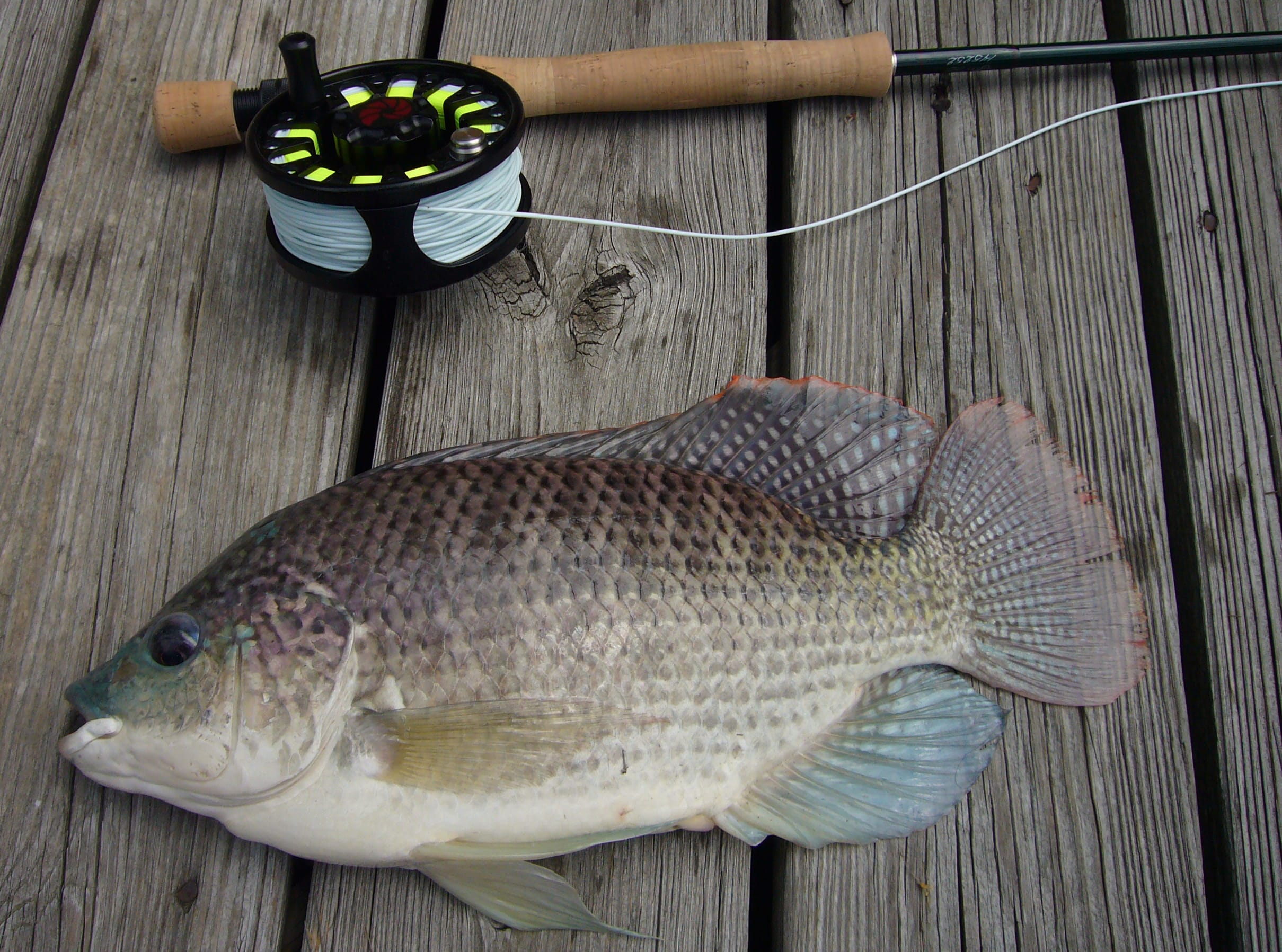
Taxonomy
- Kingdom
- Animalia
- Phylum
- Chordata
- Class
- Actinopterygii
- Order
- Esociformes
- Family
- Cichlidae
- Genus
- Oreochromis
- Species
- aureus
Habitat
Blue tilapia primarily inhabit warm, freshwater environments such as rivers, lakes, reservoirs, and ponds with abundant vegetation. They prefer temperatures above 20°C and are often found in shallow, slow-moving waters with muddy or sandy substrates. In introduced regions like the southern United States, they adapt to man-made habitats like canals and aquaculture ponds.
Diet
Blue tilapia are omnivorous, feeding on algae, aquatic plants, detritus, insects, and small invertebrates or fish. They exhibit filter-feeding behavior, scraping food from surfaces or the water column, and are most active feeders during the day in schools. Their adaptable diet allows them to thrive in various environments by exploiting available resources.
Behavior
Blue tilapia are social fish that form schools, particularly juveniles, and become more territorial during breeding seasons when males defend nesting sites. They are diurnal, actively foraging during the day and resting in groups at night, and exhibit parental care with males guarding eggs and fry. This species is known for its adaptability, quickly colonizing new areas and outcompeting native species for resources.
Fishing
Blue tilapia provide excellent recreational fishing opportunities in introduced regions like the southern United States, particularly Florida, where angling helps manage invasive populations and supports conservation efforts through license fees that fund habitat restoration and protect native species. Use effective techniques such as bottom fishing, casting with small jigs, or trolling in shallow waters, focusing on schools near vegetation. Opt for light to medium tackle, including a 6-8 foot spinning rod with 6-12 lb test monofilament line and a basic freshwater reel for easy casting and hook sets; pair this with hooks sized 6-10 and bobbers for live bait presentations. Recommended baits and lures include live worms, small minnows, bread balls, or artificial options like soft plastics and spinnerbaits that imitate their diet of insects, algae, and small invertebrates. The best seasons are spring through fall when water temperatures are above 20°C, with prime fishing during daylight hours when they actively feed in schools. Target them in warm freshwater habitats such as lakes, reservoirs, rivers, canals, and ponds with abundant vegetation and muddy substrates, especially in Florida's waterways where they thrive. The IGFA all-tackle world record for blue tilapia stands at 9 pounds 9 ounces, highlighting their impressive size potential. In areas like Florida, regulations promote harvest to control invasive spreads, ensuring healthy aquatic ecosystems through angler-supported programs that maintain balanced populations and enhance conservation outcomes.
Conservation Status
Listed as Not Evaluated by IUCN.