
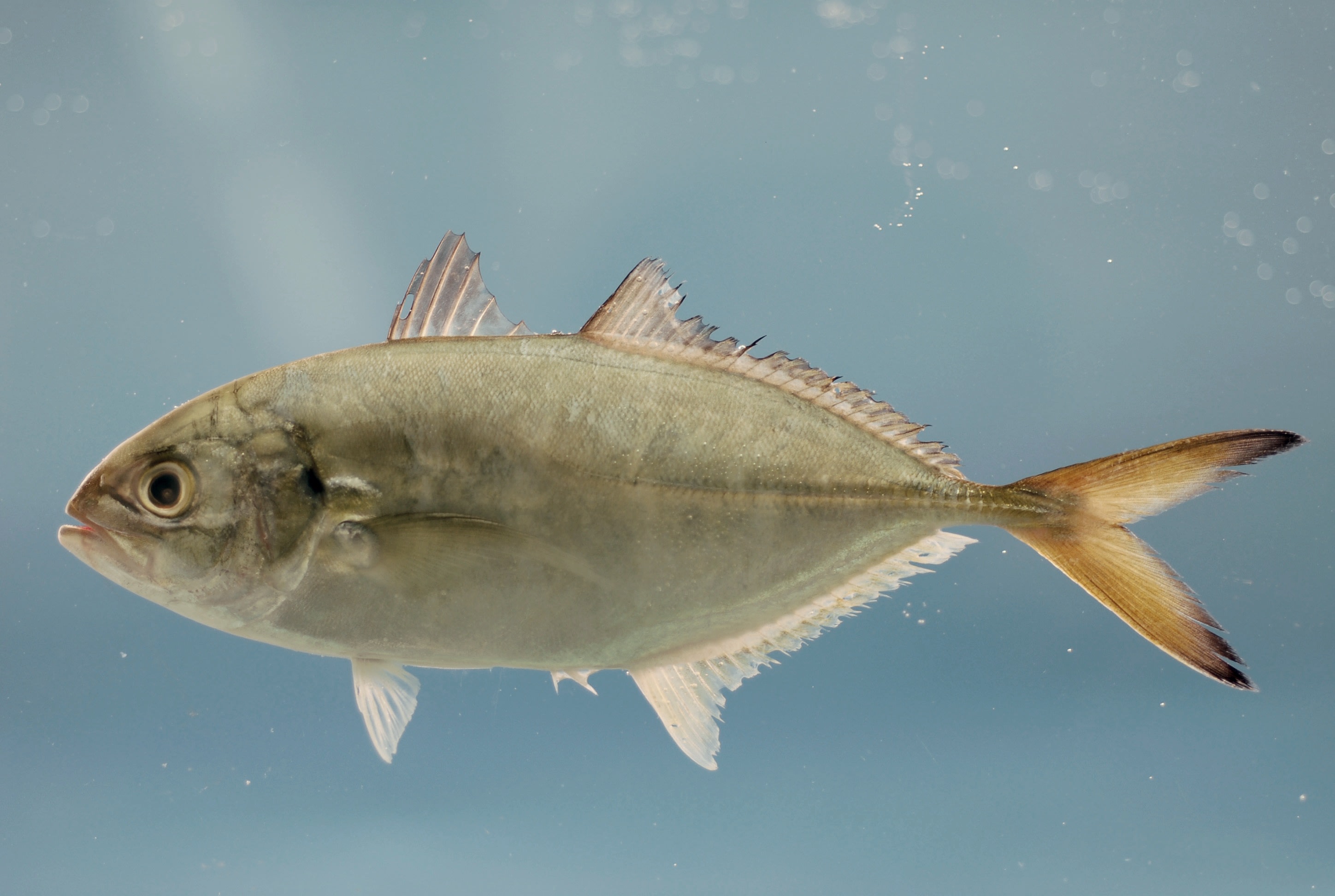
Taxonomy
- Kingdom
- Animalia
- Phylum
- Chordata
- Class
- Actinopterygii
- Order
- Cichliformes
- Family
- Carangidae
- Genus
- Caranx
- Species
- crysos
Habitat
Blue runners primarily inhabit coastal waters, including reefs, bays, and estuaries in tropical and subtropical regions. They prefer depths from near the surface down to about 100 meters and are often found over sandy or rocky bottoms. Their range extends across the Atlantic Ocean, from the eastern United States to Brazil and into the Mediterranean.
Diet
Blue runners are predatory fish that feed mainly on smaller fish such as anchovies and sardines, as well as squid and shrimp. They hunt in schools, using speed and agility to chase down prey, and are most active during the day. Feeding often occurs near the surface or around structures like reefs.
Behavior
Blue runners are highly social fish that form large schools for protection and hunting, often swimming at high speeds in open water. They exhibit migratory behavior, moving inshore during warmer months and offshore in winter, and are known for their agility and quick responses to threats. These fish are diurnal, being most active during daylight hours, and can be territorial around feeding areas.
Fishing
Blue runners are a popular sport fish in the Atlantic, from the U.S. East Coast to the Mediterranean, offering exciting action for anglers and supporting conservation through license fees that fund habitat protection and research. Target them using fast-paced techniques like trolling with diving plugs or spoons, casting jigs, or live bait fishing to mimic their prey such as anchovies and sardines, which triggers aggressive strikes from these schooling predators. Opt for medium-light spinning or baitcasting tackle with 10-20 pound test line, a sensitive rod for detecting bites, and hooks sized 2/0 to 4/0 to handle their speed and strength without excessive gear that could harm fish during catch-and-release. The best seasons are summer and early fall when they move inshore to warmer coastal waters, reefs, bays, and estuaries at depths of 10 to 100 meters over sandy or rocky bottoms, with peak activity during daylight hours when they're actively hunting schools of smaller fish. For optimal results, focus on areas with structure like wrecks or drop-offs in regions such as Alabama's Dauphin Island or the Northeast Atlantic, where they form large schools. The IGFA all-tackle world record stands at 11 pounds 2 ounces, caught in 2011 off Florida, showcasing their potential size. Conservation-wise, blue runners are managed under effective programs like slot limits and bag restrictions in many areas, which help maintain stable populations rated as Least Concern by the IUCN, ensuring sustainable fishing that bolsters waterway health through angler-funded initiatives.
Conservation Status
Listed as Least Concern by IUCN.