
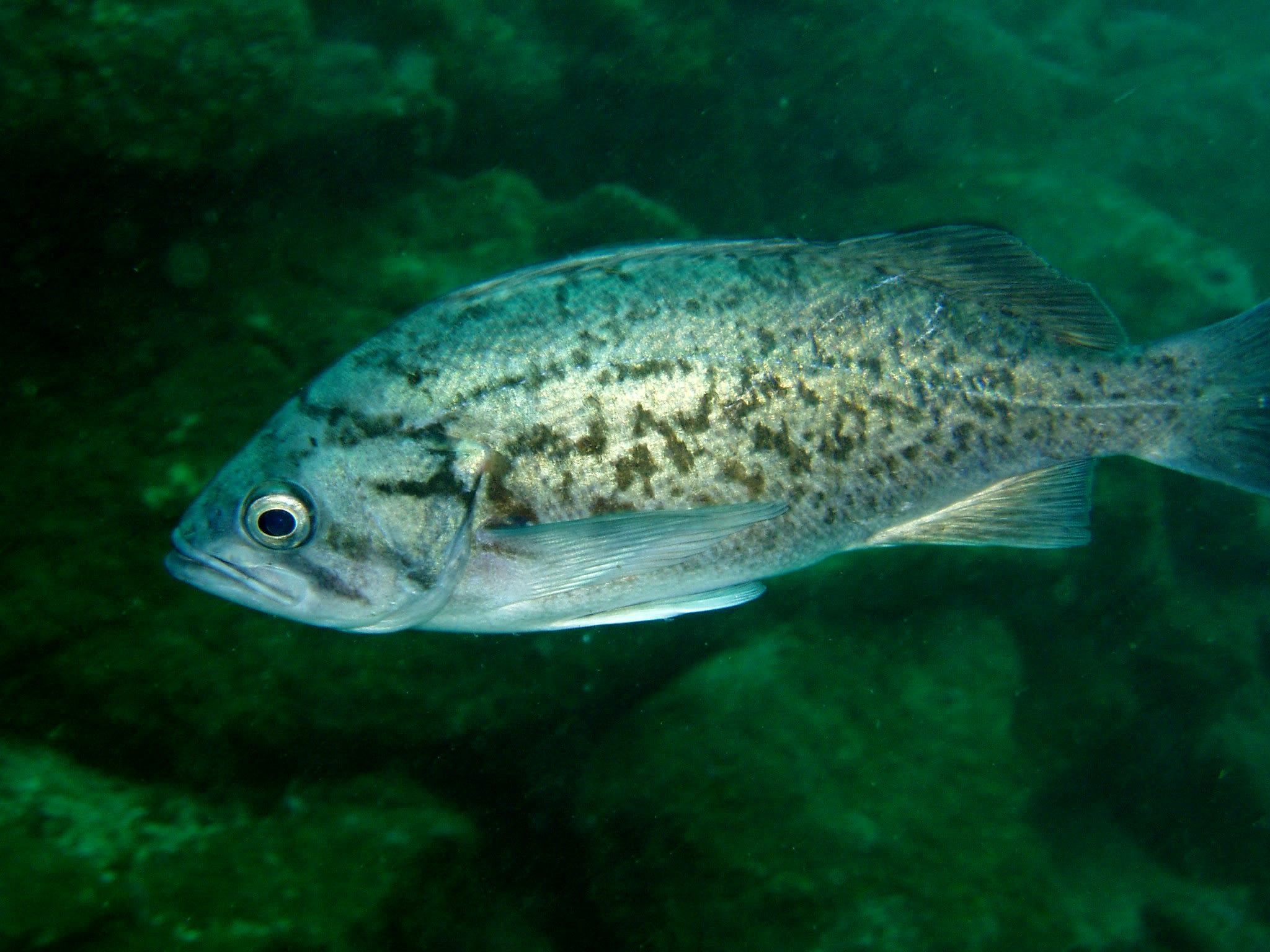
Taxonomy
- Kingdom
- Animalia
- Phylum
- Chordata
- Class
- Actinopterygii
- Order
- Salmoniformes
- Family
- Sebastidae
- Genus
- Sebastes
- Species
- mystinus
Habitat
Blue rockfish primarily inhabit rocky reefs, kelp forests, and underwater structures in the eastern Pacific Ocean, from Alaska to Baja California. They prefer depths of 10 to 300 meters where there are ample crevices for shelter. These areas provide protection from currents and predators while offering access to food sources.
Diet
Blue rockfish feed mainly on small fish such as anchovies and lanternfish, as well as squid and crustaceans like shrimp and crabs. They are ambush predators that lie in wait among rocks and strike quickly at prey. Feeding is most active during dawn and dusk when visibility is low.
Behavior
Blue rockfish form loose schools for protection, often hovering near rocky structures during the day and becoming more active at night. They exhibit territorial behavior around their preferred habitats, defending feeding areas from intruders. These fish are generally cautious and may flee from disturbances like boats or divers, but they can be curious in less threatening situations.
Fishing
Blue rockfish are a prized sport fish in the eastern Pacific, from Alaska to Baja California, where recreational fishing plays a key role in conservation by funding habitat restoration and population monitoring through license fees and excise taxes. Employ bottom fishing or vertical jigging techniques to target these ambush predators effectively, using medium-heavy rods (7-9 feet) with reels spooled in 20-50 pound test line to handle depths of 10 to 300 meters in rocky reefs, kelp forests, and underwater structures—focus on areas with crevices for shelter, such as those off Vancouver Island, the Aleutian Islands, or California's coast. Use live baits like anchovies, squid, or shrimp, or artificial lures that mimic small fish and crustaceans to entice strikes, especially during dawn and dusk when feeding is most active; prime seasons run from spring through fall, with summer offering the best opportunities due to warmer waters and increased prey availability. The IGFA all-tackle world record is 8 pounds 6 ounces, highlighting the species' impressive size potential. Special regulations, such as bag limits and slot sizes in regions like California and Alaska, serve as effective management tools to sustain healthy populations, encouraging catch-and-release practices that align with angler-funded programs protecting these vital marine ecosystems.
Conservation Status
Listed as Not Evaluated by IUCN.