
Overview
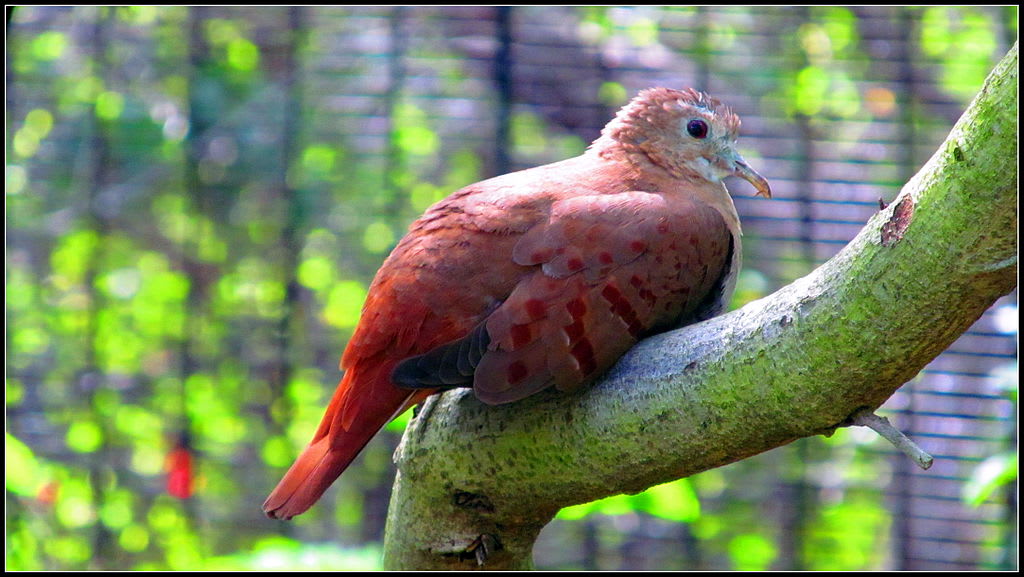
Adult males have blue-grey upperparts and paler grey underparts, becoming grey-white on the face. The flight feathers and outer tail feathers are blackish, and the wings are boldly spotted black (these spots often forming distinct bands). The iris is red or yellow, the bare eyering is green, and the legs are flesh-pink. The female has a grey-brown head neck and breast, becoming pale blue-grey on the underwings and belly. The back is ruddy brown, contrasting with the chestnut rump and tail. The spots in the wings are chestnut-brown. Young birds resemble the female, but have ruddy scaling on the back.
Taxonomy
- Kingdom
- Animalia
- Phylum
- Chordata
- Class
- Bird
- Family
- Columbidae
- Genus
- Claravis
- Species
- pretiosa
Habitat
The blue ground dove is relatively common in open woodland, forest edges, clearings and roadsides, especially in more humid areas.
Diet
They feed mainly on the ground on seeds and small insects, and take grit.
Behavior
Blue ground doves occur singly, in pairs or sometimes in small groups.
Hunting
This is species is typically hunted while passing over. A hunter will strategically place themself in between feed, water, or a roost to get a shot at the bird. Sometimes decoys are used to make the bird feel more comfortable.
Conservation Status
Listed as Least Concern by IUCN.