
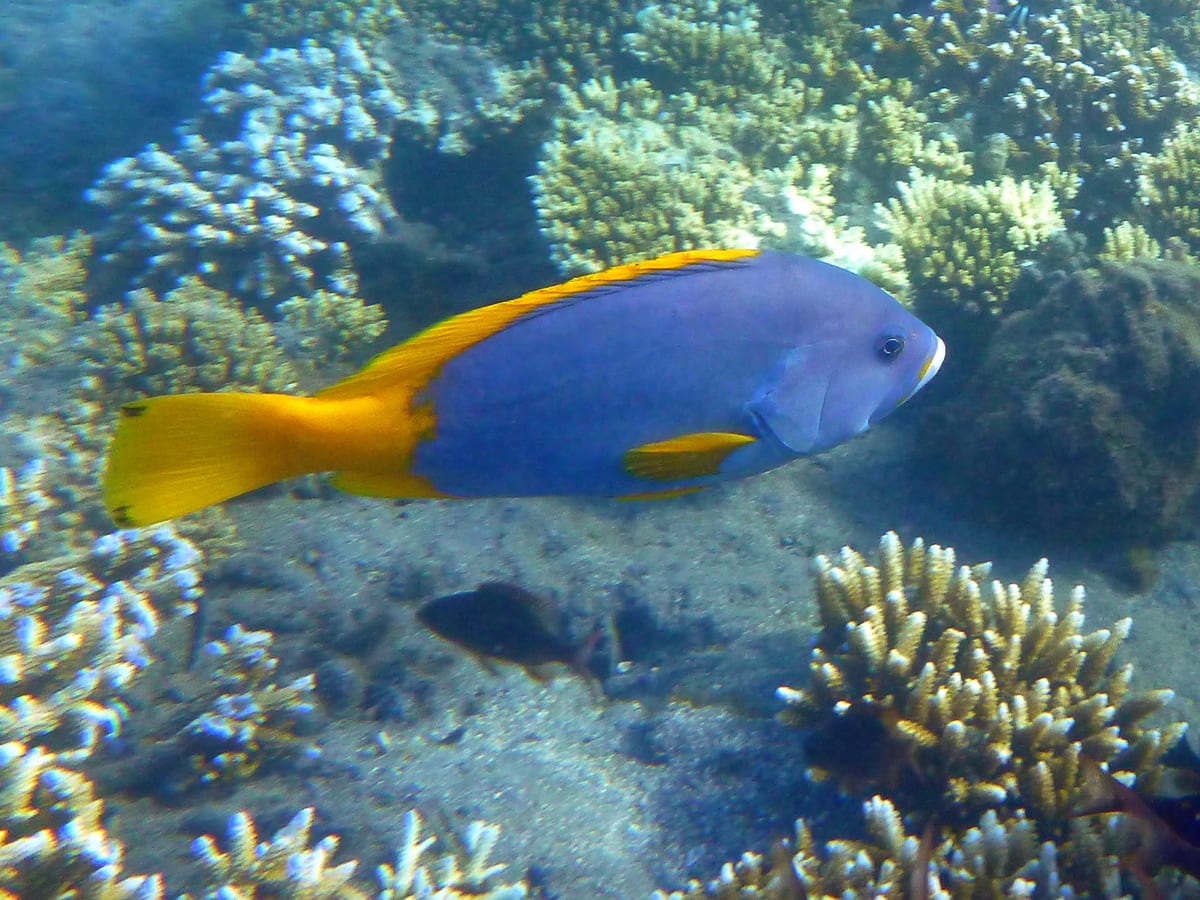
Taxonomy
- Kingdom
- Animalia
- Phylum
- Chordata
- Class
- Actinopterygii
- Order
- Scorpaeniformes
- Family
- Serranidae
- Genus
- Epinephelus
- Species
- flavocaeruleus
Habitat
This species inhabits coral reefs, rocky substrates, and lagoon areas in the Indian Ocean, typically at depths of 10 to 150 meters. It prefers warm tropical waters with good visibility and structure for hiding, such as caves and overhangs. Geographic preferences include regions around East Africa, India, and the Maldives.
Diet
The blue-and-yellow grouper primarily feeds on small fish, crustaceans like crabs and shrimp, and occasionally cephalopods such as squid. It employs an ambush strategy, lying in wait among corals before darting out to capture prey, and is most active during the day. Feeding occurs opportunistically throughout its habitat.
Behavior
Blue-and-yellow groupers are solitary and territorial, often claiming specific reef areas and defending them from intruders. They are diurnal, spending nights hidden in crevices and actively hunting during the day, with behaviors including color changes for camouflage. These fish are generally cautious around divers but can be curious if undisturbed.
Fishing
The blue-and-yellow grouper is a popular sport fish in the Indian Ocean, offering exciting challenges for anglers with its ambush predator behavior; target them using bottom fishing, jigging, or trolling techniques around coral reefs and rocky structures to mimic their natural prey. Use medium to heavy spinning or conventional rods with 20-50 lb test line, sturdy reels, and circle hooks for ethical hooksets, paired with live baits like shrimp, squid, or small fish, or artificial lures such as jigs and soft plastics to entice strikes in deeper waters. The best season runs from November to March during warmer months when spawning activity peaks, with optimal times at dawn and dusk for increased feeding; focus on habitats in depths of 10 to 150 meters around East Africa, the Maldives, Seychelles, and India, where they hide in caves and overhangs. Record sizes reach up to 90 cm and 7 lbs 14 oz, underscoring their appeal, with IGFA records helping track impressive catches. As a Least Concern species, conservation is bolstered by angler-funded programs that enforce effective management tools like slot limits and catch-and-release in many areas, ensuring sustainable populations and protecting vital reef ecosystems through regulated fishing practices.
Conservation Status
Listed as Least Concern by IUCN.