
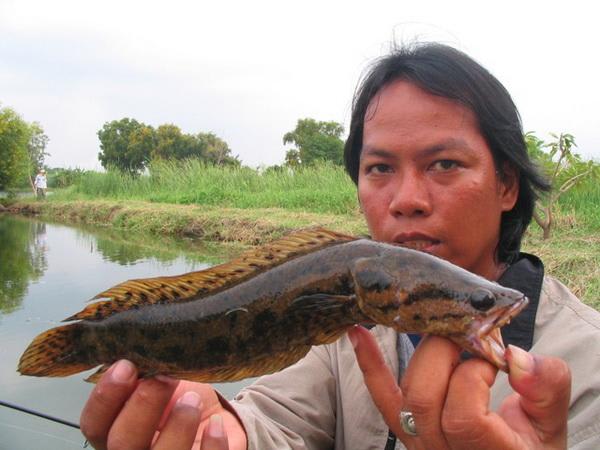
Taxonomy
- Kingdom
- Animalia
- Phylum
- Chordata
- Class
- Actinopterygii
- Order
- Cypriniformes
- Family
- Channidae
- Genus
- Channa
- Species
- maculata
Habitat
Blotched snakeheads inhabit freshwater environments such as rivers, lakes, ponds, and swamps in Southeast Asia, preferring slow-moving or stagnant waters with dense vegetation for cover. They are also found in introduced ranges like the United States, where they thrive in similar warm, vegetated habitats.
Diet
This species primarily feeds on small fish, frogs, insects, and crustaceans, using its ambush tactics to capture prey. It is an opportunistic predator that hunts during the day, often lurking in vegetation before striking quickly.
Behavior
Blotched snakeheads are solitary and territorial, particularly during breeding when they aggressively defend their nests. They exhibit air-breathing capabilities, allowing them to survive in oxygen-poor waters or briefly move on land. This species is generally nocturnal but can be active during the day in low-light conditions.
Fishing
Target Blotched snakeheads, an aggressive invasive species in areas like the United States, using effective ambush-style techniques such as casting topwater lures, soft plastics, or live baits to mimic their natural prey like small fish and frogs; focus on slow retrieves near cover to trigger strikes. Use medium-heavy spinning or baitcasting rods with 10-20 lb test monofilament or braided line, paired with size 2/0 to 4/0 hooks and reels that handle sudden runs, opting for lures like buzzbaits, spinnerbaits, or live minnows for the best results. The prime seasons are spring and summer in warmer months when they are more active, with optimal times being early morning or late evening in low-light conditions; always check local regulations for specific closed seasons that serve as effective management tools. Focus on freshwater habitats like vegetated rivers, lakes, ponds, and swamps in Southeast Asia or introduced ranges, where targeting them in dense cover helps control populations and supports conservation efforts. Record sizes reach up to 6 pounds 10 ounces and 60 cm, with fishing playing a key role in invasive species management through angler-funded programs that protect native waterways and promote sustainable practices like catch-and-release to maintain balanced ecosystems.
Conservation Status
Listed as Least Concern by IUCN.