
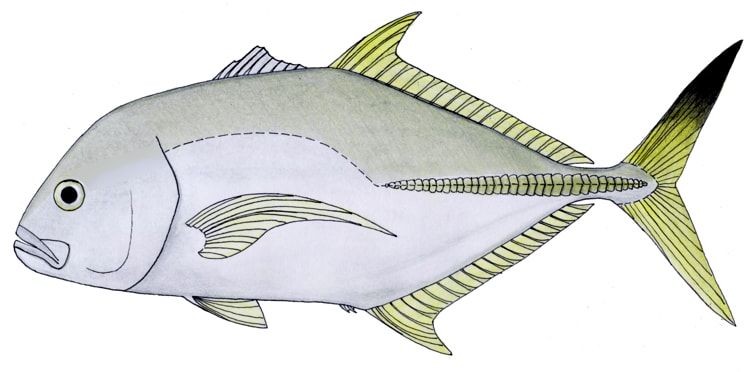
Taxonomy
- Kingdom
- Animalia
- Phylum
- Chordata
- Class
- Actinopterygii
- Order
- Cichliformes
- Family
- Carangidae
- Genus
- Caranx
- Species
- heberi
Habitat
Blacktip trevally inhabit coastal waters, coral reefs, and lagoons in the Indian and western Pacific Oceans. They prefer depths from 10 to 100 meters and are often found around rocky or coral structures. This species avoids very shallow or turbid waters.
Diet
Blacktip trevally primarily feed on smaller fish such as sardines and anchovies, as well as crustaceans and cephalopods. They hunt in schools during the day, using speed and agility to chase down prey. Feeding activity peaks at dawn and dusk in their habitats.
Behavior
Blacktip trevally are schooling fish that form groups for protection and coordinated hunting. They are diurnal, active during the day, and exhibit territorial behavior around feeding sites. This species is known for its fast swimming and agility, making it challenging to approach.
Fishing
Target Blacktip Trevally with trolling or casting techniques using medium-heavy spinning or baitcasting outfits for their powerful runs and acrobatic fights, which make them a thrilling sport fish that supports conservation through angler participation in license programs funding habitat protection in the Indian Ocean regions. Use 20-30 lb test line on rods with fast action and reels with strong drag systems to handle their speed in depths of 10-100 meters around coral reefs, rocky structures, and lagoons; effective baits and lures include live sardines, anchovies, or metal jigs and spoons that mimic their primary prey of smaller fish and crustaceans, cast during dawn and dusk when their feeding peaks for the best strikes. The best seasons are year-round in tropical areas like the Western Indian Ocean, Mozambique, and the Persian Gulf, with increased activity in warmer months; focus on areas with clear waters and structure to avoid their preference for avoiding turbid shallows, enhancing sustainable fishing practices. The IGFA all-tackle record stands at around 18 pounds 1 ounce, caught in the Indian Ocean, showcasing the species' impressive size potential. As a Least Concern species per IUCN, Blacktip Trevally benefits from angler-funded conservation efforts, including catch-and-release guidelines and slot limits in some regions, which help maintain healthy populations and protect vital coral habitats through regulated fishing that bolsters waterway restoration programs.
Conservation Status
Listed as Least Concern by IUCN.