
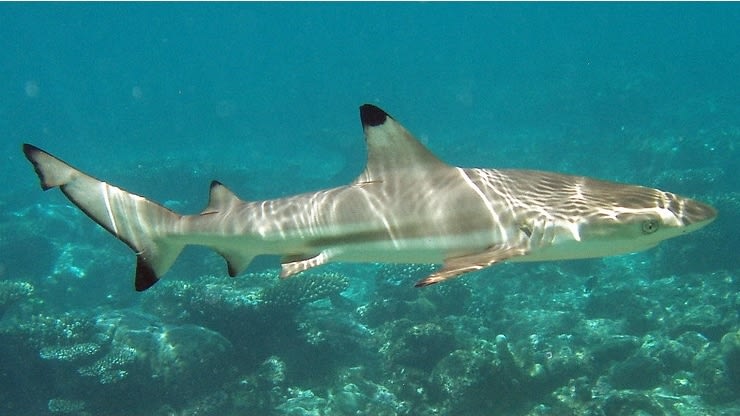
Taxonomy
- Kingdom
- Animalia
- Phylum
- Chordata
- Class
- Chondrichthyes
- Order
- Carcharhiniformes
- Family
- Carcharhinidae
- Genus
- Carcharhinus
- Species
- melanopterus
Habitat
Blacktip reef sharks primarily inhabit shallow coral reefs, lagoons, and sandy flats in tropical and subtropical waters. They prefer coastal areas with depths up to 100 meters in the Indian and Pacific Oceans, often near islands and atolls where they can find shelter and abundant prey. These sharks are adaptable but are most commonly associated with warm, clear waters.
Diet
Blacktip reef sharks mainly feed on small fish such as mullets, sardines, and wrasses, as well as cephalopods like octopuses and squid. They also consume crustaceans including crabs and shrimp, and occasionally scavenge carrion. Feeding typically occurs during the day when they are most active, using quick bursts of speed to ambush prey in shallow waters.
Behavior
Blacktip reef sharks are often solitary but may form loose groups around food sources or during migration. They are diurnal, being most active during the day, and exhibit territorial behavior in reef areas where they patrol for prey. These sharks are agile swimmers, capable of sudden accelerations to catch food, and they use their environment for cover while hunting.
Fishing
Targeting the Blacktip reef shark offers exciting sport fishing opportunities in tropical waters, supporting conservation through regulated angling that funds marine habitat protection. Use proven techniques like trolling with live bait or chumming to attract these agile predators in shallow coral reefs, lagoons, and sandy flats across the Indian and Pacific Oceans, particularly near islands and atolls up to 100 meters deep. Recommended tackle includes a heavy-action rod with 20-50 pound test line, strong reels, and circle hooks to ensure safe catch-and-release; effective baits and lures include live mullets, sardines, or squid mimics that replicate their diet of small fish and cephalopods. The best seasons are year-round in warm tropical regions, with peak activity during daylight hours when they actively hunt. The IGFA all-tackle world record is 29 pounds 13 ounces, highlighting the thrill of this species. As a Near Threatened species per IUCN, anglers should follow catch-and-release practices and local regulations, such as size limits and closed areas, which are effective management tools that maintain healthy shark populations and bolster conservation efforts through license fees and habitat restoration programs.
Conservation Status
Listed as Near Threatened by IUCN.