
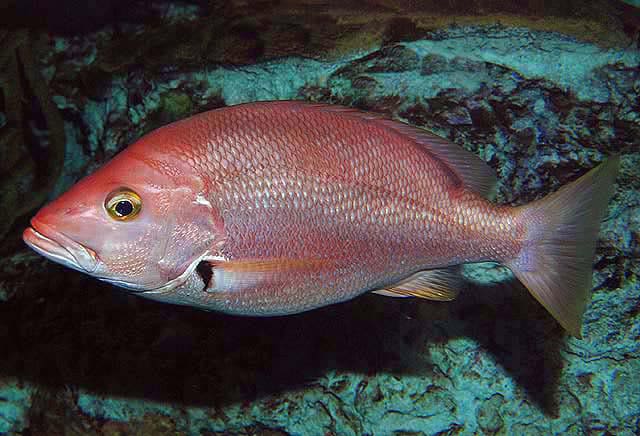
Taxonomy
- Kingdom
- Animalia
- Phylum
- Chordata
- Class
- Actinopterygii
- Order
- Perciformes
- Family
- Lutjanidae
- Genus
- Lutjanus
- Species
- buccanella
Habitat
Blackfin snappers inhabit coral reefs, rocky ledges, and drop-offs in the western Atlantic Ocean, typically from 10 to 200 meters depth. They prefer clear, warm waters around islands and continental shelves, often seeking shelter in crevices during the day.
Diet
They primarily feed on small fishes, shrimps, crabs, and other benthic invertebrates. Blackfin snappers are nocturnal foragers, actively hunting over reefs at night using ambush tactics.
Behavior
Blackfin snappers are generally solitary or form loose schools, exhibiting territorial behavior around reef structures. They are primarily nocturnal, resting in hiding spots during the day and actively foraging at night, with occasional migrations to deeper waters.
Fishing
Target Blackfin snapper with bottom fishing or trolling techniques around coral reefs and drop-offs for reliable action; use medium-heavy rods (7-9 feet) paired with reels spooled with 20-30 lb test line and circle hooks to minimize injury and support catch-and-release practices. Effective baits include live shrimp, cut bait like squid, or jigs that mimic small fish and crustaceans, as these nocturnal predators strike aggressively at night. The best season runs from spring to fall in warm waters of the Western Atlantic, such as around Florida, the Bahamas, and other Caribbean islands, with peak bites occurring at night when they forage over reefs in depths of 10-200 meters. Focus on clear, warm habitats like rocky ledges and continental shelves, where angler-funded programs through license fees help monitor populations and enforce effective management tools like bag limits and size restrictions to sustain stocks—the IGFA all-tackle record is 20 pounds 0 ounces, caught in the Bahamas in 2000, highlighting the thrill of this sport fish.
Conservation Status
Listed as Data Deficient by IUCN.