
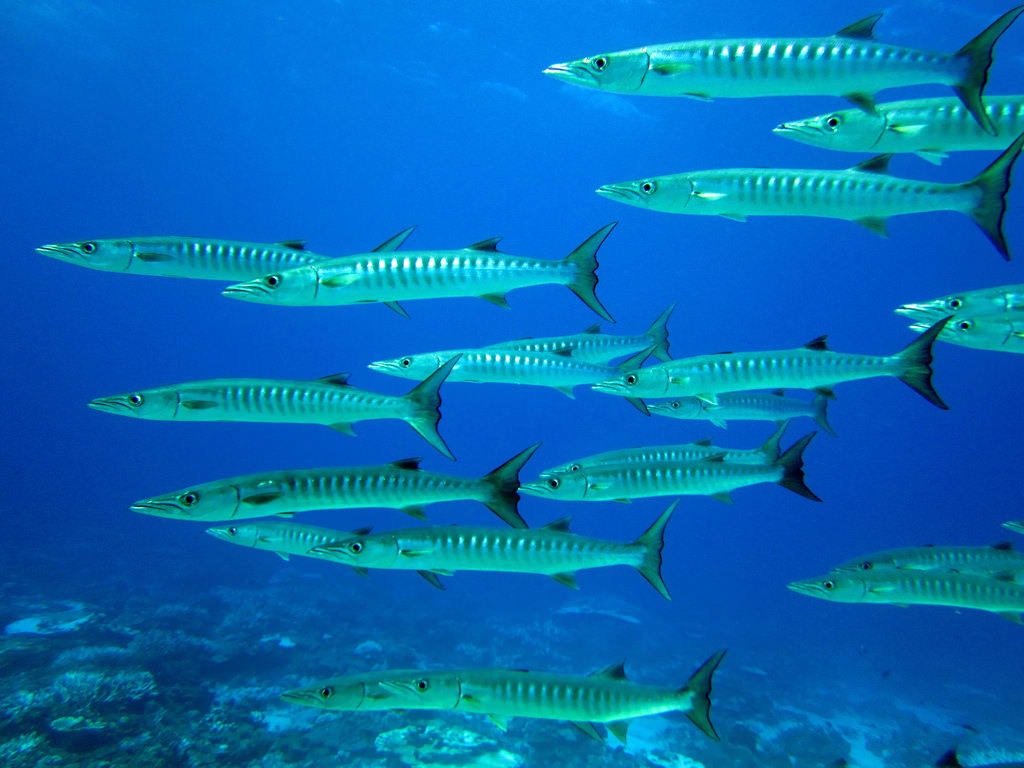
Taxonomy
- Kingdom
- Animalia
- Phylum
- Chordata
- Class
- Actinopterygii
- Order
- Tetradontiformes
- Family
- Sphyraenidae
- Genus
- Sphyraena
- Species
- qenie
Habitat
Blackfin barracudas inhabit warm tropical and subtropical marine waters of the Indo-Pacific, including coral reefs, coastal areas, and open seas. They prefer depths from shallow waters to about 100 meters and are often found around structures like reefs or drop-offs. This species avoids extremely turbid or cold waters.
Diet
Blackfin barracudas primarily feed on smaller fish such as sardines, anchovies, and mullets. They are ambush predators that hunt during the day, using their speed and stealth to chase down prey in open water or near reefs. Feeding behavior includes solitary attacks or coordinated schooling efforts.
Behavior
Blackfin barracudas are often solitary but can form loose schools, particularly juveniles, and exhibit aggressive territorial behavior around feeding grounds. They are fast swimmers, reaching speeds up to 35 mph, and are most active during the day when hunting. This species is curious and may approach divers or boats, but they are generally wary of larger threats.
Fishing
Target Blackfin barracuda as a thrilling sport fish in the warm tropical waters of the Indo-Pacific, including the Persian Gulf, Red Sea, East Africa, and around coral reefs in French Polynesia, Mexico, and Panama, where they patrol drop-offs and coastal structures from shallow waters to 100 meters; use trolling with fast-retrieve lures or live bait like sardines and mullets for the best results, as these ambush predators strike aggressively during the day. Opt for heavy-action rods with strong 20-50 lb test lines and wire leaders to handle their speed up to 35 mph and prevent bite-offs from their razor-sharp teeth, paired with reels that offer quick drags for exciting fights. The prime season runs from spring to summer when they spawn and are most active, with peak bites in the morning or late afternoon around dawn and dusk for higher success rates. Anglers should focus on areas with reefs, open seas, or structure edges, casting or trolling artificial lures that mimic small fish to entice strikes; the IGFA all-tackle world record stands at 29 pounds 8 ounces, showcasing the potential for trophy catches that support conservation efforts. Remember, recreational fishing for Blackfin barracuda funds habitat protection through license fees and excise taxes, and practicing catch-and-release helps maintain stable populations, as seen in their common status with no significant declines, making it a smart tool for aquatic conservation.
Conservation Status
Listed as Not Evaluated by IUCN.