
Overview
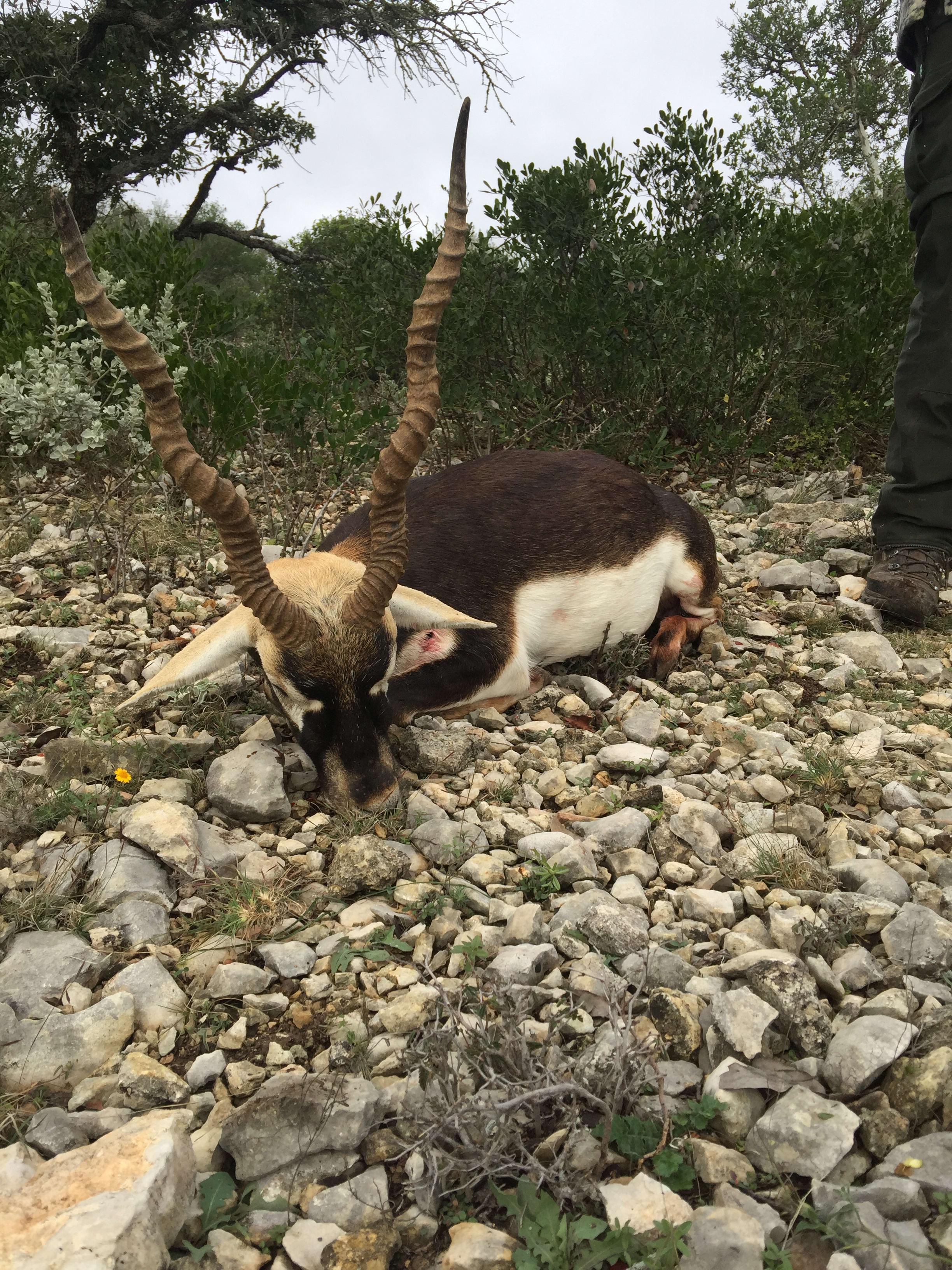
A slender, graceful, very handsome antelope with contrasting dark-and-white coloration. Considered by many to be the most attractive and elegant of gazelles. One of the few antelopes where the sexes have different coloration. Mature males are a rich, dark brown (sometimes almost black) on the upperparts and outside of upper legs, but with the underparts, inside of legs, chin, ears and area around the eyes a sharply contrasting white. Females are fawn and white. Young males are colored like females, darkening gradually with age until fully mature at 4-5 years. (Oddly, a few males fail to darken, although normal in other respects.) The horns (males only) are long, closely ringed and corkscrew shaped, with 3-5 tight twists.
Taxonomy
- Kingdom
- Animalia
- Phylum
- Chordata
- Class
- Mammal
- Order
- Artiodactyla
- Family
- Bovidae
- Genus
- Antilope
Habitat
Open plains, also thorn and dry deciduous forest. Distribution- Nepal, Eastern Pakistan and India. Outside Asia, the blackbuck has been introduced in the wild in Argentina and Australia, and on private properties in Australia, South Africa, and the United States.
Diet
Essentially a grazer, but does browse at times.
Behavior
A gregarious animal, with large herds composed of both sexes, smaller harems led by a mature male, and bachelor groups of immature males. Breeding males are territorial, marking and guarding their territories from other males. Mating can take place throughout the year, but the peak periods are March-April and August-October, with a single young born six months later. It is possible for a female to produce three offspring within two years. Active all day except during very hot weather when it will rest in shade at midday. Usually prefers open plains, but also found in open woodland. Very alert, with keen eyesight. Extremely fast, able to run 50-55 mph (80-88 kmh). In India, could usually outrun greyhounds, and even trained cheetahs if they were seen in time to avoid their initial rush.
Hunting
Native to the plains of India and Pakistan, where, until the last century, it was the most abundant hoofed animal, numbering about four million. A favorite quarry of the maharajahs, who hunted them with firearms and coursed them with trained cheetahs. They are wary and skittish. They have a hard time crossing fences and can't jump them. They can be kept inside a property with hog/sheep fencing.
Conservation Status
Listed as Least Concern by IUCN.