
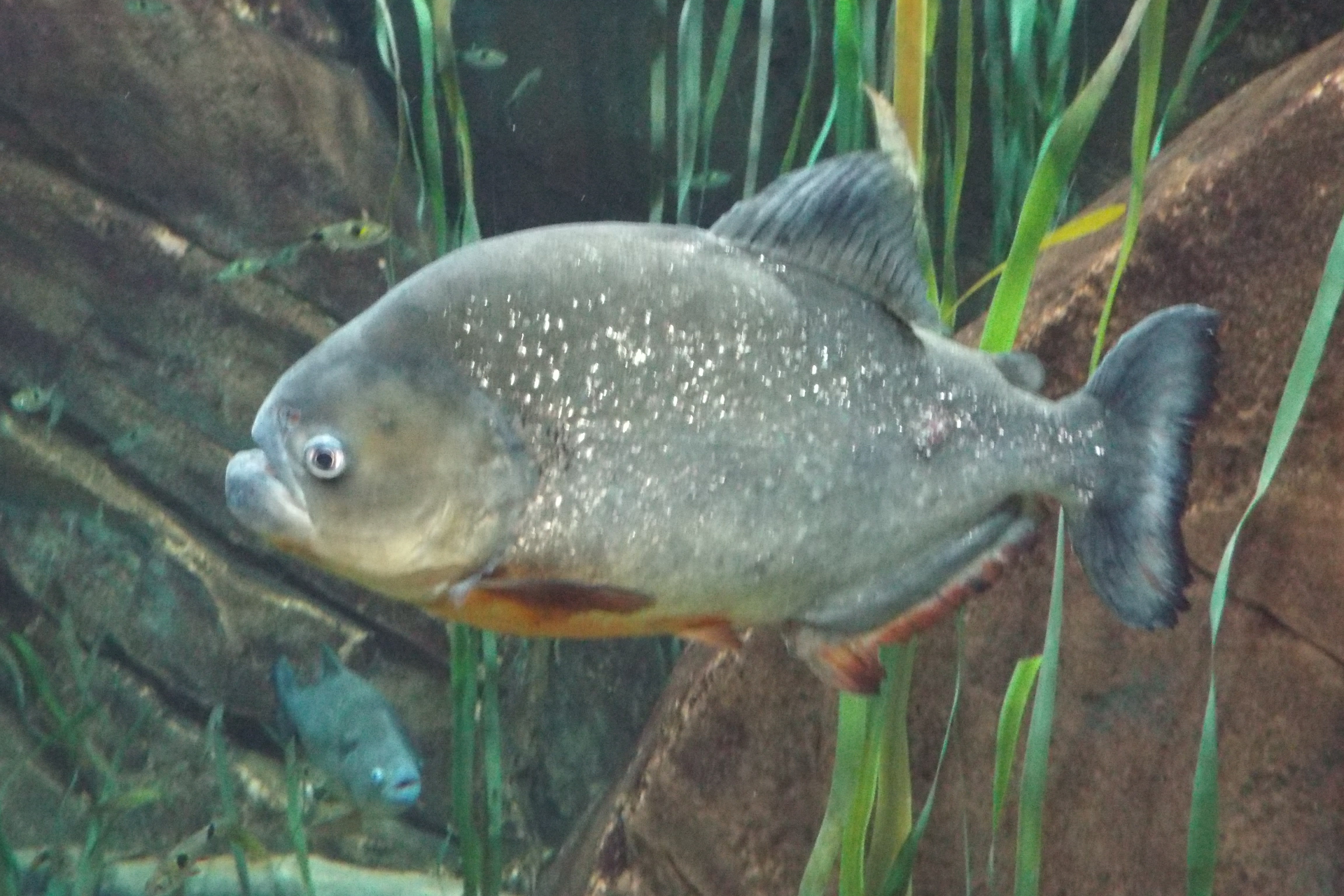
Taxonomy
- Kingdom
- Animalia
- Phylum
- Chordata
- Class
- Actinopterygii
- Order
- Cypriniformes
- Family
- Characidae
- Genus
- Pygocentrus
- Species
- cariba
Habitat
Black spot piranhas inhabit freshwater rivers, streams, and flooded forests in the Orinoco River Basin of Venezuela and Colombia. They prefer warm, slow-moving waters with abundant vegetation and submerged structures for cover. This species is adapted to the tropical, lowland environments of the Llanos region.
Diet
Black spot piranhas primarily eat smaller fish, insects, crustaceans, and occasionally amphibians or birds that venture into the water. They hunt in schools to ambush prey, often attacking during the day when visibility is high. Feeding behavior includes rapid strikes and can escalate into frenzies in the presence of blood or injured animals.
Behavior
Black spot piranhas are highly social, forming schools of up to several hundred individuals for protection and cooperative hunting. They are diurnal, most active during the day, and exhibit territorial behavior around feeding and breeding sites. These fish can become aggressive when threatened or during food scarcity, but they generally avoid larger predators by schooling.
Fishing
Targeting the black spot piranha in the Orinoco River Basin of Venezuela and Colombia offers exciting sport fishing opportunities, supporting conservation through angler-funded programs that protect these vital freshwater ecosystems. Use effective techniques like casting with cut bait or lures to mimic small fish and insects, employing a fast retrieve to trigger strikes from their aggressive schooling behavior; focus on ambush tactics near submerged vegetation and structures where they hide. Recommended tackle includes a light spinning rod with 6-10 lb test monofilament line, size 1-2 hooks, and simple lures such as spoons or jigs that flash and vibrate, paired with baits like raw meat or fish chunks to draw in these predators during feeding frenzies. The best season is during the rainy months from May to August when water levels rise and fish are more active, with peak times being daytime hours when they hunt in schools; target warm, slow-moving rivers, streams, and flooded forests with abundant cover for the best results. Black spot piranhas can reach record sizes up to 40 cm (about 16 inches) and 1 lb 8 oz, making them a thrilling catch for anglers. Conservation efforts, including slot limits and catch-and-release practices in regulated areas, ensure healthy populations by maintaining balance in these habitats, with fishing license fees directly funding habitat restoration and anti-poaching initiatives in South America's waterways.
Conservation Status
Listed as Not Evaluated by IUCN.