
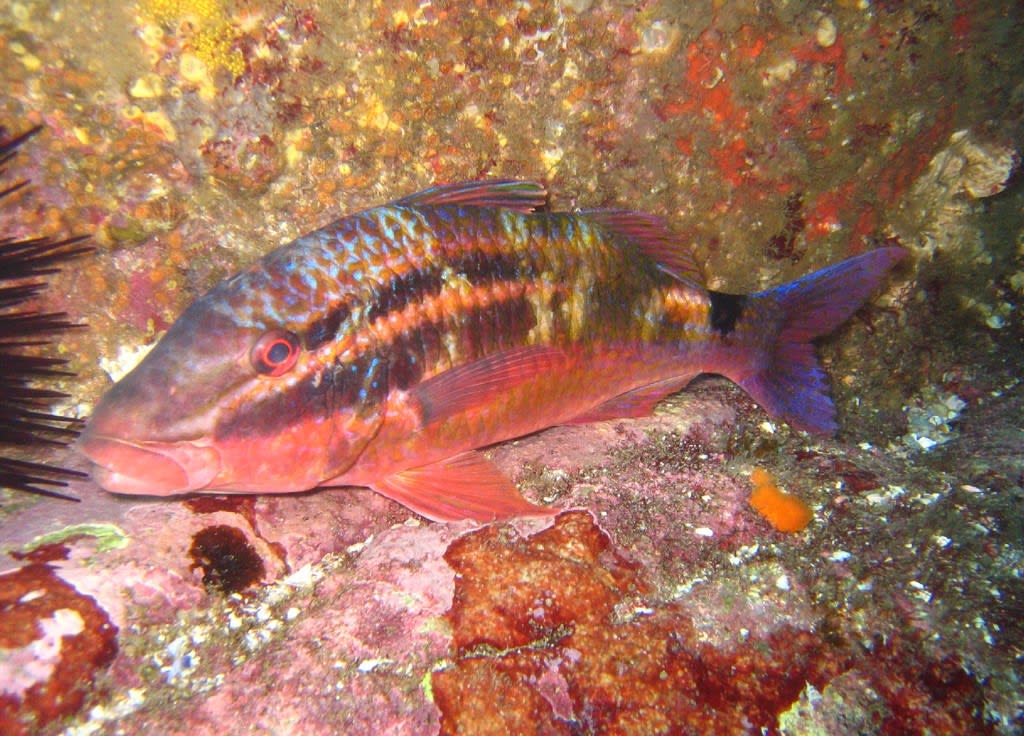
Taxonomy
- Kingdom
- Animalia
- Phylum
- Chordata
- Class
- Actinopterygii
- Order
- Acipenseriformes
- Family
- Acanthuridae
- Genus
- Parupeneus
- Species
- spilurus
Habitat
This species inhabits coral reefs, lagoons, and sandy or rubble bottoms in tropical and subtropical waters. It prefers depths from 1 to 100 meters in the Indo-Pacific region, often found near structures that provide cover and foraging opportunities. Geographic preferences include areas with moderate water movement for feeding.
Diet
The Black-spot goatfish primarily feeds on small benthic invertebrates such as worms, crustaceans, and mollusks, which it locates by using its sensitive barbels to probe the sand and rubble. It is a diurnal feeder, actively foraging during the day over the seafloor. Feeding behavior involves stirring up sediment to uncover prey.
Behavior
Black-spot goatfish are often solitary or form small loose groups, actively foraging over sandy areas near coral reefs during daylight hours. They exhibit territorial behavior when feeding, using their barbels to search for food and occasionally changing color for camouflage. This species is generally wary of predators and quick to dart into hiding spots.
Fishing
The Black-spot goatfish is a popular target for recreational anglers in the Indo-Pacific regions, offering exciting bottom fishing opportunities that support conservation through license fees and habitat protection programs. Employ bottom fishing techniques using light tackle, such as a 6- to 8-foot medium-action spinning rod paired with 10- to 20-pound test line, a sinker to reach depths of 1 to 100 meters, and size 1/0 to 2/0 hooks to effectively probe sandy or rubble bottoms near coral reefs. Use live or fresh bait like shrimp, worms, or small crustaceans to mimic their natural diet, or opt for artificial lures such as jigs and soft plastics that imitate benthic invertebrates for a more dynamic approach. The best seasons are year-round in tropical waters, with peak activity during warmer months when fish are more active, and target them during daylight hours when they forage diurnally over reefs and lagoons in areas like Australia, Indonesia, and Japan. Focus on habitats with moderate water movement and structures for cover, such as drop-offs or patch reefs, to increase your chances of success. Record sizes include specimens up to 50 cm in length and weighing around 2 pounds 12 ounces, with no specific IGFA all-tackle record noted, but aiming for fish in this range rewards skillful angling. Conservation-wise, as a Least Concern species with stable populations, practices like catch-and-release and adhering to local slot limits or seasonal closures in certain areas help maintain healthy stocks, with angler-funded programs playing a key role in protecting these vibrant coral ecosystems.
Conservation Status
Listed as Least Concern by IUCN.