
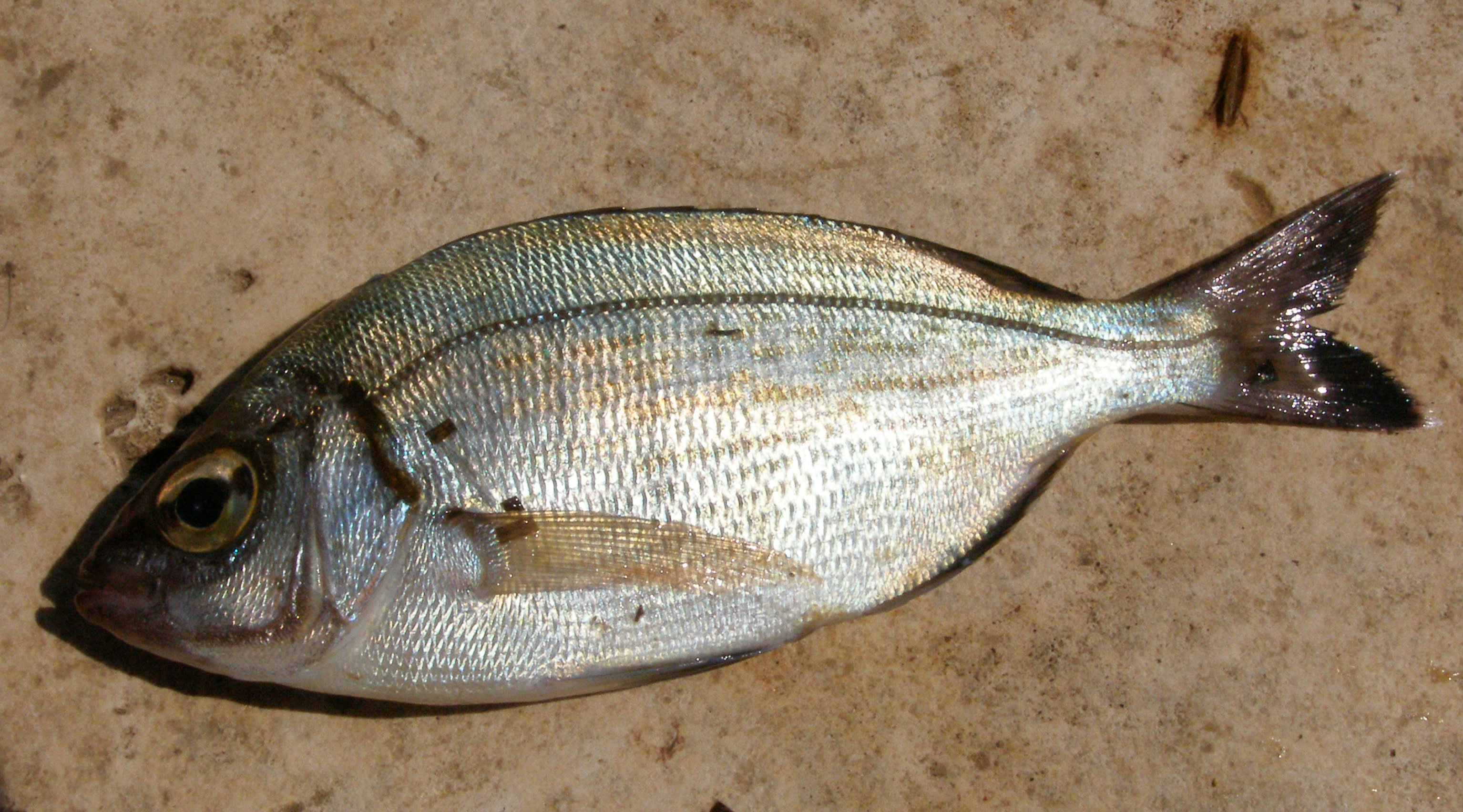
Taxonomy
- Kingdom
- Animalia
- Phylum
- Chordata
- Class
- Actinopterygii
- Order
- Siluriformes
- Family
- Sparidae
- Genus
- Spondyliosoma
- Species
- cantharus
Habitat
Black seabream inhabit coastal waters of the Eastern Atlantic Ocean and Mediterranean Sea, favoring rocky reefs, sandy bottoms, and areas with structures like wrecks or jetties from shallow depths to about 200 meters. They prefer temperate to subtropical regions with moderate currents.
Diet
Black seabream are omnivorous, feeding on benthic invertebrates such as crabs, mussels, and worms, as well as algae and small fish. They forage actively during the day, using their powerful jaws to crush hard-shelled prey on the seafloor.
Behavior
Black seabream form schools, particularly juveniles, and are diurnal, being most active during daylight hours for feeding and exploration. They exhibit territorial behavior around breeding grounds and can be aggressive when defending these areas, though they generally avoid open confrontations.
Fishing
Black seabream are a favored sport fish in the Atlantic and Mediterranean, providing anglers with thrilling bottom fishing that supports conservation through license fees and habitat programs. Employ effective bottom fishing techniques using a medium-light rod (6-9 feet) with 10-20 lb test line, paired with a reel for controlled drags, and rigs like a Carolina or fish finder setup to present bait near the seafloor; add a sinker to reach depths up to 200 meters. Opt for baits such as worms, crabs, mussels, or small fish pieces to mimic their diet, or use lures like jigs and soft plastics that imitate benthic invertebrates for added action. The prime season runs from spring to summer during spawning, with the best times being daylight hours when they are most active foraging; focus on temperate to subtropical coastal waters around rocky reefs, sandy bottoms, wrecks, and jetties for higher success. Black seabream can reach up to 60 cm and 4 lbs 3 oz, with the IGFA all-tackle record at 4 lbs 3 oz caught in the Mediterranean, showcasing their impressive size potential. Conservation-wise, as a Least Concern species with stable populations, regulations like slot limits and catch-and-release practices in some areas are smart management tools that maintain healthy stocks, ensuring sustainable fishing funded by anglers helps protect these vital marine habitats.
Conservation Status
Listed as Least Concern by IUCN.