
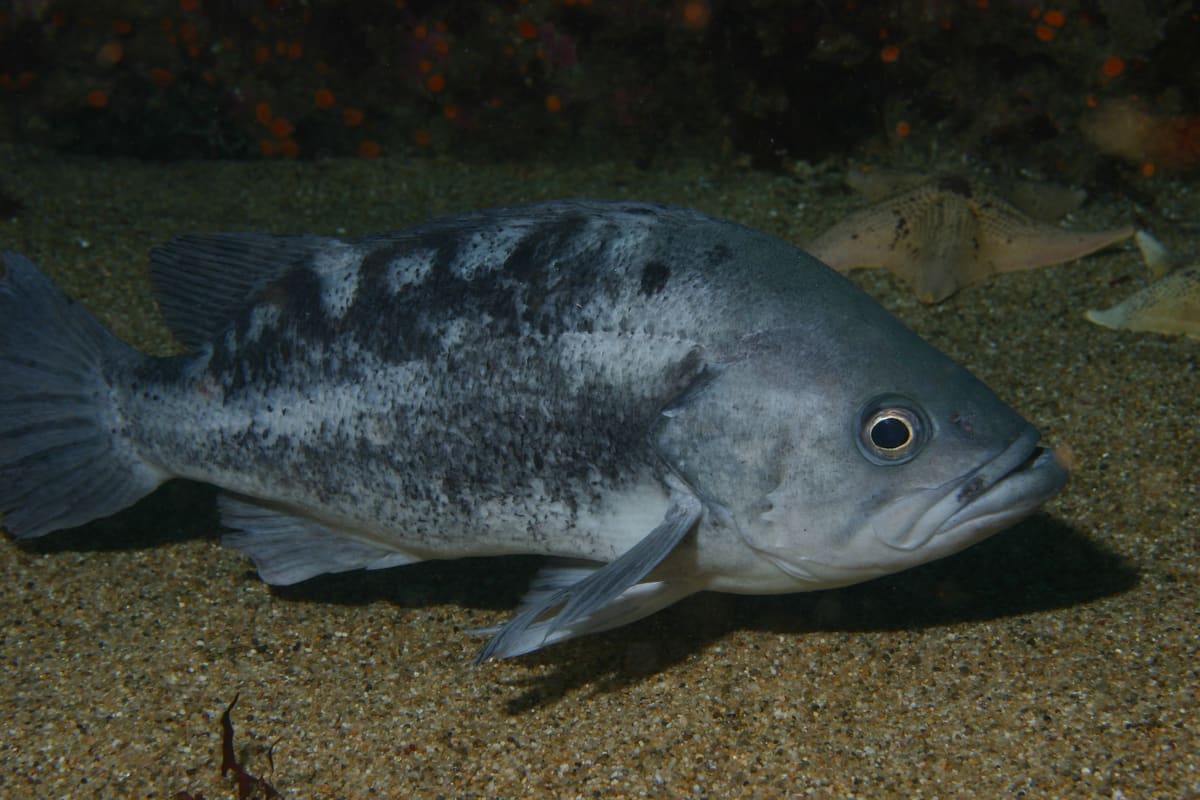
Taxonomy
- Kingdom
- Animalia
- Phylum
- Chordata
- Class
- Actinopterygii
- Order
- Salmoniformes
- Family
- Sebastidae
- Genus
- Sebastes
- Species
- melanops
Habitat
Black rockfish primarily inhabit rocky reefs, kelp forests, and underwater structures in the northeastern Pacific Ocean. They are found from Alaska to Baja California at depths of 10 to 400 meters, preferring areas with strong currents and abundant cover for protection. These habitats provide both shelter and access to food sources.
Diet
Black rockfish feed on small fish, squid, crustaceans like shrimp and crabs, and occasionally plankton. They are ambush predators that hunt in the water column during daylight hours, using their surroundings for cover to surprise prey. Feeding activity peaks in the morning and evening when prey is more abundant.
Behavior
Black rockfish are schooling fish that form loose groups, especially around rocky structures, and are active during the day while resting at night. They exhibit territorial behavior, defending specific areas from intruders, and can be cautious around potential threats. Notably, they use color changes for camouflage and communication within their schools.
Fishing
Black rockfish are a premier sport fish in the Pacific Northwest, offering exciting angling opportunities that support conservation through license fees and habitat programs; target them using bottom fishing, jigging, or trolling techniques around rocky reefs and kelp forests to mimic their ambush predation on small fish and crustaceans. Use medium-heavy rods with 20-30 pound test line, sturdy reels, and hooks sized 1/0 to 4/0, paired with baits like shrimp, crabs, or squid, or effective lures such as jigs and soft plastics that imitate their natural prey for reliable strikes. The best seasons are spring through fall, with peak activity in the morning and evening when feeding is most intense, though they can be caught year-round in deeper waters; focus on depths of 10 to 400 meters along the coasts of Alaska, British Columbia, Washington, Oregon, and Baja California, where strong currents and structures provide ideal cover. Anglers should note the IGFA all-tackle world record of 13 pounds 5 ounces, caught off California, as a benchmark for trophy catches. Conservation-wise, black rockfish populations are stable thanks to angler-funded management tools like bag limits (often 5-10 fish per day depending on the state), minimum size limits (around 14-16 inches), and slot limits in some areas, which ensure sustainable harvests and protect spawning stocks, reinforcing recreational fishing's role in maintaining healthy marine ecosystems.
Conservation Status
Listed as Not Evaluated by IUCN.