
Overview
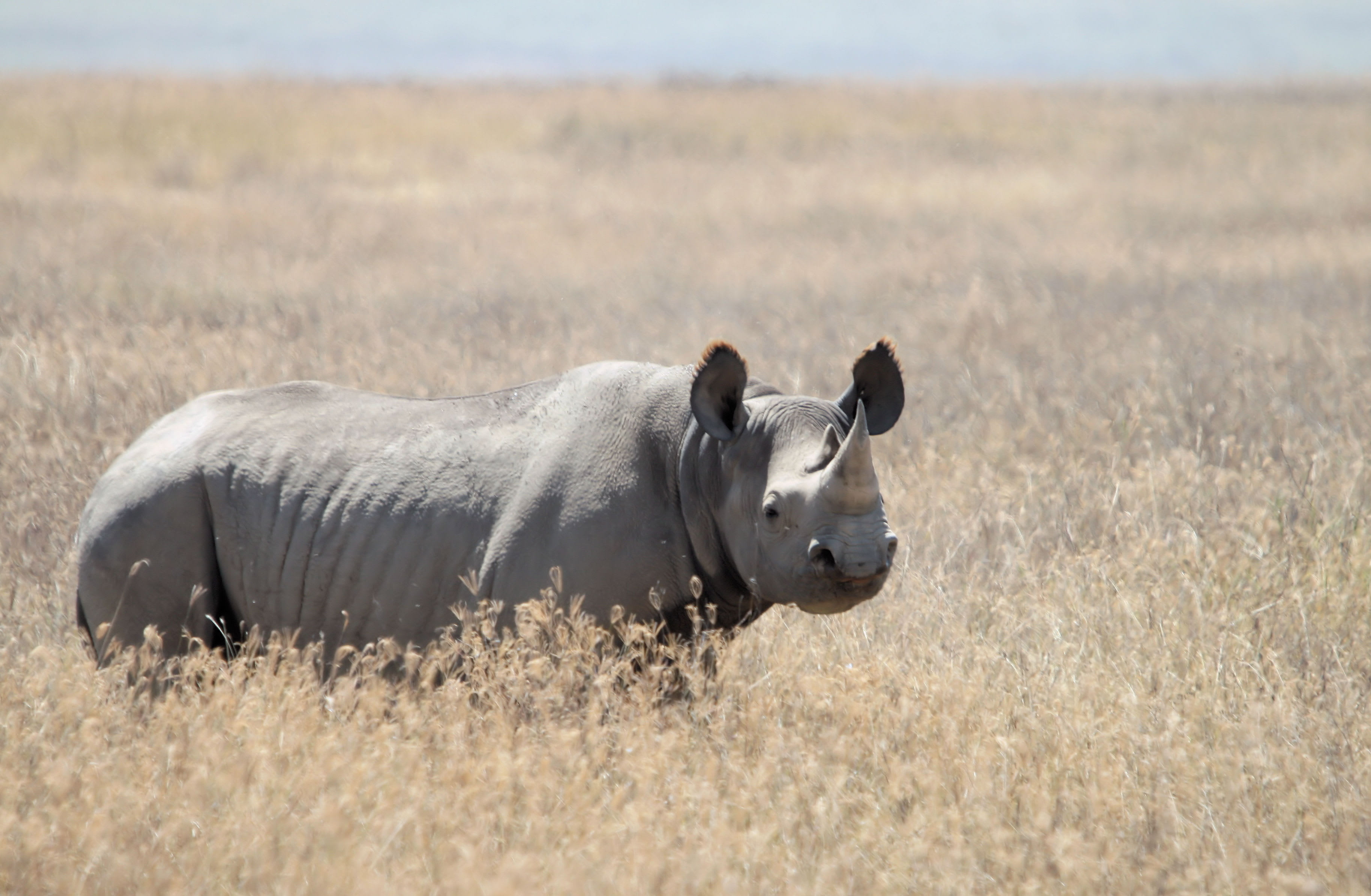
The black rhinoceros is a very large, heavily built animal with a concave back, a relatively short head, a narrow muzzle, small, rounded ears and a short tail. The upper lip protrudes slightly in the middle and has a prehensile tip. The skin is dark gray (not really black), and is usually covered with dirt or mud from dusting or wallowing. There are two horns, with the front horn normally longer than the rear horn. Females are similar to males and about the same size, but their horns are thinner, and often are longer.
Taxonomy
- Kingdom
- Animalia
- Phylum
- Chordata
- Class
- Mammal
- Family
- Rhinocerotidae
- Genus
- Diceros
Habitat
Dry bush country, particularly thorn bush; also mountain forests in Kenya to 11,000 feet (3,350 m) elevation. Distribution- Remnant populations exist in Cameroon, Kenya, Tanzania, Angola, Zambia, northern Zimbabwe, Mozambique, Namibia, the Okavango region of Botswana, South Africa, and Swaziland. Possibly a few survive in Ethiopia, Rwanda and Malawi.
Diet
Browses on leaves and twigs, occasionally eats grass. Drinks daily when water is available.
Behavior
Usually solitary except for mother and young. Active early morning and evening, also at night, rests during middle of day. Sedentary. Sense of smell is excellent, hearing is very good, eyesight is poor. Can run quite fast for a short distance and is surprisingly agile.
Hunting
One must exercise care when in a black rhino area, for these animals may charge for no apparent reason. They are much more aggresive and inclined to charge than the White rhino subspecies. To kill or wound one, even in self-defense, can be a serious offense these days if you do not have a tag. Every so often a tag is allocated for a problem rhino, which is usually an older male past breeding age, that is acting agressive toward the other rhinos in the area. Darting them is now common, and allows for the wildlife specialist in that area to take measurments, apply tracking technologies, or administer medicines and treatment. Because darting a rhino can be very stressful to the animals, darting is only done when there is clear conservation reason to tranquilize the animal. These types of hunts can be even more dangerous than normal hunts because the animal is even more inclined to charge in the moments between being shot with the dart and falling asleep. It is for this reason that they are normally darted from helicopters and not hunted on foot with a dart gun.
Conservation Status
Listed as Critically Endangered by IUCN. Listed as Critically Endangered as the population of Black Rhino has declined by an estimated 97.6% since 1960 with numbers bottoming out at 2,410 in 1995, mainly as a result of poaching. Since then, numbers have been steadily increasing at a continental level with numbers doubling to 4,880 by the end of 2010. Current numbers are however still 90% lower than three generations ago. (IUCN)