
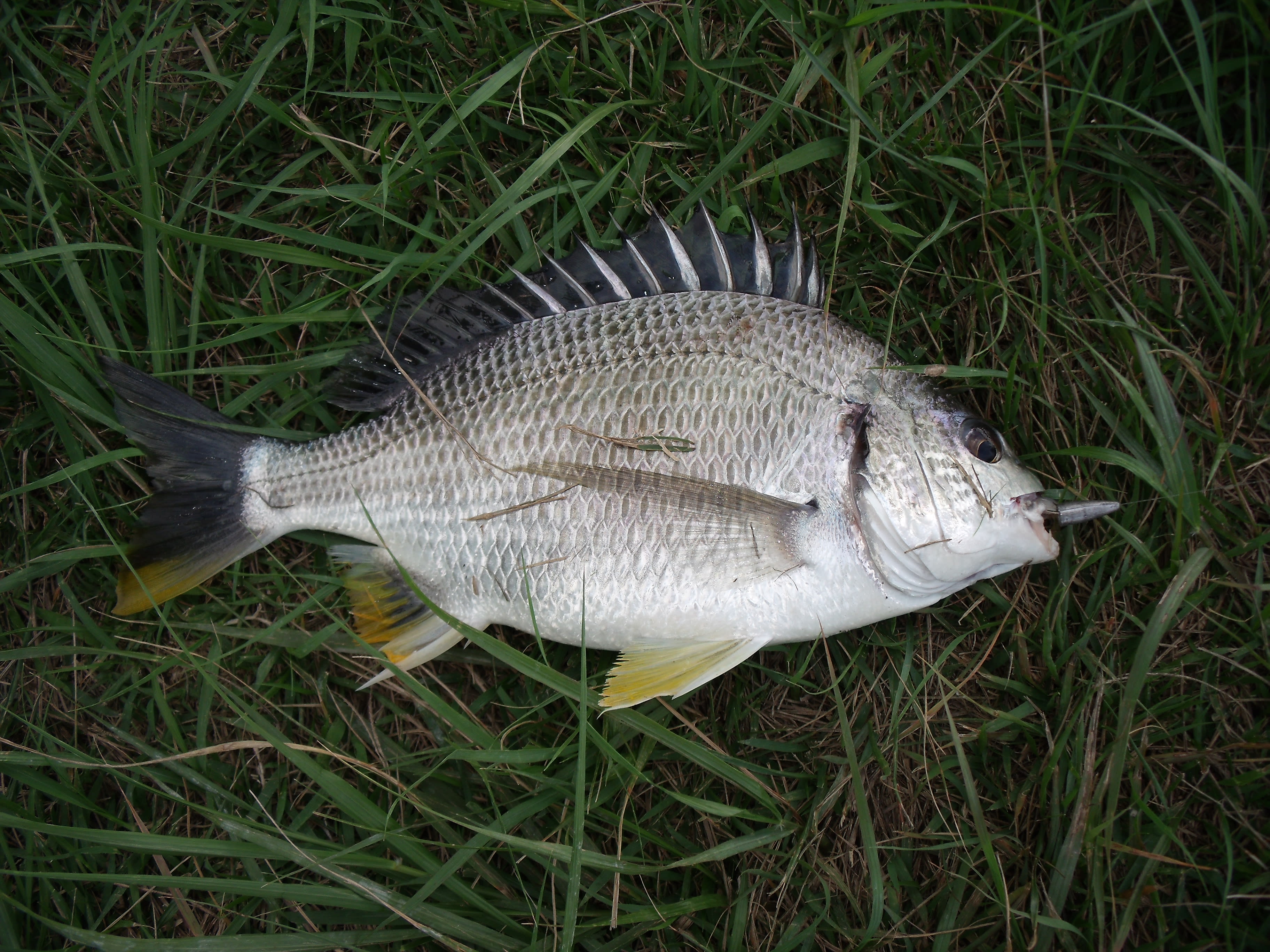
Taxonomy
- Kingdom
- Animalia
- Phylum
- Chordata
- Class
- Actinopterygii
- Order
- Siluriformes
- Family
- Sparidae
- Genus
- Acanthopagrus
- Species
- schlegelii
Habitat
Black porgy primarily inhabit coastal waters, estuaries, and bays in the Western Pacific, favoring sandy or rocky bottoms and areas with moderate currents. They are commonly found in shallow depths up to 30 meters, often near structures like reefs or piers. This species tolerates a wide range of salinities, allowing it to thrive in both fully marine and brackish environments.
Diet
Black porgy are omnivorous, feeding mainly on benthic invertebrates such as crabs, shrimp, mollusks, and polychaete worms. They also consume algae and small fish when available. Feeding activity peaks during the day, with the fish foraging along the seafloor using their protruding jaws to dig for prey.
Behavior
Black porgy are schooling fish that form loose groups to forage and evade predators, often seen swimming near the bottom during the day. They exhibit territorial behavior around feeding areas, chasing away intruders, and are generally active in daylight hours while resting at night. This species can adapt to human-altered environments, making them common in fished areas.
Fishing
Black porgy are a prized sport fish in the Western Pacific, from Japan and Korea to China and Vietnam, where recreational fishing drives conservation funding through license fees that support habitat restoration and population monitoring. Employ bottom fishing techniques using light to medium tackle, such as a 7-foot spinning rod paired with a reel spooled in 10-20 lb monofilament line, and a size 1-2 hook to present bait effectively; opt for live or cut bait like shrimp, crabs, or worms to match their diet of benthic invertebrates, or use jig heads with soft plastics for added action. The best seasons are spring and summer during their spawning periods in shallow coastal waters, with optimal fishing times in the early morning or late afternoon when they are most active foraging along the seafloor; year-round opportunities exist in warmer regions like the Sea of Japan or Yellow Sea. Target them in estuaries, bays, and areas with sandy or rocky bottoms up to 30 meters deep, especially near reefs, piers, or structures that provide cover. The IGFA all-tackle world record stands at 9 pounds 5 ounces, highlighting their impressive size potential. As a Least Concern species with stable populations, effective management tools like slot limits and catch-and-release practices in some areas ensure sustainable stocks, bolstered by angler-funded programs that protect waterways and promote healthy fisheries.
Conservation Status
Listed as Least Concern by IUCN.