
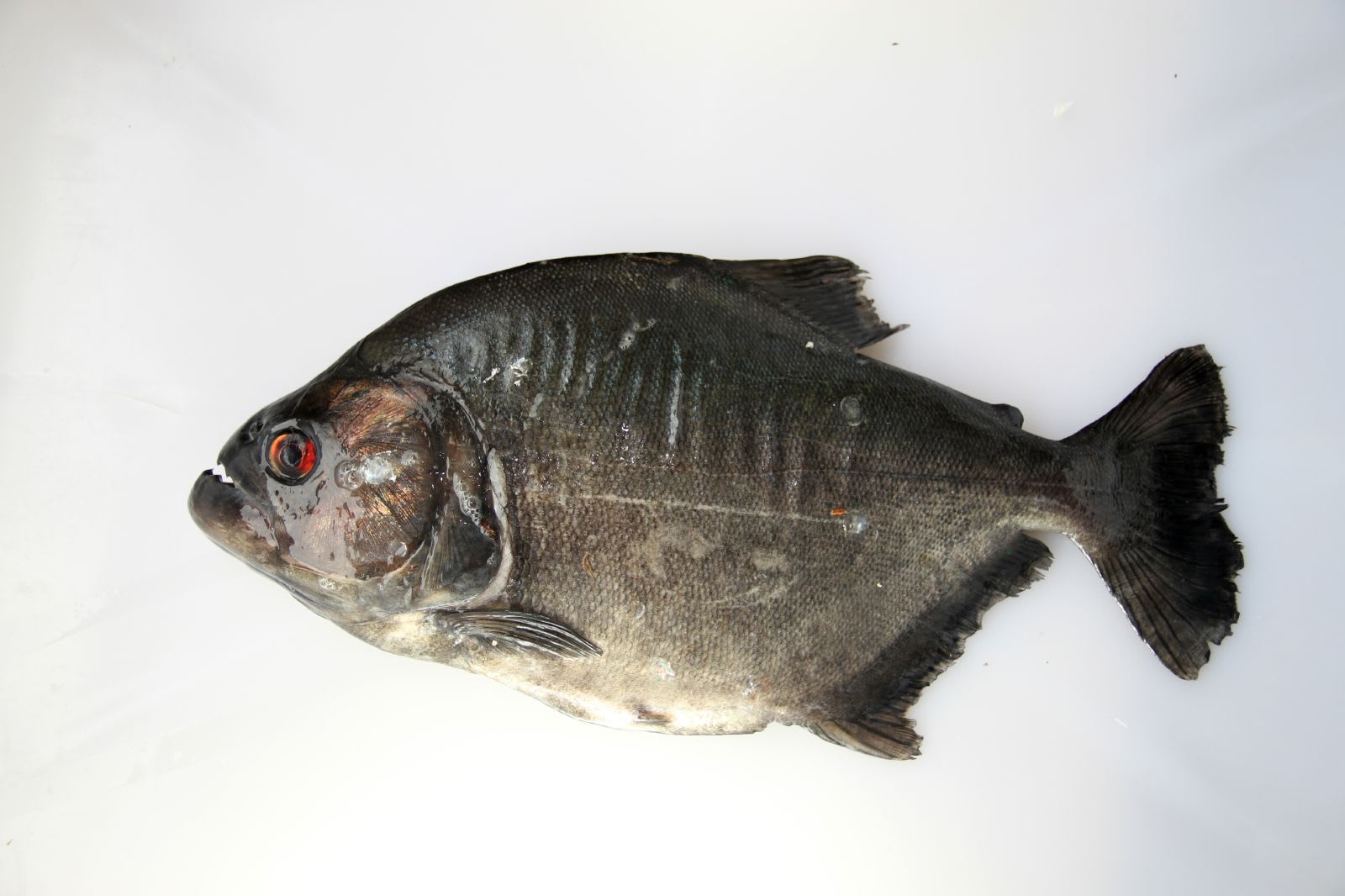
Taxonomy
- Kingdom
- Animalia
- Phylum
- Chordata
- Class
- Actinopterygii
- Order
- Siluriformes
- Family
- Serrasalmidae
- Genus
- Serrasalmus
- Species
- rhombeus
Habitat
Black piranhas inhabit freshwater rivers, lakes, and flooded forests in the Amazon and Orinoco river basins of South America. They prefer warm, slow-moving waters with abundant vegetation and submerged structures for cover. These environments are typically tropical, with temperatures around 24-28°C.
Diet
Black piranhas primarily consume fish, insects, crustaceans, and occasionally plant matter or smaller vertebrates. They are opportunistic feeders that hunt in schools and can exhibit aggressive feeding behavior, often attacking prey with rapid strikes. Feeding activity peaks during the day in shallow waters.
Behavior
Black piranhas are highly social, forming schools that provide protection and aid in hunting. They display territorial aggression, especially during breeding seasons, and are known for sudden feeding frenzies triggered by blood or distress. These fish are diurnal, active during the day, and rest in sheltered areas at night. They communicate through vibrations and body language within their groups.
Fishing
Targeting the black piranha in the Amazon and Orinoco river basins offers exciting sport fishing opportunities while supporting conservation through regulated angling practices that fund habitat protection in these vital waterways. Use aggressive techniques like casting with topwater lures or jigs to mimic small fish and insects, as these trigger the piranha's natural hunting instincts in schools; opt for light tackle setups with a medium-action rod (6-7 feet), 10-20 pound test line, and strong hooks to handle their sharp teeth and sudden strikes. Effective baits and lures include fresh meat chunks, live minnows, or brightly colored spinners that attract their opportunistic feeding behavior during daylight hours. The best season is the dry months from June to October, when water levels drop and fish concentrate in slower-moving, vegetated areas, with peak activity in the early morning or late afternoon for higher catch rates; focus on warm, shallow waters with abundant submerged structures like flooded forests and river edges in Brazil's Amazonas or the Orinoco Basin for the most productive spots. Black piranhas can reach record sizes up to 45 cm (18 inches) and 8 lbs 7 oz, with no official IGFA all-tackle record listed, but anglers should aim for slot limits where applicable to maintain healthy populations. Conservation efforts, including angler-funded programs in South America, promote catch-and-release for smaller fish to ensure stable populations, as black piranhas are abundant and benefit from these management tools that protect biodiversity in the Amazon ecosystem.
Conservation Status
Listed as Not Evaluated by IUCN.