
Overview
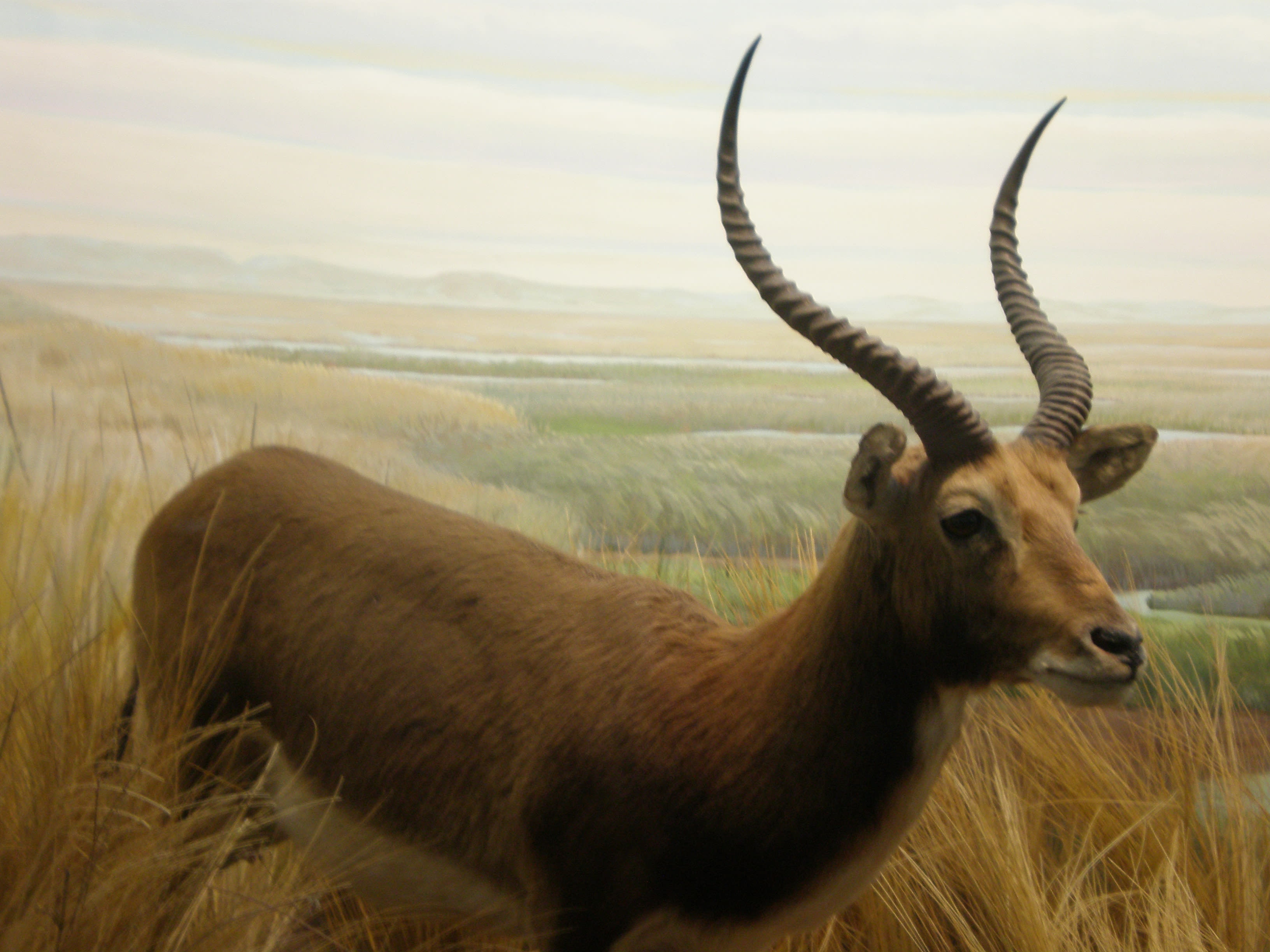
The black lechwe is not actually black, but old males may turn blackish brown on the back and sides. Females and younger males are a dark chestnut color that is somewhat darker than a red lechwe. The horns are shorter and thinner than in the other races.
Taxonomy
- Kingdom
- Animalia
- Phylum
- Chordata
- Class
- Mammal
- Order
- Artiodactyla
- Family
- Bovidae
- Genus
- Kobus
- Species
- Kobus leche
Habitat
They live in dryer areas. Distribution- The area surrounding Lake Bangweulu in northeastern Zambia. At one time black were also found along the upper Chambeshi River in Zambia, but they no longer occur there. Unlike other antelope, black lechwe are slow runners but they are good swimmers and are often seen grazing shoulder-deep in water. Their hooves are adapted for swampy areas rather than dry land. In extreme flooding, lechwes take refuge in woodlands.
Diet
Water plants and grass.
Behavior
They form bachelor herds during most of the year. Females and their calves depend on water more than the males and remain closer to it all year round. It is not uncommon to encounter large herds of hundreds, or even thousands of animals on completely dry ground.
Hunting
Depending on the water level, one may be able to bag a black lechwe from near the vehicle, or may have to wade. It is not uncommon to encounter large herds of hundreds, or even thousands of animals on completely dry ground. They will part for a vehicle, then close ranks behind it, partly obliterated by the dust cloud they have made. Under these conditions it is very difficult to judge horn size, especially as the difference between a respectable trophy and a superb one is slight.
Conservation Status
Listed as Vulnerable by IUCN, for the following reason: Black Lechwe numbers have stabilised since the late 1980s (East 1999, Jeffery and Nefdt 2013) and are now increasing. However, the entire population is restricted to the Bangweulu Basin where it remains at risk of poaching and is totally dependent on the maintenance of a favourable hydrological regime. (IUCN)