
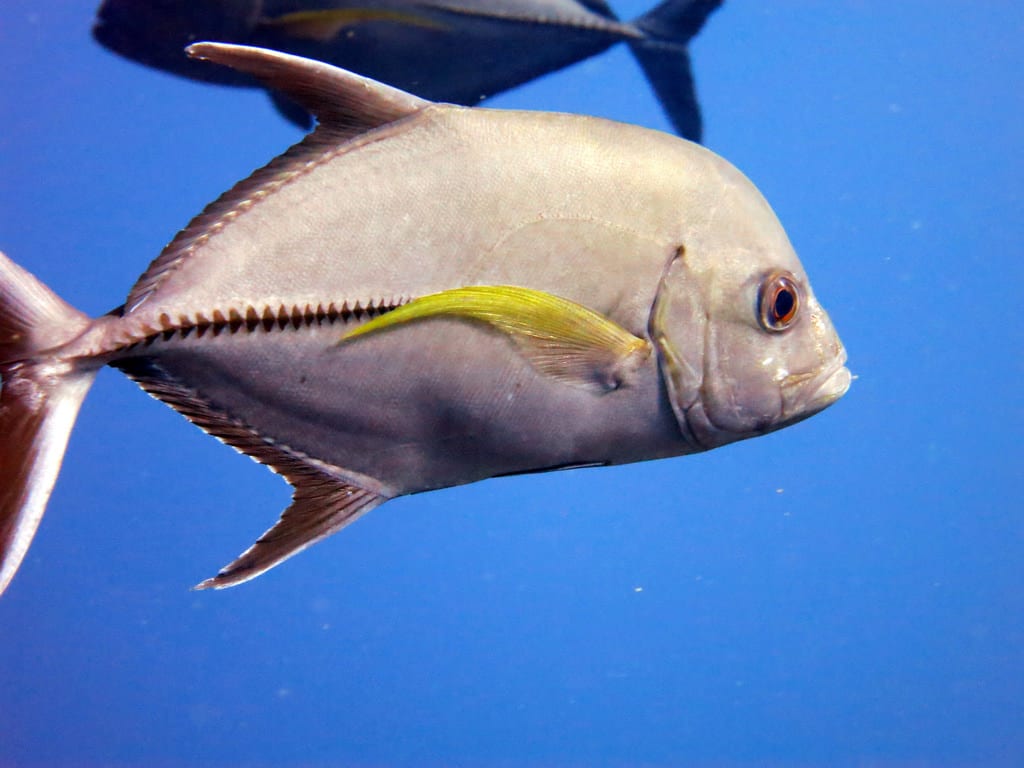
Taxonomy
- Kingdom
- Animalia
- Phylum
- Chordata
- Class
- Actinopterygii
- Order
- Characiformes
- Family
- Carangidae
- Genus
- Caranx
- Species
- lugubris
Habitat
Black jack inhabit tropical and subtropical marine waters, often around coral reefs, rocky outcrops, and pelagic zones. They prefer depths from 10 to 350 meters and are found in the Atlantic, Indian, and Pacific Oceans, typically in areas with strong currents.
Diet
Black jack primarily feed on smaller fish such as sardines and mackerel, as well as squid and crustaceans. They are ambush predators that hunt during the day, using their speed and agility to chase down prey in open water.
Behavior
Black jack are schooling fish that form loose groups for hunting and migration, often exhibiting aggressive feeding frenzies. They are diurnal, active during the day, and can be territorial around reefs or food sources. These fish are fast swimmers, capable of sudden bursts of speed to catch prey.
Fishing
Black Jack, a powerful game fish inhabiting tropical and subtropical marine waters of the Atlantic, Indian, and Pacific Oceans, offers exciting angling opportunities around coral reefs, rocky outcrops, and pelagic zones in depths from 10 to 350 meters, where strong currents concentrate prey. Target them using trolling with live bait like sardines, mackerel, or squid, or opt for jigging with metal jigs and spoons to mimic their natural diet of smaller fish and crustaceans; these techniques capitalize on their daytime hunting behavior for the best results. Fish during daylight hours, with peak seasons year-round in tropical regions but often more productive in warmer months when activity increases. Use heavy-duty tackle, including 30-50 pound test line, strong rods (7-9 feet), and reels with a high drag system to handle their aggressive runs and potential sizes up to 41 pounds 7 ounces, with the IGFA all-tackle world record at 124 pounds caught in 1990. Recreational fishing for Black Jack supports conservation through angler license fees and excise taxes that fund habitat protection and stocking programs, while practices like catch-and-release help maintain stable populations, as designated by its Least Concern status on the IUCN Red List, ensuring these waters remain healthy for future generations.
Conservation Status
Listed as Least Concern by IUCN.