
Overview
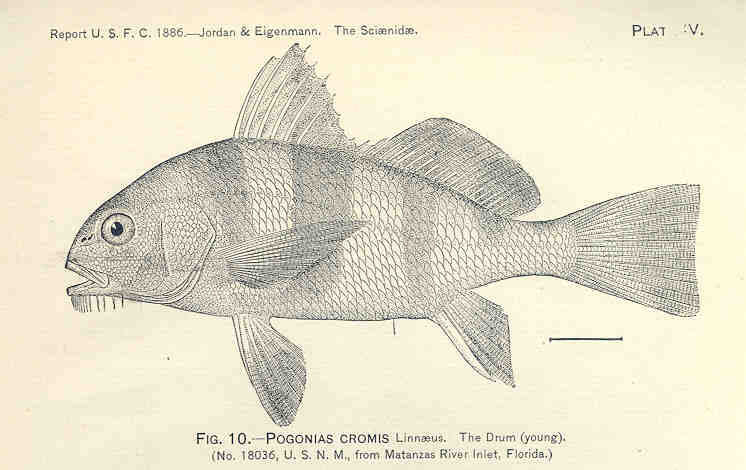
The black drum is a chunky, high-backed fish with many barbels or whiskers under the lower jaw. Younger fish have four or five dark vertical bars on their sides but these disappear with age. The bellies of older fish are white but coloration of backs and sides can vary greatly. Fish from Gulf waters frequently lack color and are light gray or silvery. Those living in muddy bay waters have dark gray or bronze-colored backs and sides. Some are solid silvery gray or jet black.
Taxonomy
- Kingdom
- Animalia
- Phylum
- Chordata
- Class
- Actinopterygii
- Order
- Perciformes
- Family
- Sciaenidae
- Genus
- Pogonias
- Species
- cromis
Habitat
This species can adapt to a wider range of habitats than any other important Texas food fish. Drum are found in the clearest water of sand flats and in the muddiest waters of a flooding slough.They thrive in water so shallow that their backs are exposed, and also in the Gulf waters more than 100 feet deep. They are found in extremely warm shallow flats of the Laguna Madre during summer and survive better than many other fish in freezing weather. They are attracted to freshwater runoff of creeks and rivers, yet can live in waters twice as salty as the Gulf of Mexico. This adaptability makes the black drum available to more anglers than any other bay fish.
Diet
Crustaceans, Zooplankton, Shrimp, Crabs, Worms, Small Fish, Mollusks.
Behavior
Young drums feed on maritime worms, small shrimp, and crabs and small fish. Larger drum eat small crabs, worms, algae, small fish and mollusks. Barbels (or whiskers) are used to find food by feel and smell. Drum often dig or root out buried mollusks and worms while feeding in a head-down position.
Fishing
Black drum fishing can be enjoyed by anyone at almost any time. It is a relaxing outing compared with other types of fishing which require experience, expensive tackle, boats and related equipment. Anyone can catch a drum, whatever their skills or finances. Tackle can be rod and reel, trotline, hand line or cane pole, and bait is inexpensive. Fishing can be done from piers or from the bank and the entire family can join in.
Conservation Status
Listed as Least Concern by IUCN.