
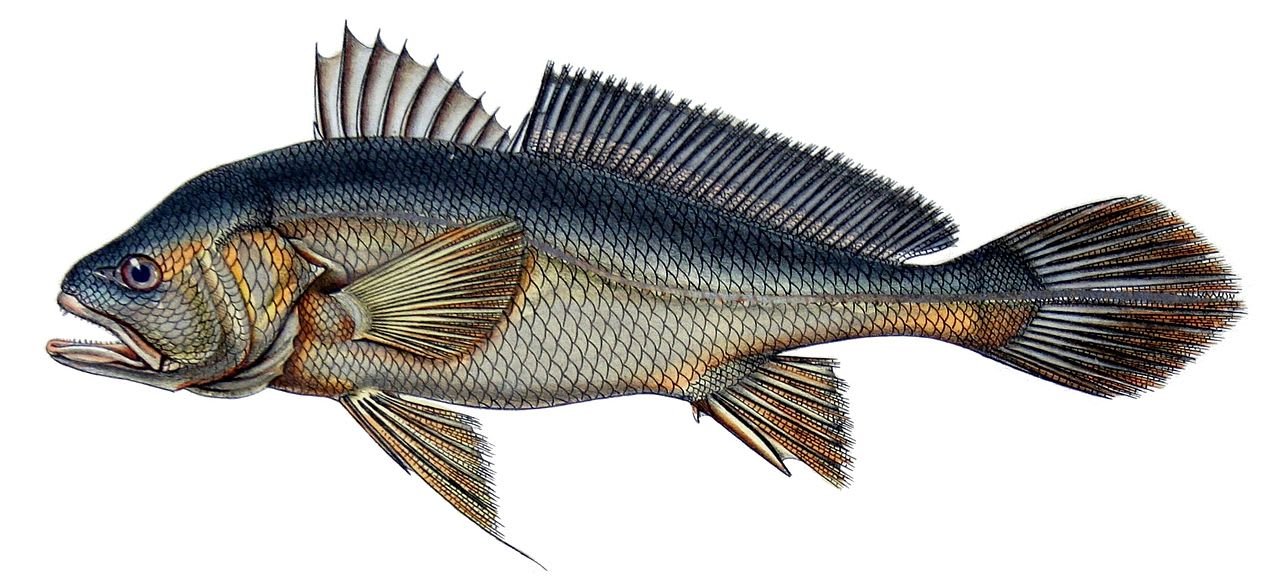
Taxonomy
- Kingdom
- Animalia
- Phylum
- Chordata
- Class
- Actinopterygii
- Order
- Perciformes
- Family
- Sciaenidae
- Genus
- Plagioscion
- Species
- auratus
Habitat
This fish inhabits freshwater rivers, lakes, and floodplains in South America, particularly the Amazon, Orinoco, and Guiana basins. It prefers slow-moving or still waters with sandy or muddy substrates, often found in areas with submerged vegetation or woody debris. These environments provide cover and abundant food sources.
Diet
Plagioscion auratus primarily feeds on smaller fish, crustaceans, and insects, using its sensitive barbels to detect prey on the bottom. It is a nocturnal predator, actively hunting in low-light conditions to ambush prey. Feeding occurs mainly at dusk and dawn when visibility is reduced.
Behavior
This species is generally solitary or forms small groups, becoming more active at night for feeding and less so during the day. It exhibits territorial behavior around spawning sites, aggressively defending areas from intruders. Plagioscion auratus is known for producing drumming sounds using its swim bladder, which is used for communication during mating.
Fishing
Targeting the Black curbinata, or Plagioscion auratus, in South America's Amazon, Orinoco, and Guiana River basins offers anglers a thrilling challenge while supporting aquatic conservation through license fees that fund habitat protection and stocking programs; practice catch-and-release to maintain healthy populations in these dynamic waterways. For best techniques, use bottom fishing or slow trolling with baits that mimic its prey, such as live minnows, shrimp, or crankbaits that create vibration to attract this nocturnal predator in low-light conditions. Recommended tackle includes a medium-heavy spinning rod paired with a 20-30 lb test line and a reel with a smooth drag system to handle its strong fights in structure-laden waters, along with hooks sized 2/0 to 4/0 for effective hooksets. The prime season runs from November to March during the rainy season when fish are more active in flooded areas, with the best times being dusk and dawn for top bites; focus on habitats like slow-moving rivers, lakes, and floodplains with sandy or muddy substrates, submerged vegetation, or woody debris for cover. Typical sizes range from 30 to 50 cm, with records up to 70 cm and 7 lbs 9 oz, showcasing the potential for impressive catches. Angler-funded programs in these regions ensure sustainable fishing practices, including slot limits in some areas that promote population balance, making every outing a step toward conserving these vital ecosystems.
Conservation Status
Listed as Not Evaluated by IUCN.