
Overview
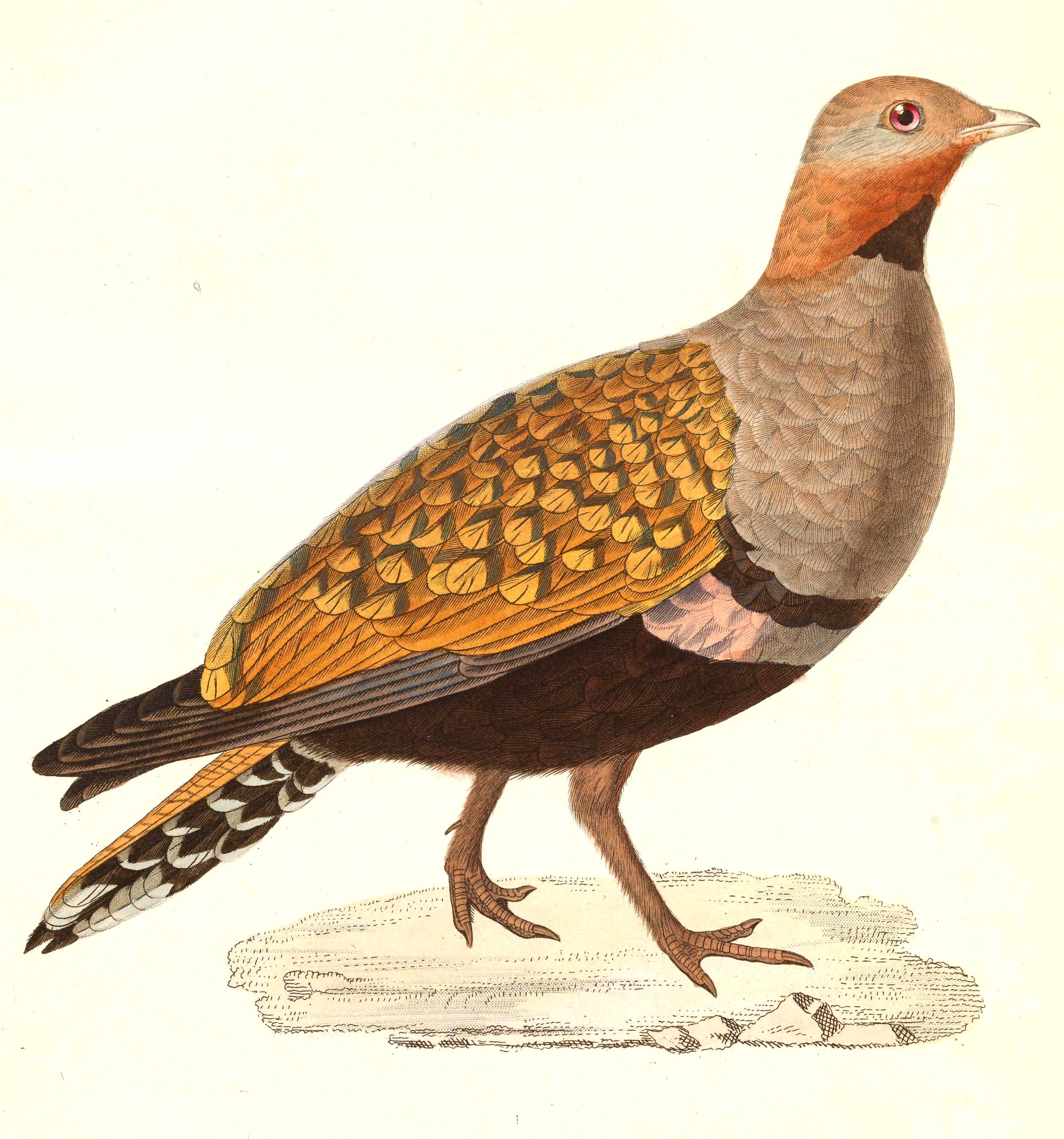
The male has a grey head, neck, and breast. The underparts are black and the upperparts are golden-brown with darker markings. There is a thin black border around the lower breast, and a chestnut throat patch. The female has browner, more finely marked upperparts, including the head and the breast. The underparts and breast band are identical to the male. This sandgrouse has a small, pigeon like head and neck, but a stocky compact body. It has long pointed wings and a fast direct flight. The white underwings and black belly make this species easy to identify while in flight.
Taxonomy
- Kingdom
- Animalia
- Phylum
- Chordata
- Class
- Bird
- Family
- Pteroclididae
- Genus
- Pterocles
- Species
- orientalis
Habitat
Dry open plains and similar habitats.
Diet
Seeds and legumes.
Behavior
This gregarious species, unlike the pin-tailed sandgrouse, it avoids areas completely lacking in vegetation. Its nest is a ground scrape into which three greenish eggs with cryptic markings are laid. Both sexes incubate, but only the male brings water.
Hunting
Often hunted by intercepting flocks as they approach water holes.
Conservation Status
Listed as Least Concern by IUCN.