
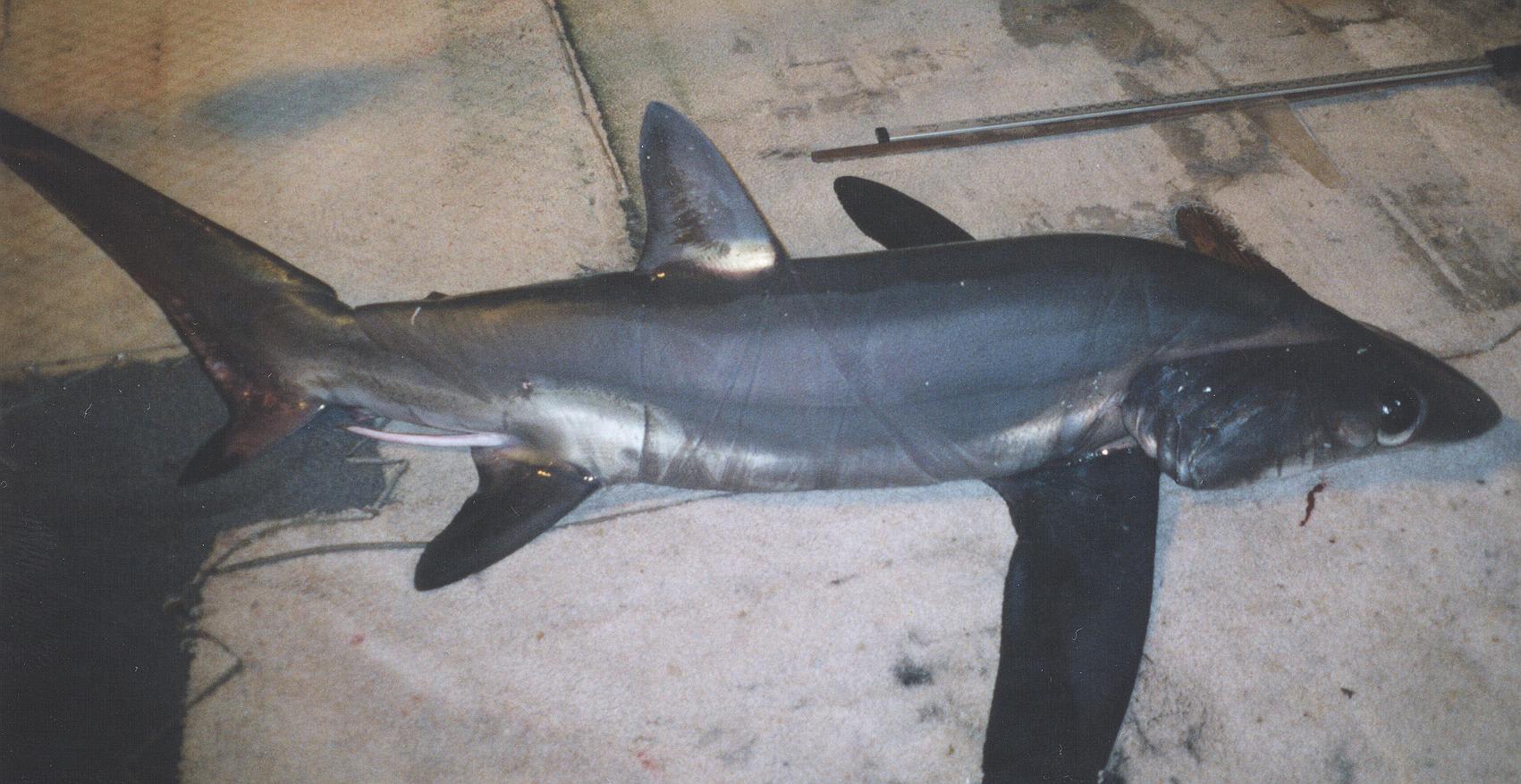
Taxonomy
- Kingdom
- Animalia
- Phylum
- Chordata
- Class
- Chondrichthyes
- Order
- Carcharhiniformes
- Family
- Alopiidae
- Genus
- Alopias
- Species
- superciliosus
Habitat
Found overcontinental and insular shelves, mostly close to shore but also to a depth of 150 m (490 ft).
Diet
It feeds mainly on crustaceans (including shrimps, crabs, hermit crabs, and mantis shrimps),cephalopods (including octopus), and spoon worms; polychaete worms, tunicates, peanut worms, and small, bottom-living bony fishes (including flatfishes, conger eels, herring, jacks, drums, and grunts) are occasionally consumed.
Behavior
Bigeye threshers are typically solitary and pelagic, often found swimming in the open ocean but occasionally near continental shelves. They are primarily nocturnal hunters, using their long tails to whip and stun prey, and they exhibit migratory behavior following warm water currents. These sharks are not highly territorial but may form loose aggregations around food sources.
Fishing
Target the Bigeye thresher shark as a thrilling big-game species in the Atlantic, Pacific, and Indian Oceans, particularly over continental and insular shelves at depths up to 150 meters, where they patrol near shorelines and follow warm water currents—focus on areas with strong currents or baitfish schools for the best action. Use trolling with heavy tackle as the top technique, employing a sturdy rod with a conventional reel spooled with 80-200 lb test line, along with a wire leader to handle their powerful runs and sharp teeth; effective baits include live mackerel, squid, or large lures that mimic their preferred prey like small fish and crustaceans. The prime season runs from summer through fall when they migrate to warmer waters, with evening or night being optimal times due to their nocturnal hunting behavior, increasing your chances of a successful catch. The IGFA all-tackle record stands at 802 pounds, caught in the Atlantic, showcasing the species' impressive size potential. As a Vulnerable species per IUCN, adhere to conservation-minded regulations like catch-and-release practices and size limits as effective tools for maintaining healthy populations, supported by angler-funded programs that protect ocean habitats and ensure sustainable fishing contributes to global shark conservation efforts.
Conservation Status
Listed as Vulnerable by IUCN.