
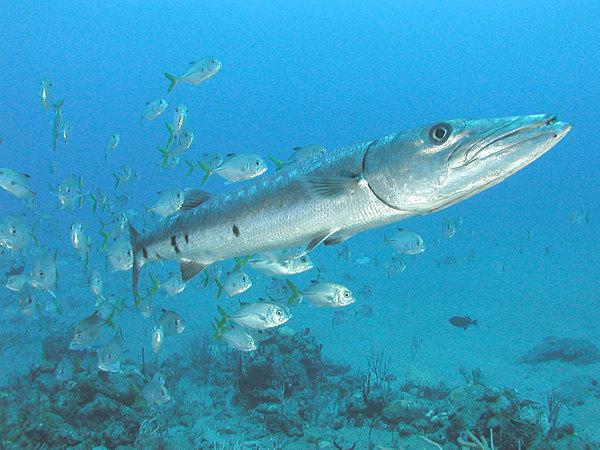
Taxonomy
- Kingdom
- Animalia
- Phylum
- Chordata
- Class
- Actinopterygii
- Order
- Tetradontiformes
- Family
- Sphyraenidae
- Genus
- Sphyraena
- Species
- forsteri
Habitat
Bigeye barracuda inhabit tropical and subtropical marine waters of the Indo-Pacific, often found around coral reefs, lagoons, and drop-offs at depths of 10 to 100 meters. They prefer areas with structure for ambushing prey and can also venture into open ocean, avoiding extremely turbid or cold waters.
Diet
Bigeye barracuda primarily feed on smaller fish such as sardines, mackerel, and anchovies, as well as squid and occasionally shrimp. They are ambush predators that hunt during the day, using their speed and sharp teeth to strike quickly from hiding spots near reefs.
Behavior
Bigeye barracuda are often solitary or found in loose schools, exhibiting territorial behavior around feeding areas. They are fast swimmers, capable of sudden bursts of speed to chase prey, and can be aggressive if threatened, sometimes following divers or boats. Nocturnal activity increases in deeper waters, but they remain alert during the day.
Fishing
Targeting Bigeye barracuda in the Indo-Pacific, from East Africa to Southeast Asia and the Pacific islands like the Marquesan and Society Islands, offers thrilling sport fishing that supports marine conservation through angler fees funding habitat protection and research. Use trolling with metal spoons, plugs, or jigs that mimic small fish like sardines, or cast live baits such as sardines and mackerel near structure for effective strikes from these ambush predators; medium to heavy spinning or trolling rods with 20-50 lb test line and wire leaders are essential to handle their speed and sharp teeth. The best seasons are year-round in tropical waters, with peak activity during warmer months and optimal times at dawn or dusk when they hunt actively around coral reefs, lagoons, and drop-offs at depths of 10 to 100 meters. Bigeye barracuda can reach record sizes up to 120 cm and 17 pounds 6 ounces, showcasing their status as a premier game fish. Conservation practices like catch-and-release and adherence to local slot limits or seasonal closures in managed areas help sustain populations, with fishing license revenues directly contributing to Indo-Pacific waterway protection and stocking programs that ensure these species thrive for future generations.
Conservation Status
Listed as Not Evaluated by IUCN.