
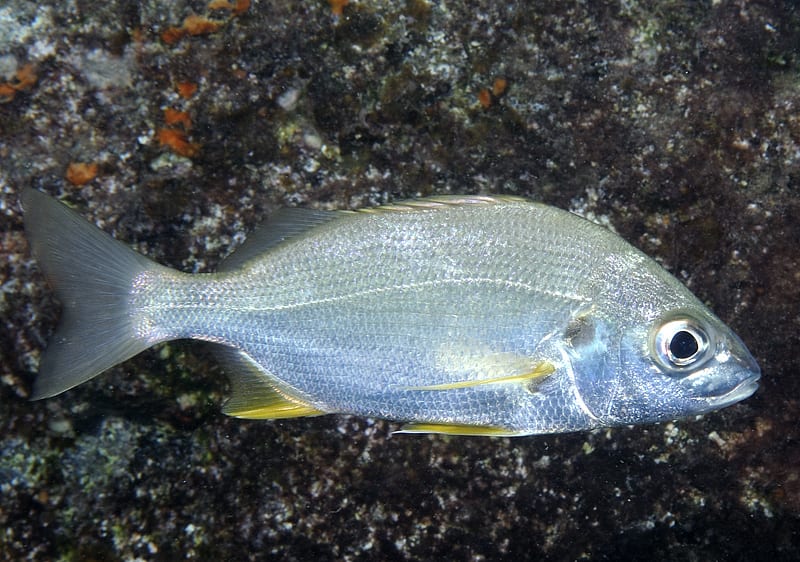
Taxonomy
- Kingdom
- Animalia
- Phylum
- Chordata
- Class
- Actinopterygii
- Order
- Perciformes
- Family
- Haemulidae
- Genus
- Pomadasys
- Species
- incisus
Habitat
This species inhabits coastal waters, estuaries, and shallow sandy or muddy bottoms in the eastern Atlantic Ocean, including the Mediterranean and Black Seas. It prefers depths from 10 to 100 meters and is often found near rocky areas or seagrass beds. Geographic preferences include warmer temperate to subtropical regions like Portugal and Angola.
Diet
Bastard grunts primarily feed on small crustaceans, worms, mollusks, and occasionally small fish. They are benthic foragers, using their pharyngeal teeth to crush hard-shelled prey, and are most active during dawn and dusk. Feeding behavior involves schooling to locate food sources in sandy substrates.
Behavior
Bastard grunts are schooling fish that form loose groups for protection and feeding, often in shallow waters. They are diurnal, most active during the day, and exhibit territorial behavior around feeding grounds. They produce grunting sounds for communication, which helps in maintaining group cohesion and possibly deterring predators.
Fishing
Target Bastard grunts in coastal waters, estuaries, and shallow sandy or muddy bottoms of the eastern Atlantic Ocean, including hotspots like Portugal, Angola, the Mediterranean Sea, and the Black Sea, at depths from 10 to 100 meters near rocky areas or seagrass beds for the best results. Use effective bottom fishing techniques such as drifting or anchored setups to mimic their benthic foraging behavior, employing light to medium tackle like a 7-foot rod, 10-20 lb test line, and size 1-2 hooks to handle their schooling nature and up to 1 lb 1 oz weight. Opt for bait like live shrimp, worms, or small fish to match their diet of crustaceans and mollusks, or try simple jigs and soft plastics as lures for added versatility. The prime seasons are spring and summer during warmer months when they spawn and are most active, with dawn and dusk offering the best bite windows due to their diurnal feeding patterns. Record sizes reach up to 40 cm, though no specific IGFA all-tackle record is noted for this species. As a Least Concern species with a stable population, angler-supported conservation efforts through license fees fund habitat restoration and stocking programs, making catch-and-release practices and adherence to local regulations like slot limits or seasonal closures key tools for maintaining healthy grunt populations and promoting sustainable fishing in these vital waterways.
Conservation Status
Listed as Least Concern by IUCN.