
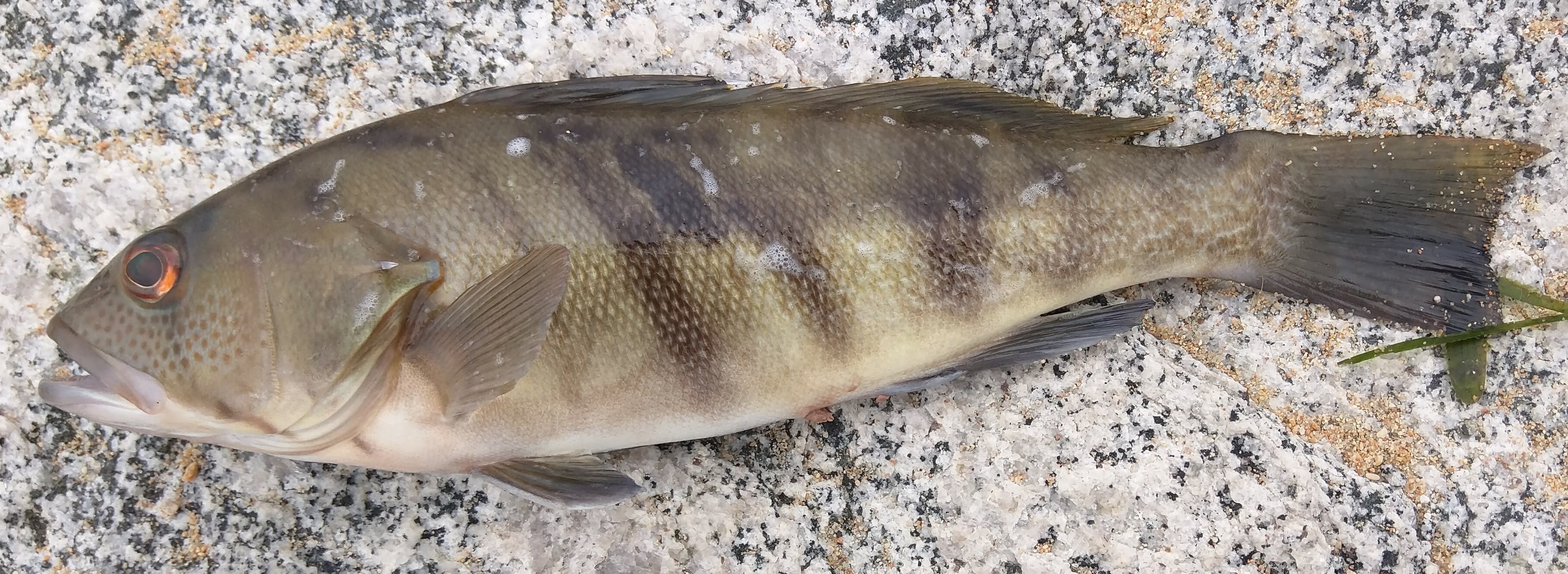
Taxonomy
- Kingdom
- Animalia
- Phylum
- Chordata
- Class
- Actinopterygii
- Order
- Scorpaeniformes
- Family
- Serranidae
- Genus
- Paralabrax
- Species
- nebulifer
Habitat
Barred sand bass primarily inhabit rocky reefs, kelp forests, and sandy bottoms in the eastern Pacific Ocean, from Southern California to Baja California, Mexico. They prefer depths of 10 to 200 feet and areas with structure like rocks or wrecks for shelter. These habitats provide ample hiding spots and prey.
Diet
Barred sand bass are carnivorous, feeding mainly on smaller fish such as anchovies, sardines, and croakers, as well as crustaceans like crabs and shrimp. They employ ambush tactics to capture prey, often hunting during daylight hours in their reef environments. Feeding activity peaks at dawn and dusk.
Behavior
Barred sand bass are typically solitary or form loose aggregations, showing territorial behavior around rocky structures. They are diurnal, most active during the day for hunting, and can change color slightly for camouflage. These fish are known to be cautious and may retreat quickly when threatened.
Fishing
Target barred sand bass, a popular sport fish in the eastern Pacific from Southern California to Baja California, using effective bottom fishing techniques like jigging or bait fishing around rocky reefs, kelp forests, and sandy bottoms in depths of 10 to 200 feet, where they ambush prey. Opt for medium-weight spinning or conventional tackle with 15- to 30-pound test line, a 7- to 9-foot rod, and hooks sized 1/0 to 4/0; effective baits and lures include live anchovies, sardines, shrimp, or crabs, as well as jigs and soft plastic imitations that mimic their natural diet of smaller fish and crustaceans. The best season is summer during spawning, with peak bites at dawn and dusk when they are most active, though they can be caught year-round in warmer months; focus on tidal movements and structure for higher success. The IGFA all-tackle world record stands at 13 pounds 3 ounces, caught in California waters, highlighting their impressive size potential up to 28 inches. Angler-funded programs through license fees and excise taxes support habitat restoration and stocking efforts, while state regulations like minimum size limits (typically 14 inches in California) and bag limits serve as effective management tools to ensure healthy, stable populations, promoting catch-and-release for undersized fish to bolster conservation.
Conservation Status
Listed as Least Concern by IUCN.