
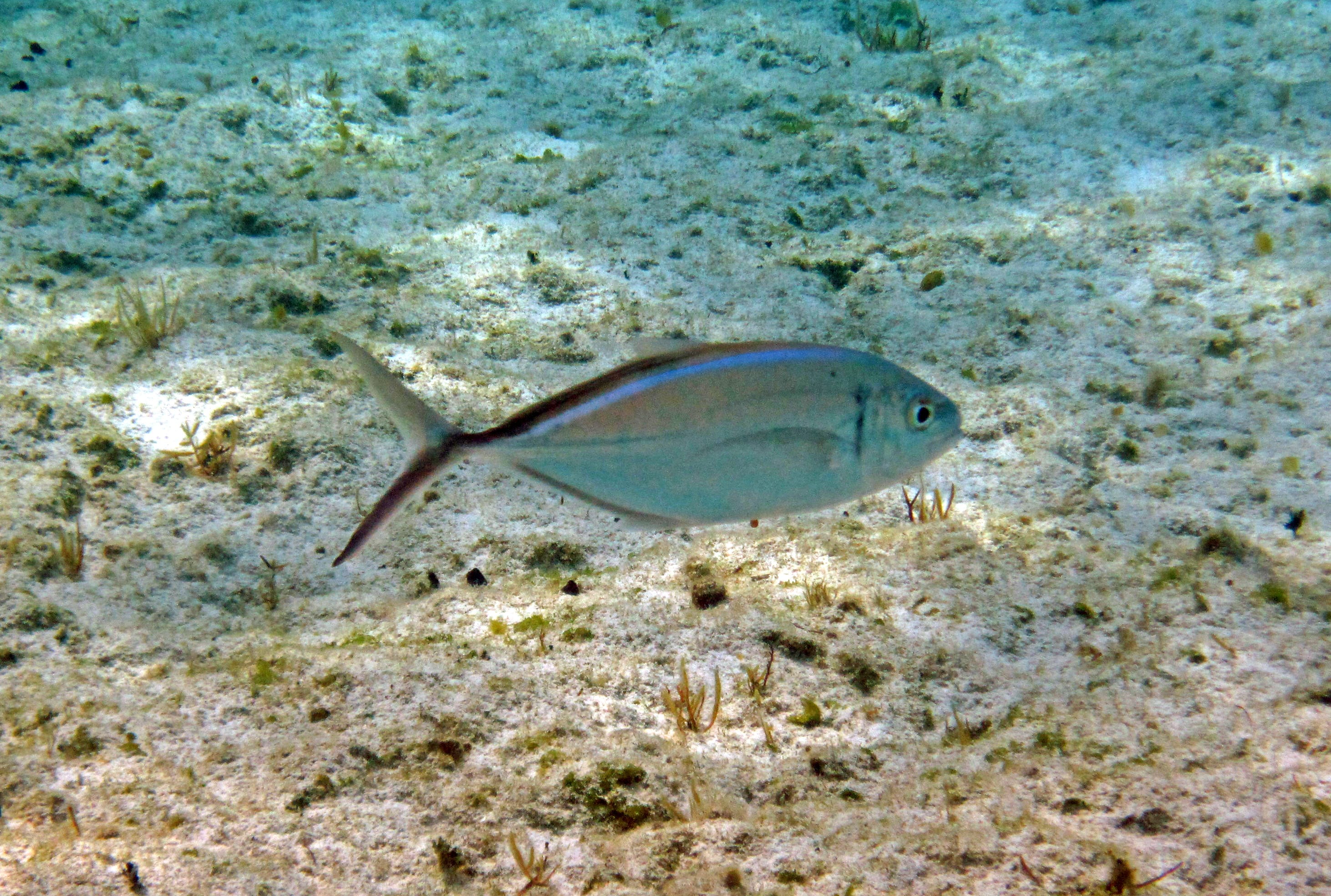
Taxonomy
- Kingdom
- Animalia
- Phylum
- Chordata
- Class
- Actinopterygii
- Order
- Characiformes
- Family
- Carangidae
- Genus
- Caranx
- Species
- ruber
Habitat
Bar jacks inhabit tropical and subtropical marine waters, primarily around coral reefs, rocky areas, and sandy bottoms in depths from 5 to 100 meters. They are commonly found in the western Atlantic Ocean, including the Caribbean Sea and Gulf of Mexico, often near structures like shipwrecks or jetties that provide cover.
Diet
Bar jacks primarily feed on smaller fish such as anchovies and sardines, as well as squid and crustaceans like shrimp and crabs. They are active predators that hunt in schools during the day, using ambush tactics to chase down prey in open water. Feeding peaks in the morning and late afternoon when visibility is good.
Behavior
Bar jacks are highly social fish that form schools for protection and hunting, often seen swimming rapidly in open water or near reefs. They exhibit diurnal activity patterns, being most active during the day, and can be territorial around feeding areas. These fish are known for their speed and agility, making quick turns to evade predators or capture prey.
Fishing
Target bar jacks, a prized sport fish in tropical waters, using effective techniques like trolling with diving plugs or spoons, casting jigs near structures, or live bait fishing to mimic their prey; these methods leverage their schooling behavior and ambush tactics for exciting catches that support conservation through angler participation. Opt for light to medium spinning or trolling outfits with 10-20 pound test line, a fast-action rod for quick strikes, and circle hooks to promote safe catch-and-release, paired with lures such as metal jigs, soft plastics imitating shrimp or squid, or live bait like sardines and anchovies to entice their predatory instincts. The best seasons are spring through summer when they spawn in warmer waters, with peak activity in the morning and late afternoon for optimal feeding windows; focus on habitats around coral reefs, rocky areas, shipwrecks, or jetties in depths of 5 to 100 meters across the Western Central Atlantic, Caribbean Sea, and Gulf of Mexico, where they provide cover for ambushes. The IGFA all-tackle world record for bar jacks stands at 15 pounds 6 ounces, caught in 1985, highlighting their impressive size potential up to 75 cm and 7 pounds 5 ounces typically. As a Least Concern species with stable populations, angler-funded programs through license fees help maintain healthy stocks via slot limits and catch-and-release practices, ensuring sustainable fishing that protects these vibrant reef ecosystems for future generations.
Conservation Status
Listed as Least Concern by IUCN.