
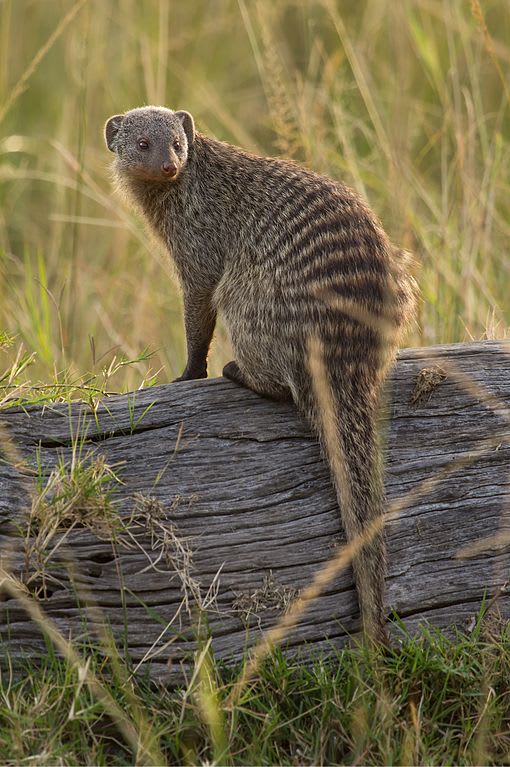
Taxonomy
- Kingdom
- Animalia
- Phylum
- Chordata
- Class
- Mammal
- Order
- Carnivora
- Family
- Herpestidae
- Genus
- Mungos
Habitat
Banded mongooses primarily inhabit savannas, grasslands, and open woodlands in sub-Saharan Africa. They prefer areas with termite mounds, rock crevices, or burrows for shelter and are adaptable to various dry terrains but avoid dense forests.
Diet
Banded mongooses mainly eat insects like termites and beetles, small vertebrates such as rodents and reptiles, and occasionally fruits or bird eggs. They forage in groups during the day, using their keen sense of smell to locate food and digging with their claws. Feeding is opportunistic and occurs throughout their active hours.
Behavior
Banded mongooses are highly social, living in groups of 10-75 individuals led by a dominant breeding pair, with cooperative behaviors like babysitting pups and group foraging. They are diurnal, active during the day, and exhibit territorial defense by marking areas with scent and vocalizing alarms. Notable behaviors include cooperative hunting and mobbing predators to protect the group.
Conservation Status
The IUCN status of the banded mongoose is Least Concern, with stable populations across their range, though they face threats from habitat loss due to agriculture and human expansion.